


accuracy score 48.9 on ETH over 7 ETH calls · 210 days of data · not ranked: too few calls on the asset · v20r-multi-sparsepen-strong-ss12m-20261012, computed Nov 11, 2026 · Methodology →
Cite asCryptoQuant has tracked 7 directional calls on ETH by @egyhash on CryptoQuant since Aug 2024: scored 48.9 on ETH, not yet ranked (210 days of data) (as of Nov 11, 2026).
Other assets covered (1)
7 ETH calls on record, a thin history.
Relative view by default: fewer than 30 ETH calls or days on record.
Sentiment timeline shows relative sentiment within this analyst's history. A perma-bull showing 8 bullish : 2 bearish in a bear market sets that as their baseline. If you notice any errors, claim @egyhash to submit corrections.
Hover the chart to read the thesis of that period · click a day to pin it
Bear Traders vs. Bull Coders: Ethereum’s Relentless On-Chain Growth
ETH smart contracts surge from 60M to 72M+ in 2026 while price sits near $2.5K. Daily active wallets hold steady near 338K despite the drawdown. Builders ignore the chop.
View original →Ethereum Staking Rate Surpasses 33% for the First Time
ETH staking hits record 33% even as price craters to $1,500. Investors locking tokens instead of selling—liquid supply shrinking fast. Divergence signals diamond hands betting on supply squeeze...
View original →Leverage Risk Builds as Ethereum Open Interest Shrinks
Ethereum has faced notable challenges in recent weeks, reflected in a sharp decline in open interest across derivatives markets. Over the past two weeks, open interest has contracted significantly by 7 billion dollars, dropping from approximately $32 billion to $25 billion. Despite this reduction, Ethereum’s Estimated Leverage Ratio (ELR), calculated as the ratio of open interest to exchange coin reserves, has surged to levels last observed in June. This divergence suggests that, while overall open interest is falling, the positions that remain are increasingly reliant on higher leverage. The rise in the ELR underscores heightened risk-taking behavior among market participants, with traders engaging in leveraged derivatives at a scale that may signal fragility rather than strength in market structure. Such dynamics often raise concerns about market stability, as elevated leverage can amplify volatility and exacerbate downside risks during periods of stress. The decline in Ethereum’s open interest, coupled with a sharp rise in its leverage ratio, highlights increasing speculative risk in the market, raising concerns over potential volatility and instability in the coming days. 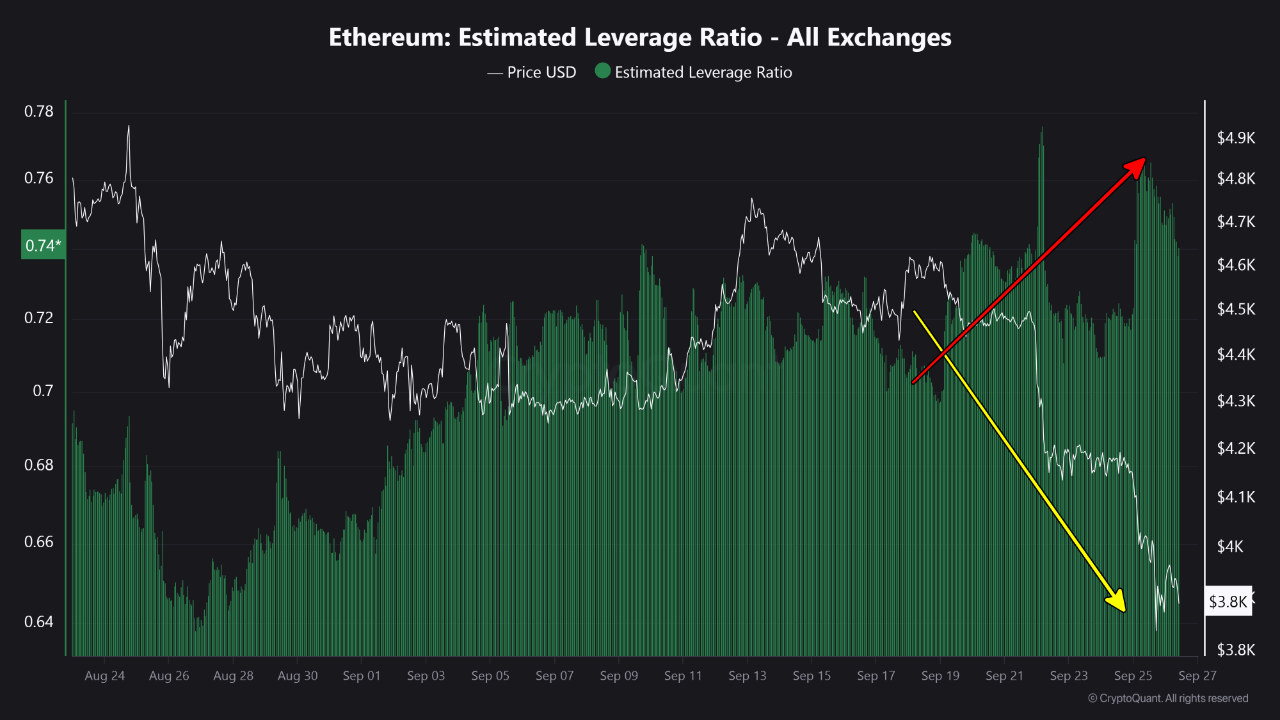 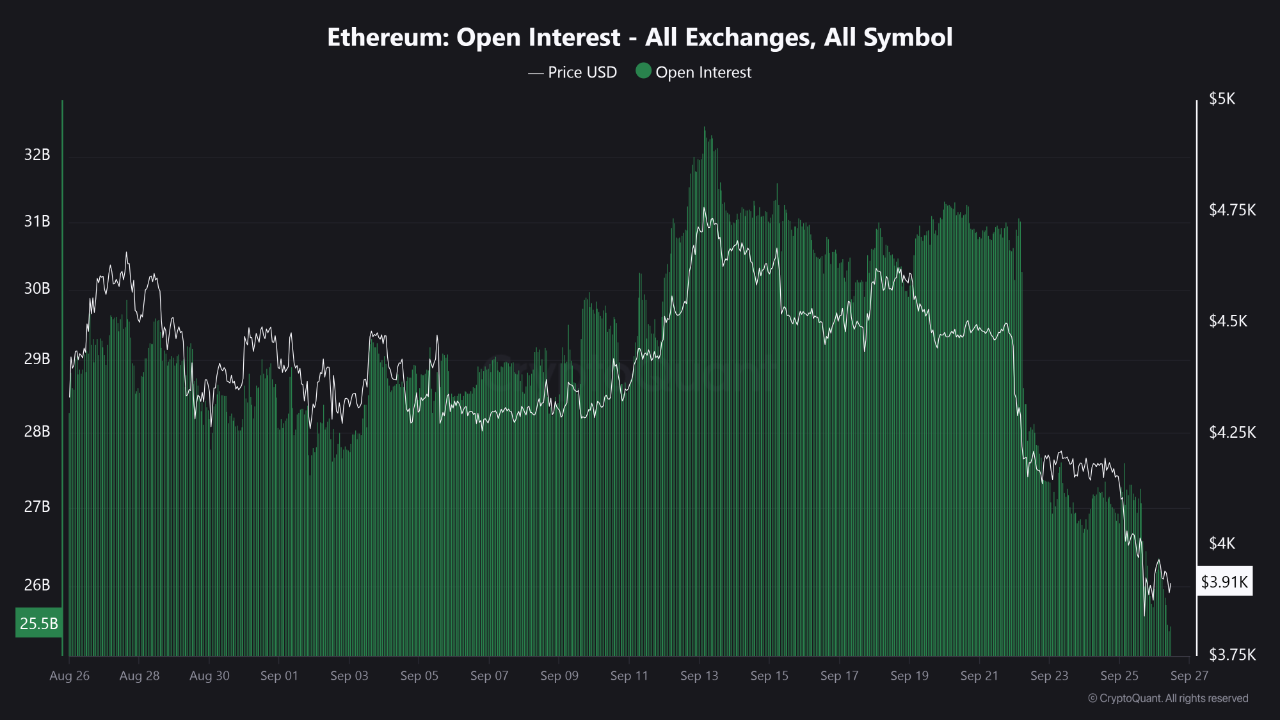 
View original →Ethereum Roars Back: ETH/BTC Hits Yearly Highs as Volumes Skyrocket
Ethereum has been demonestrating a renewed relative strength against Bitcoin after touching its lowest exchange rate in six years this past April. Currently, the ETH/BTC pair is trading at its highest level since the beginning of the year, reaching 0.0368. While this marks a notable recovery, it still falls short of the levels many within the Ethereum community aspire to. On the spot market, ETH/BTC pair weekly spot trading volumes have reached a new all-time high (ATH), with the ratio standing at 2.71. Notably, Ethereum’s spot trading volume last week was nearly three times that of Bitcoin, highlighting a shift in market participation. In the derivatives market, the ETH/BTC perpetual futures open interest ratio has surged to 0.71, a peak not seen in 14 months. This uptick reflects growing speculative positioning and investor interest in Ethereum relative to Bitcoin. The recent surge in Ethereum’s relative performance against Bitcoin, coupled with record spot trading volumes and elevated derivatives positioning, signals a shift in market dynamics favoring Ethereum in the short term. However, despite this momentum, ETH/BTC remains well below historical highs, suggesting that sustained investor conviction and broader adoption will be critical for Ethereum to close the gap with Bitcoin over the longer horizon.  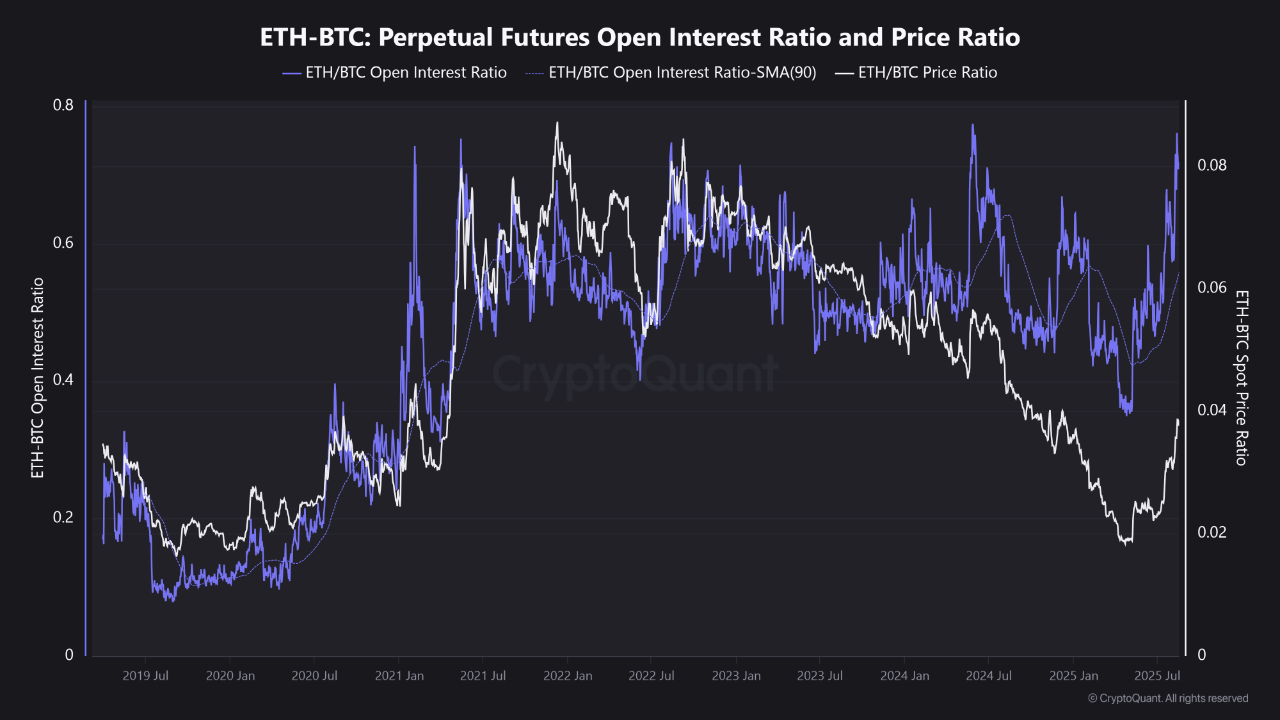 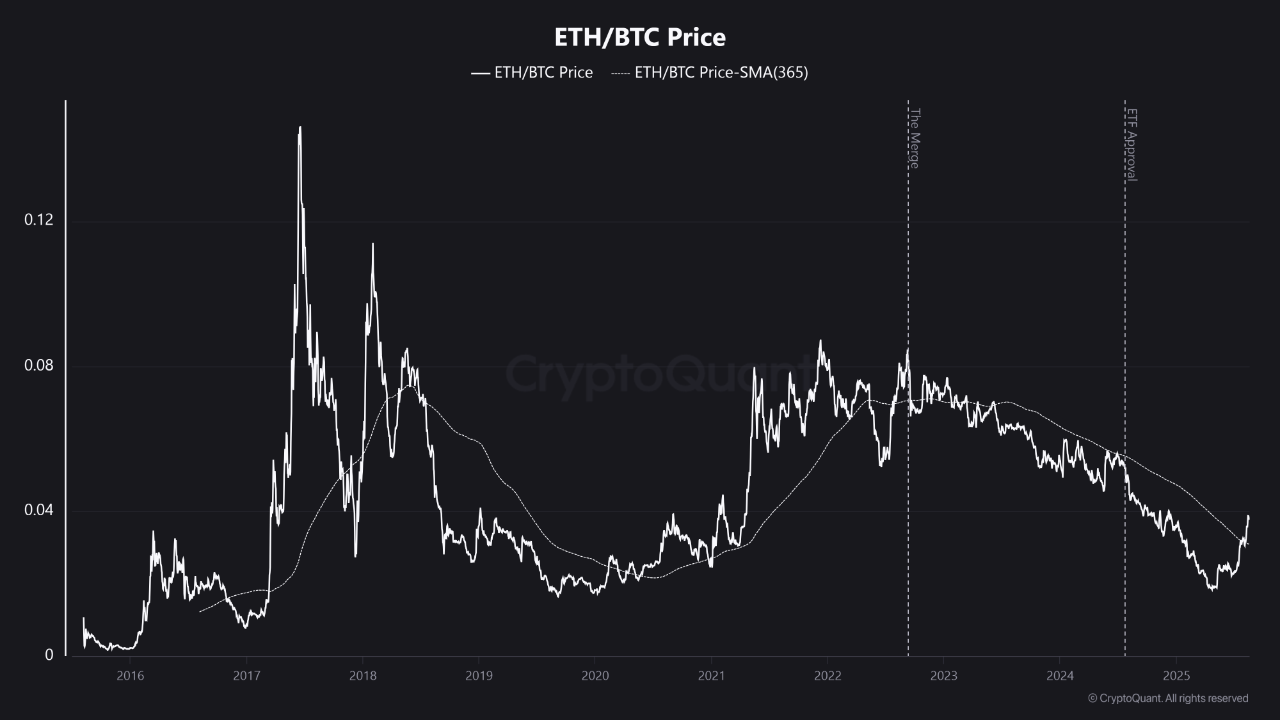 
View original →Why Ethereum Is Bleeding Value: Fee Crash Meets Hyperinflation Hellscape
It is evident that Ethereum has been facing significant challenges, especially when compared to Bitcoin, reaching levels not observed since 2020. On-chain data reveals that subdued network activity is a primary contributor to Ethereum's ongoing price decline. The number of active addresses has been steadily decreasing since the start of the year, and average fees per transaction and per block have reached record lows. As a result, the burn rate has fallen to its lowest level since the Merge, further exacerbating the inflationary pressures on the asset since the Dencun upgrade. Ethereum's recent underperformance can be largely attributed to diminished network activity, as evidenced by declining active addresses and reduced transaction fees. These factors, coupled with a low burn rate post-Dencun upgrade and a continuous high inflation rate, continue to exert downward pressure on the asset's value. Moving forward, closely monitoring these on-chain metrics will be crucial for understanding Ethereum's market trajectory and potential recovery strategies.  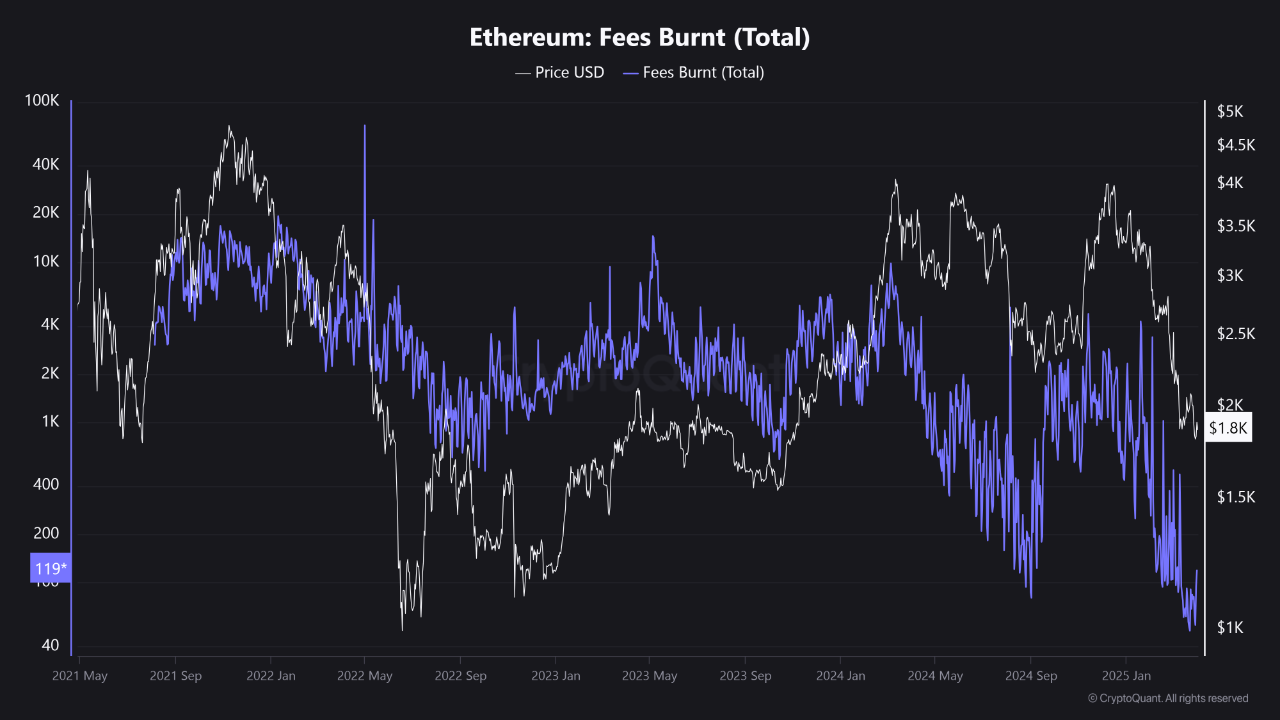 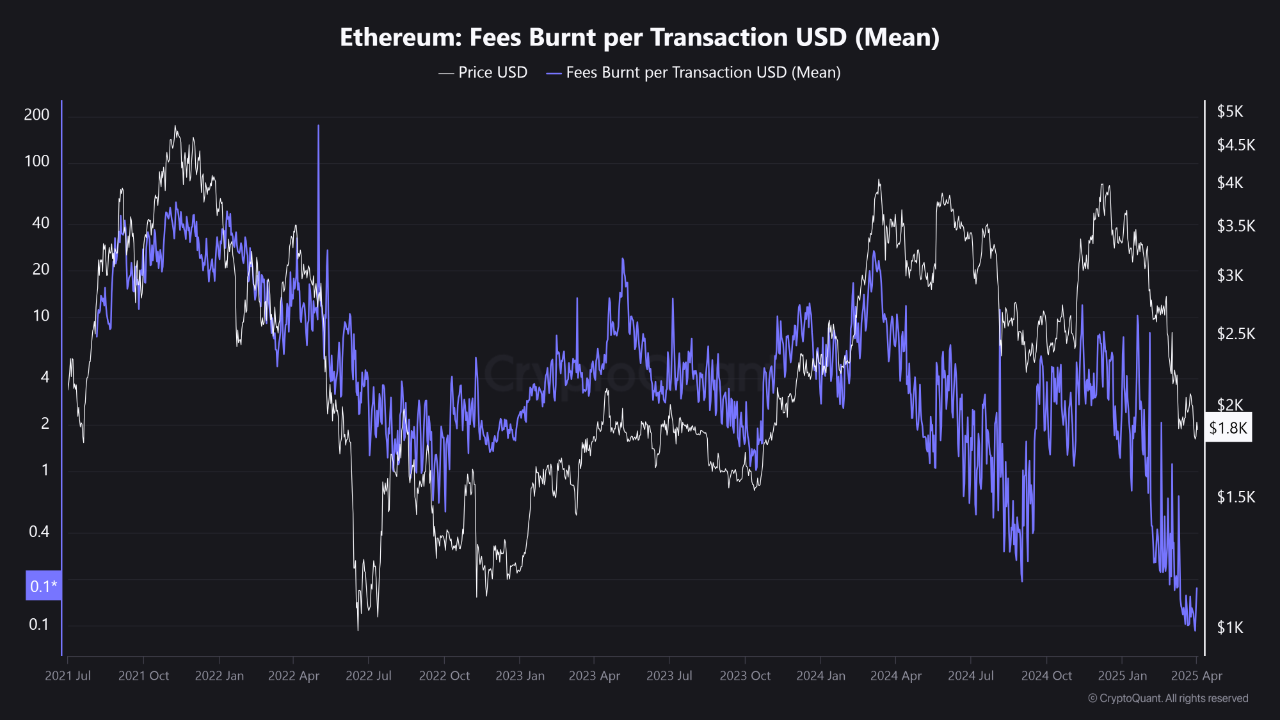 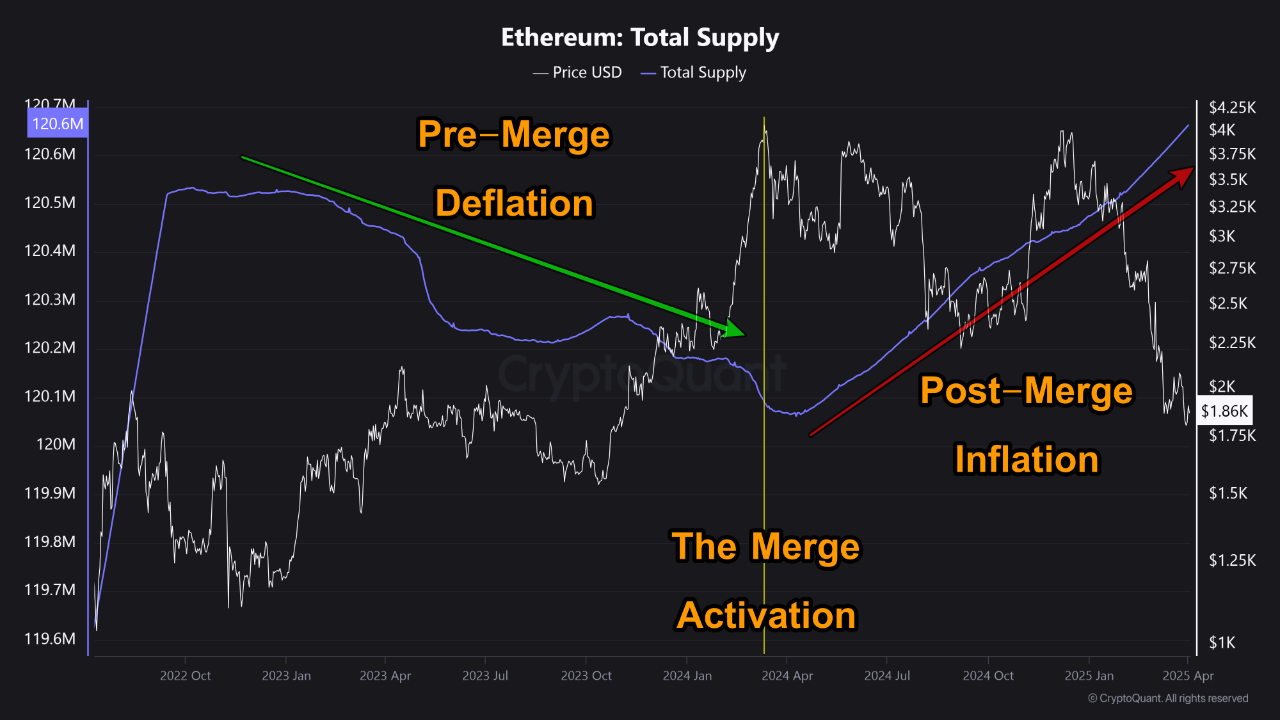 
View original →