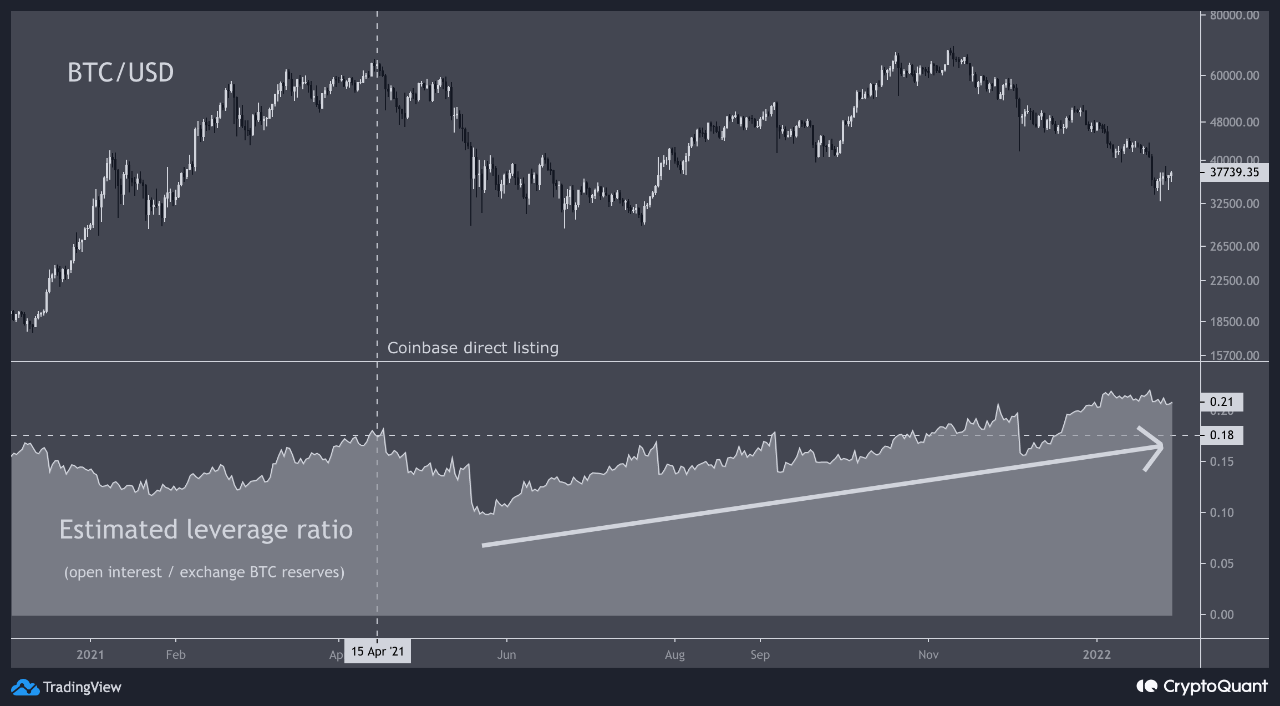
The Estimated Leverage Ratio is calculated by dividing the Open Interest by exchange BTC reserves.
This metric is IMO conceptually very interesting but realistically misleading - especially on longer timeframes.
Over the last year, the percentage of cash-margined contracts increased a lot, causing an upward drift in this metric that does not represent an increase in actual leverage.
Perhaps this could in theory be overcome by including exchange stablecoin (and fiat, if that data were available) reserves as well, but since those are likely used as trading pairs and/or collateral for many more assets, that probably also will not improve the accuracy of the metric.
If anyone has any thoughts, suggestions or corrections on the content of this post, feel free to share them in the comments below!

View original →Bearish(Nuanced)BTC
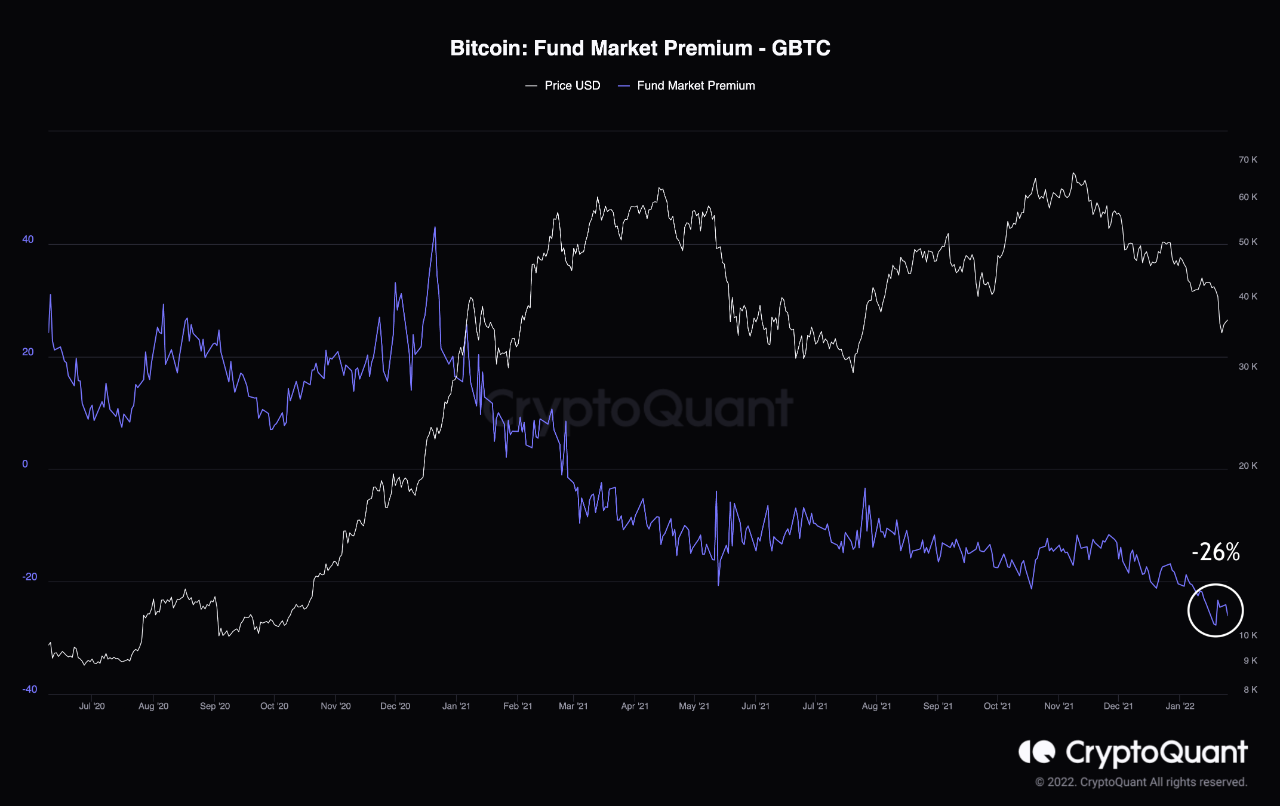
1/26/2022 Grayscale Bitcoin Trust shares, which represent Grayscale-held Bitcoin, are now worth 26% less than actual Bitcoin.
Investors that hold these GBTC shares are likely speculating on the premium returning to neutral again at some point - for instance if Grayscale's filing to convert their trust into a spot Bitcoin ETF gets accepted. The latter is supposedly being reviewed by the Securities and Exchange Commission (SEC) on February 6th.
More info on Grayscale's spot ETF filing: https://grayscale.com/unpacking-the-news-a-new-argument-for-a-bitcoin-etf/

View original →Bearish(Nuanced)BTC
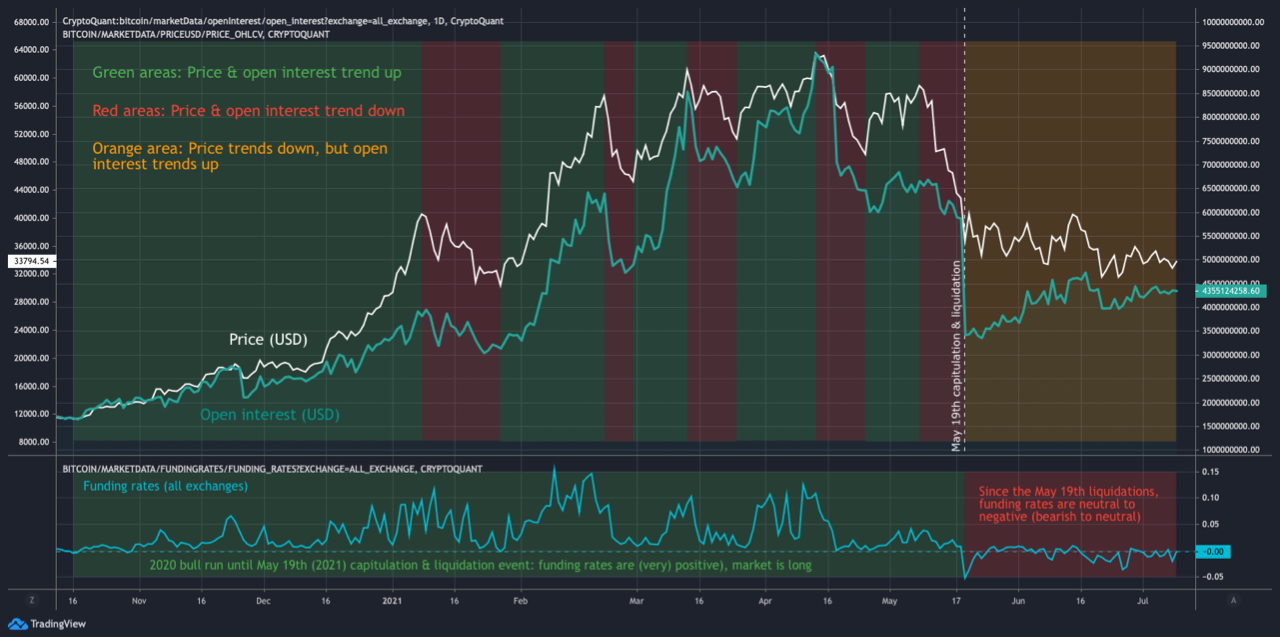
7/10/2021 Throughout the 2020 & early 2021 bull run, funding rates were (very) positive, as the market was massively long. During that period, open interest generally went up (green areas) during price rises and down (red areas) during price declines.
Since the May 19th massive market capitulation & liquidation event that birthed Bitcoin's first $10k intraday candle, this flipped: price had a downwards consolidation, but open interest is gradually trending up, with funding rates neutral to bearish.

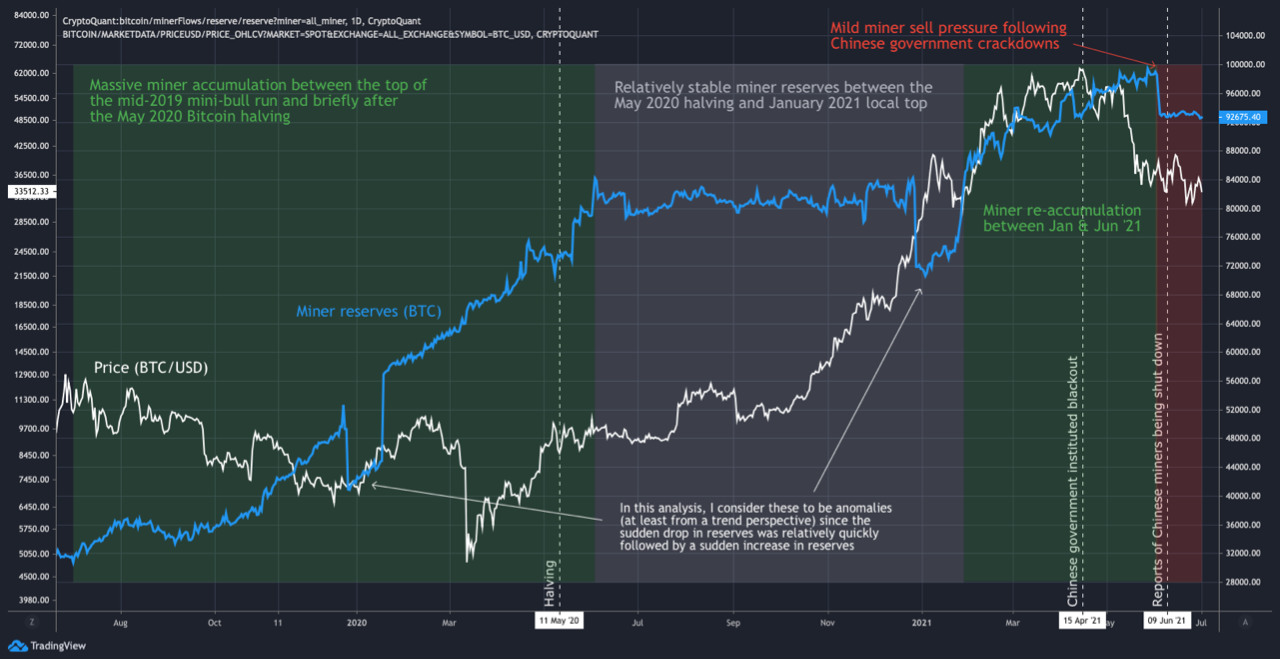
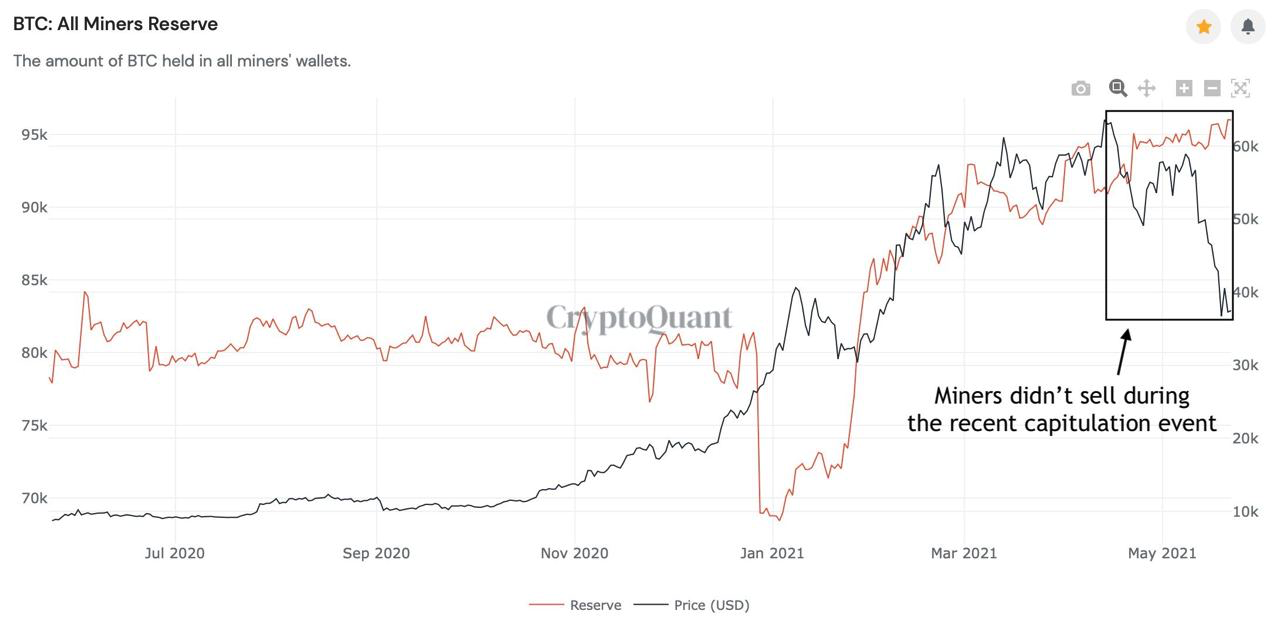
View original →Following recent Chinese government crackdowns on Bitcoin and its miners, there appears to be fear in the markets that further sell pressure from Chinese Bitcoin miners is going to push the bitcoin price further down.
Although on-chain miner reserves recently indeed have declined by about 6-7k BTC, this sell pressure is rather modest when reflected upon based on a larger timeframe, as showed in the figure below.

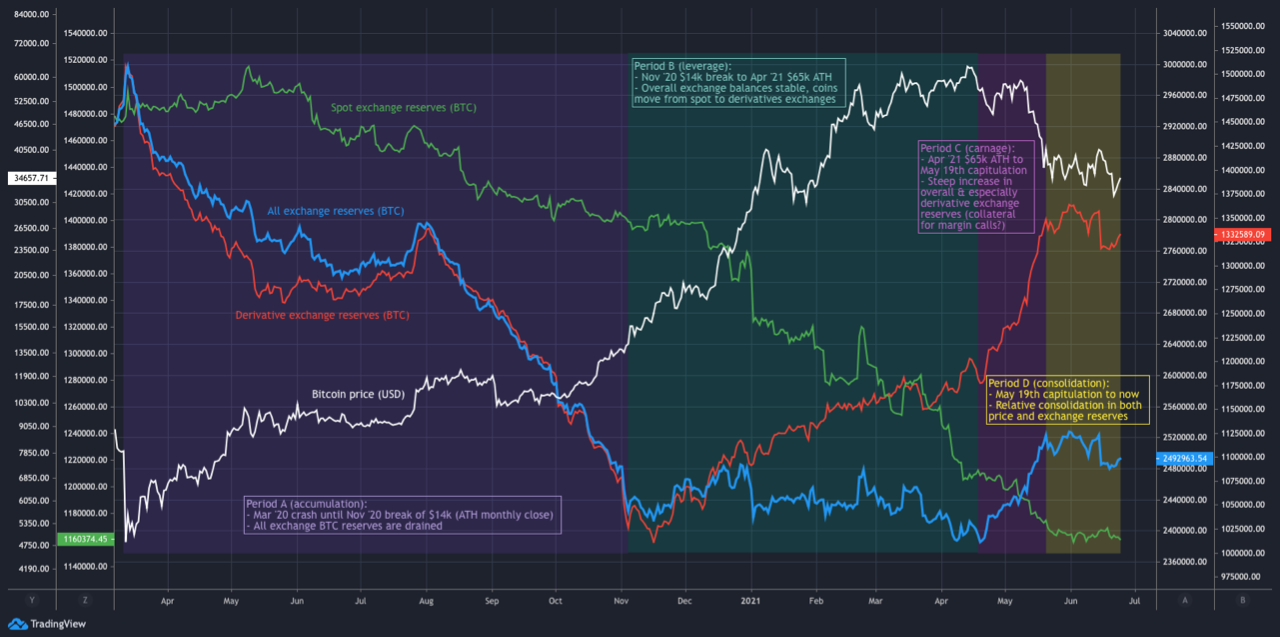
View original →A) Accumulation:
- Mar '20 crash until Nov '20 break of $14k
- All exchange reserves are drained
B) Leverage:
- Nov '20 $14k break to Apr '21 $65k ATH
- Overall exchange reserves stable, coins move from spot to derivative exchanges
C) Carnage:
- Apr $65k ATH to May 19th capitulation event
- Steep increase in derivative exchange reserves, (collateral to counter margin calls?)
D) Consolidation:
- May 19th capitulation event to now
- Relative consolidation in both price and exchange reserves

View original →Since the January local top, Bitcoin miners have turned into net accumulators.
They even did not budge during this week's capitulation event 💎🙌

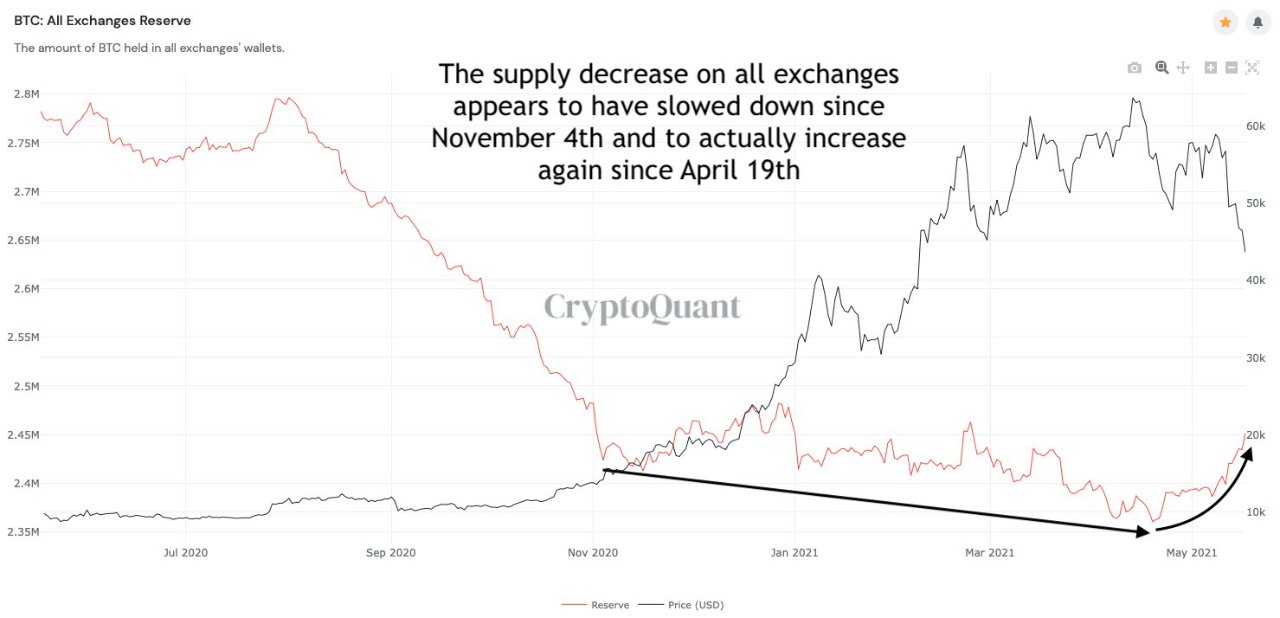
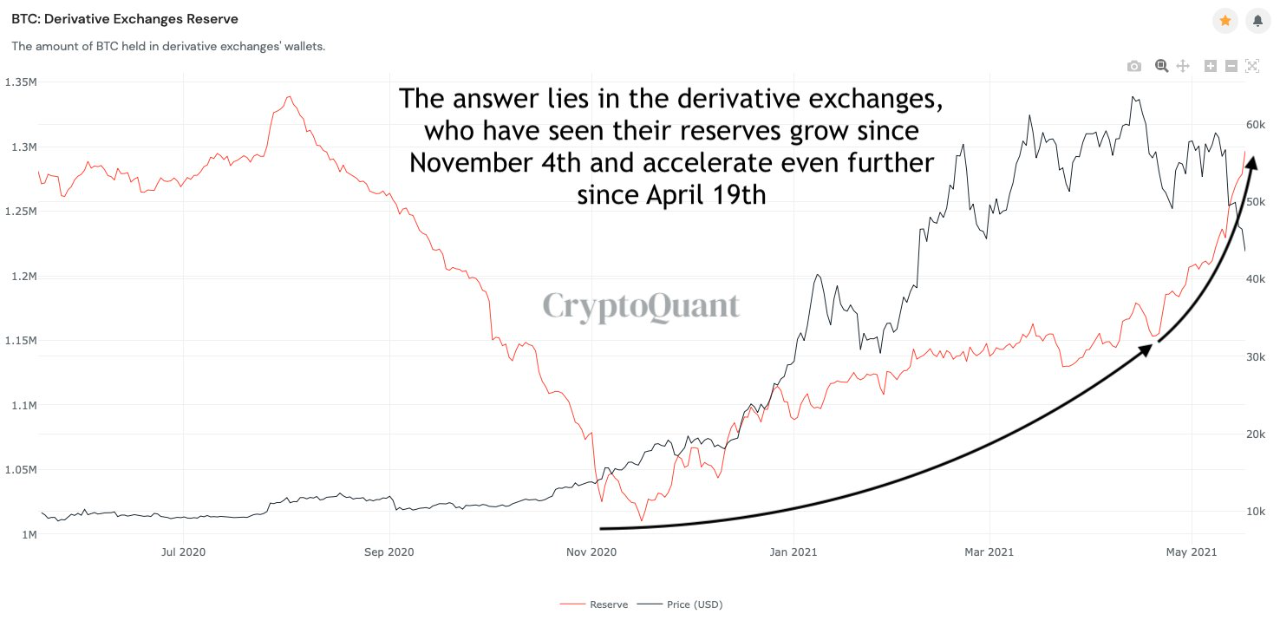
View original →Bitcoin supply depletion of all exchanges slowed down since Nov 4th & is increasing since Apr 19th.
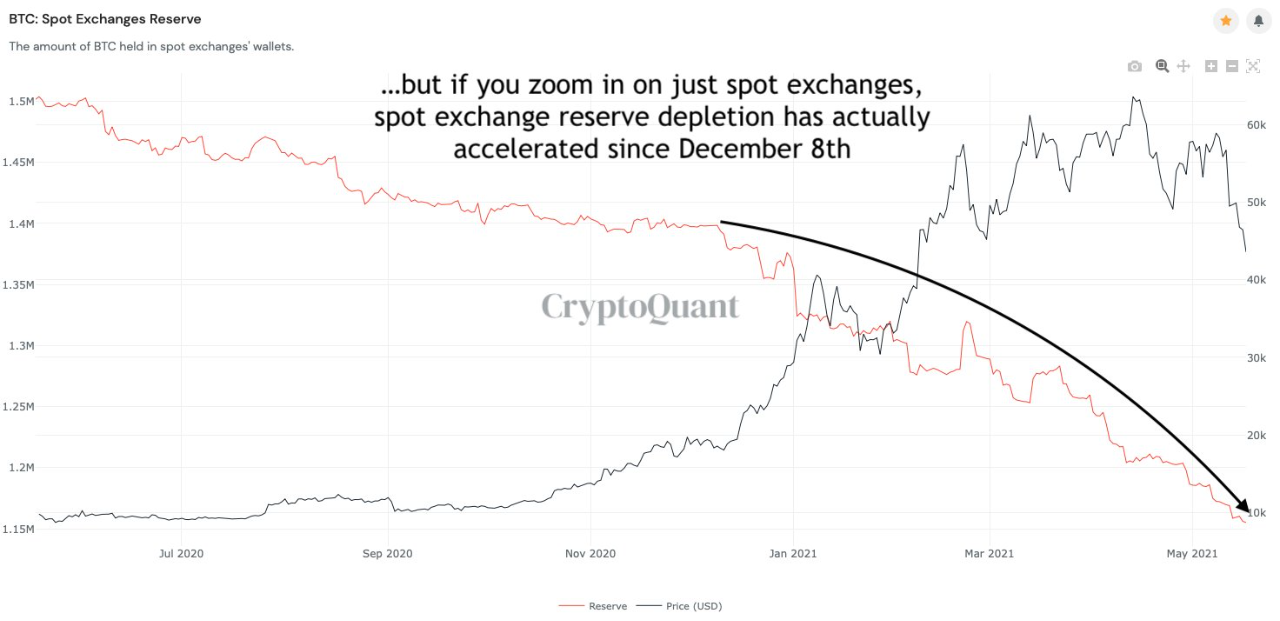
..but if you zoom in, you see that supply depletion of spot exchanges has accelerated since Dec 8th.
3 possible explanations (in reality we're likely seeing a combination of all 3):
1) More leveraged bets on Bitcoin
since the start of the bull run
2) More interest in the contango trade
3) Altcoin trading & speculation, as some of these derivatives exchanges also offer that.

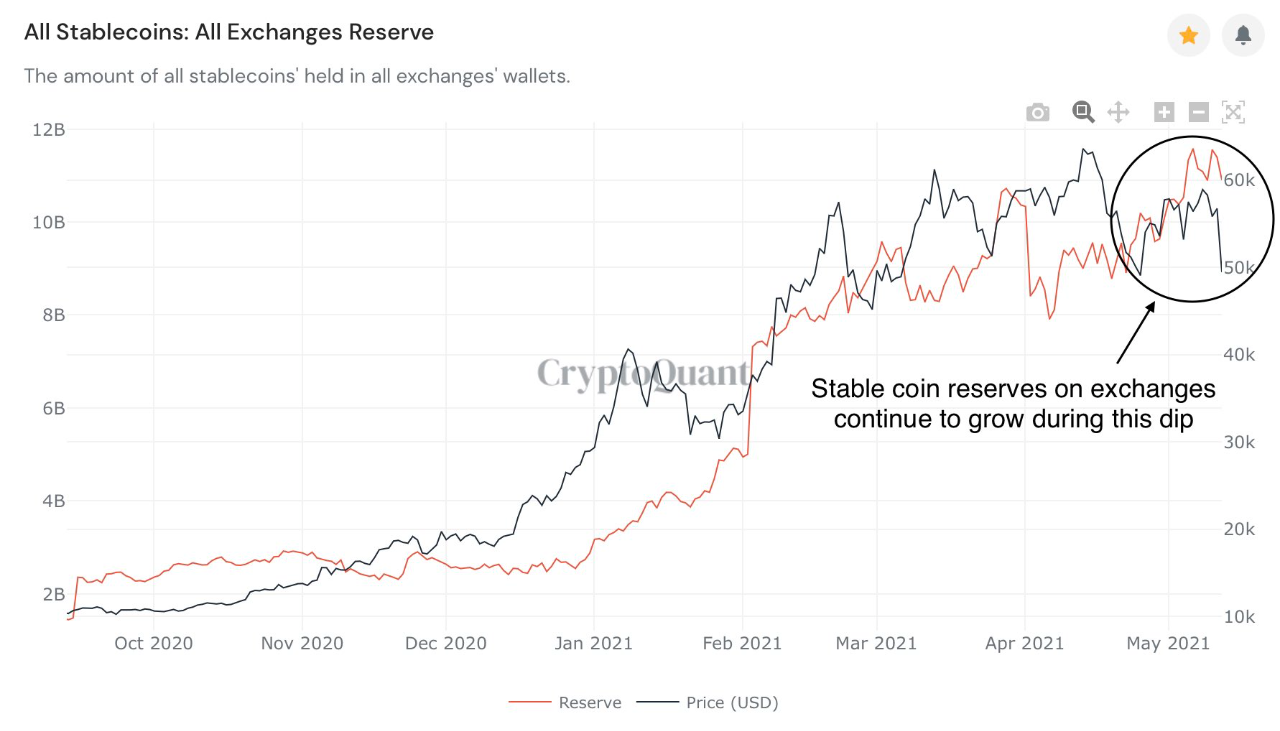
View original →The larger these stablecoin reserves are on exchanges, the easier it will be for Bitcoin to climb out of the dip when upwards momentum returns.
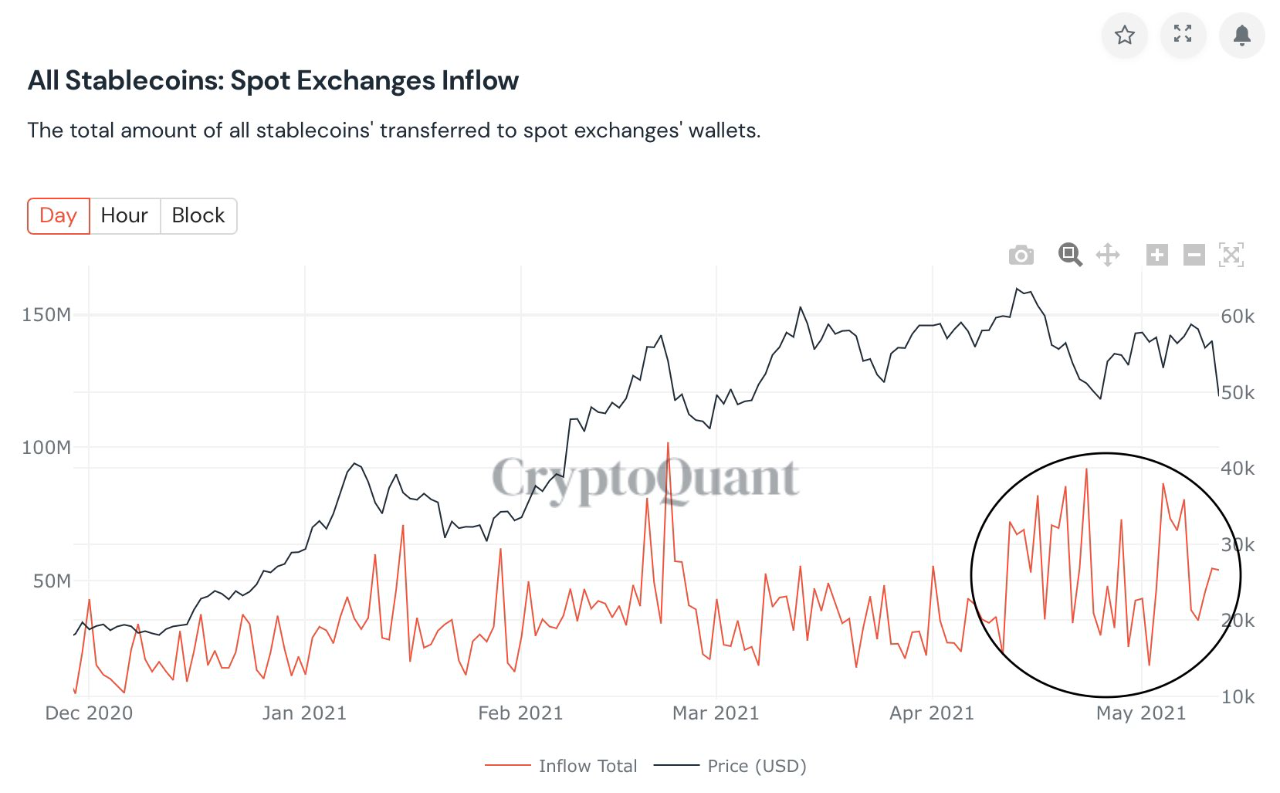
To those asking if the previous tweet could be people rotating into stablecoin or using stablecoins as collateral; there are huge amounts of stablecoins being deposited at actual spot exchanges recently, so it is reasonable to assume that this is at least partially dry powder
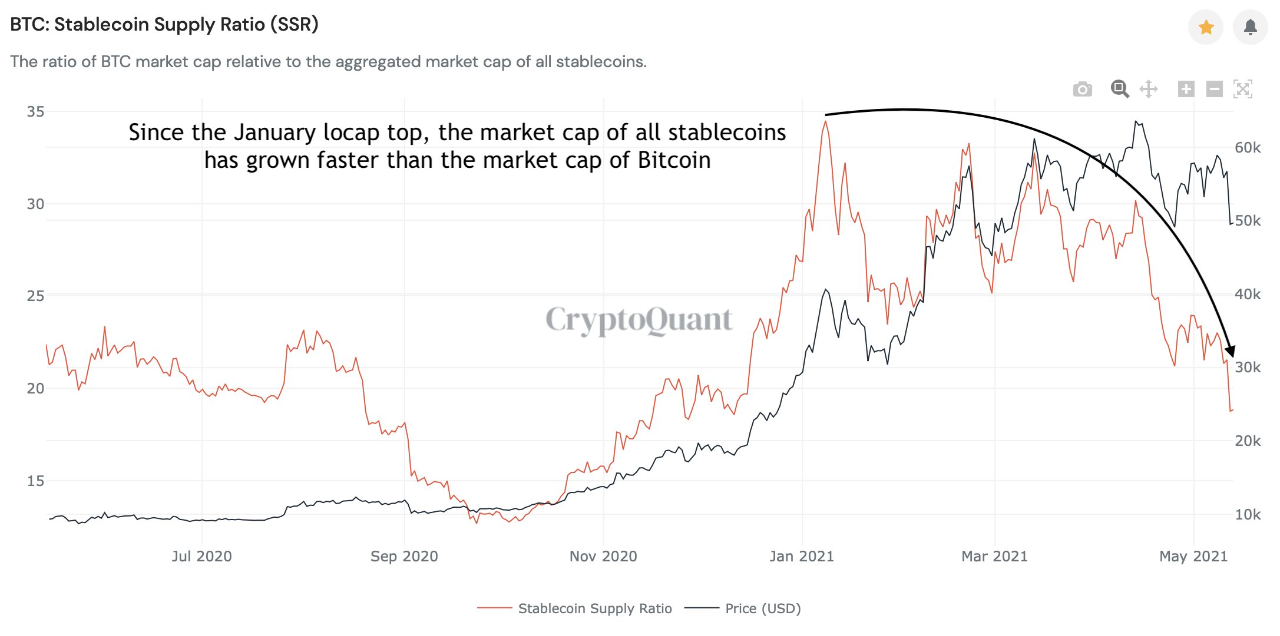
Some pointed out that the market cap of Bitcoin has grown during this consolidation, alleviating some of this stablecoin growth. That is true, but the market cap of all stablecoins has grown (much) faster than that of Bitcoin. There is simply a lot more money slushing around.

View original →

