Bearish(Nuanced)ETH
7/18/2025 Ethereum’s recent breakout has triggered excitement across the market, but a closer look at the underlying flows suggests caution is warranted.
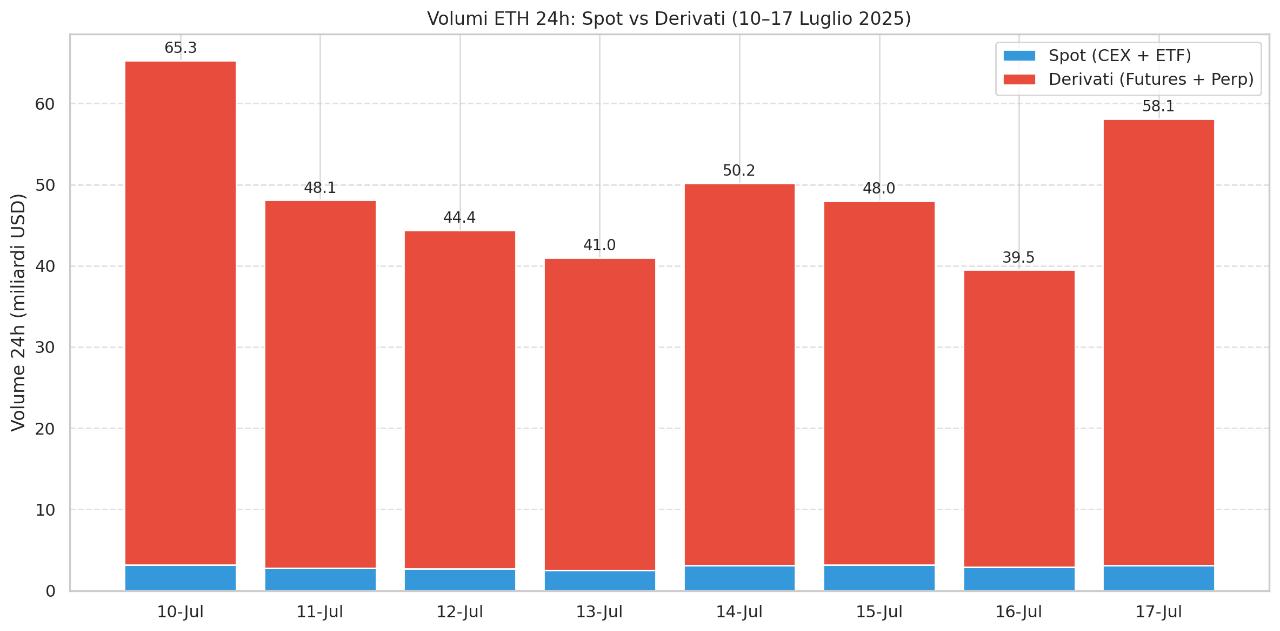
Over the past week (July 10–17), ETH’s 24h trading volume has consistently been dominated by derivatives. Daily notional volumes in futures and perpetuals ranged between $39B and $65B, while spot volume (CEX + ETF) remained relatively flat and modest in comparison. Even on days when ETF flows picked up, the structure remains mostly derivative-driven.
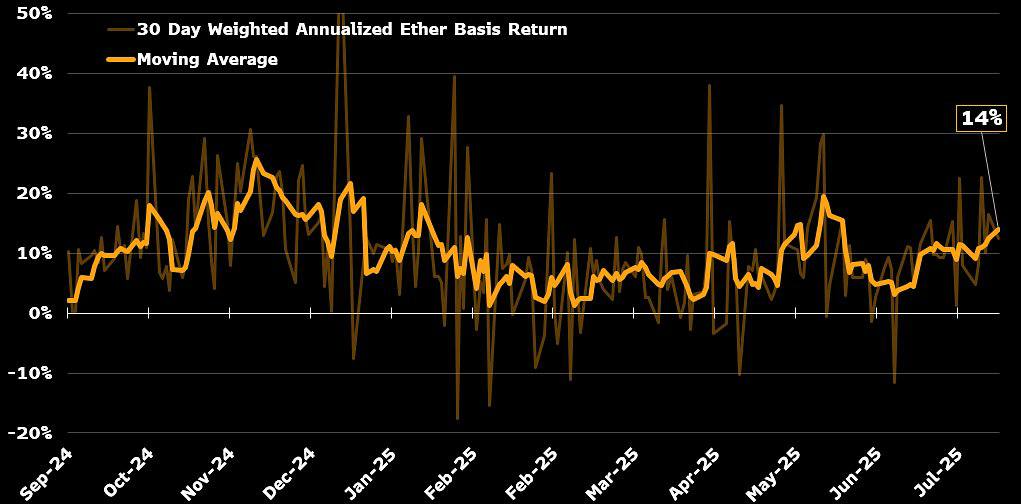
Moreover, there’s an important nuance: a significant portion of recent ETF inflows are likely tied to basis trades. This arbitrage strategy, which involves going long spot (or ETF) while shorting futures, has become increasingly attractive as ETH’s basis widened again, now offering up to 15% APR on a delta-neutral position.
This means that ETF inflows alone shouldn't be interpreted as directional bullish flows. In many cases, they’re simply one leg of a market-neutral arbitrage setup, with the other leg (a short futures position) applying structural pressure to derivative markets.
Until we see a meaningful increase in spot participation from real buyers, not just arbitrage desks, ETH’s rally remains fragile, and heavily dependent on the behavior of leveraged players.
It’s not that spot flows have been weak. It’s that they haven’t confirmed or supported the magnitude of the current move, which appears mostly engineered by futures positioning and funding dynamics.
In short: strong price action, but weak confirmation. ETH is dancing to the beat of derivatives; again.

View original →Bearish(Nuanced)BTC
5/15/2024 Volatility in the crypto market is returning to normal, with demand for Bitcoin declining and the supply of new issues halved since the halving.
This is determined by the absence of narratives that can fuel short-term interest, with investor flows oriented towards "fresher" and more attractive narratives, such as the electrification of data centers to support the development of AI (the "Power up America" sector is among the top performers in 2024).
The result of this dynamic is an erratic Bitcoin price action at the mercy of derivatives, which follows mostly speculative logic with a short-term perspective.
However, I am still constructive on Bitcoin as current market conditions appear very robust. To confirm this thesis, there are notable outflows from exchanges, with Coinbase recording one of the largest outflows of 2024 in recent days.
In the immediate term, I think the most likely outcome is a long and drawn-out consolidation phase, until new catalysts come back into play.
It's not just me who thinks this way; many confidential reports from large investment banks are circulating which envisage very interesting scenarios for Bitcoin in the medium to long term.
Below are some key points from a report by Standard Chartered Bank:
1. Bitcoin will certainly benefit from the US fiscal dominance policy.
2. US debt and public deficits appear to be on an unsustainable path.
3. This should push the price of Bitcoin higher, with investors looking for alternative assets.
4. A second Trump administration could provide a more "crypto-friendly" regulatory framework, benefiting digital assets.
5.(...) This adds to our already bullish medium-term outlook on Bitcoin: we reiterate our target price levels for late 2024 and late 2025 at $150K and $200K respectively." (Standard Chartered Bank).
I think there is very little to add.


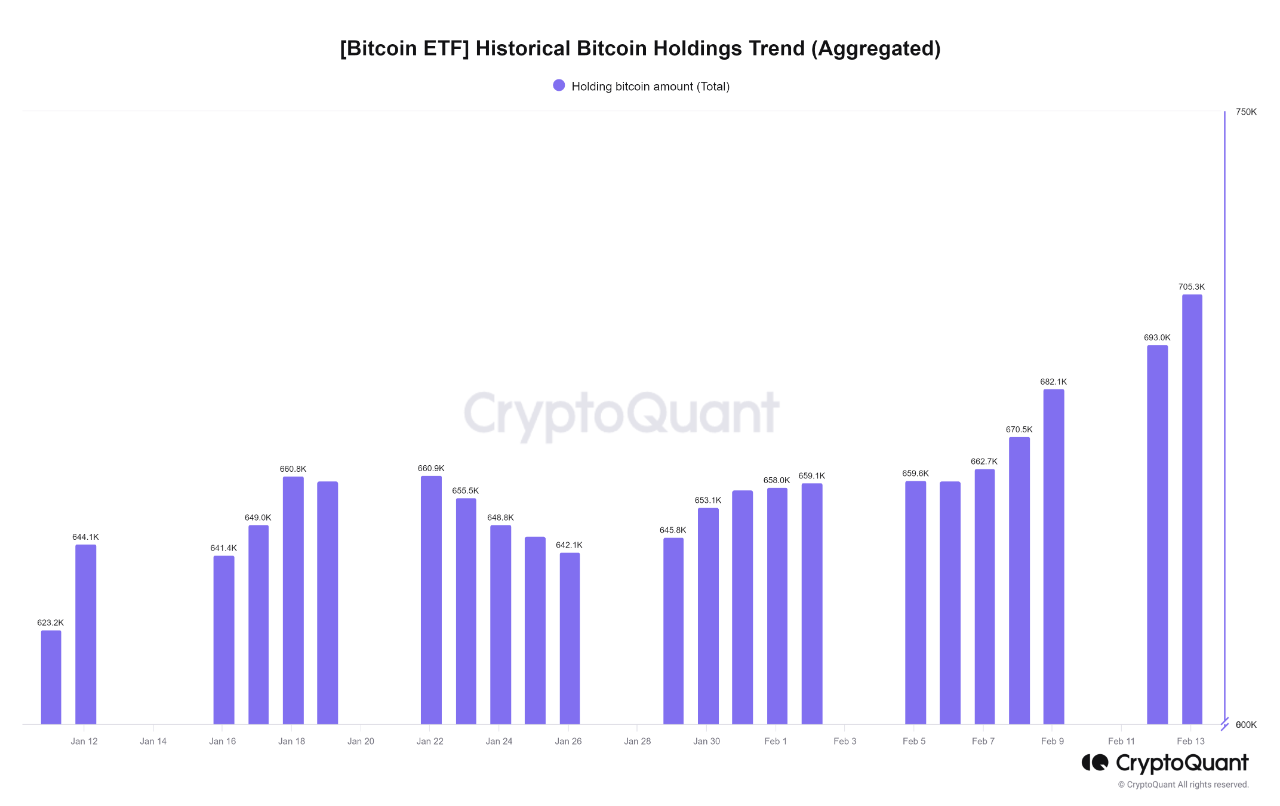
View original →During the latest trading session, the new Bitcoin ETFs saw inflows of $340 million, despite outflows from the Grayscale Bitcoin Trust and Invesco Galaxy of around $160 million
Yesterday the price rose before the US trading session and then moved mostly sideways.
I imagine this is due to traders trying to frontrun the buying pressure during the Wall Street session, with ETFs continuing to suck BTC out of the market at the pace of an industrial vacuum cleaner.
After the $50,000 breakout I really have no idea how much more Bitcoin can push without a break (at $53K there is a huge GEX, which could act as first resistance).
But it is unlikely that Bitcoin will drop significantly if we continue to go at the pace of 300 - 500 million dollars in net inflows per day, especially considering those BTC are removed from the market for a long time.
All this is just around the corner from the halving, which could produce an epochal supply crunch.
The only source of concern is the aggregated open interest at levels last seen in spring 2022, during the last crypto market rally before the bear market. From these levels, any moment is a good time to trigger the classic deleveraging dynamics based on sudden flushes.

View original →Neutral8/28/2023
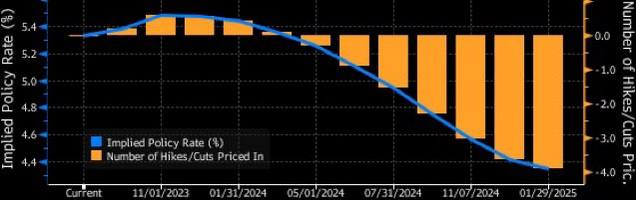
Both NVDA earnings and Jackson Hole, potential bearish catalysts, passed without too much damage. The implied policy rate has remained fairly stable following Powell's performance, with the market pricing in a latest Fed hike in November, while the rest of the curve is broadly unchanged.
From a macro point of view, not much has changed either.
The USD shows good relative strength and gold is stabilising, perhaps anticipating a yield reversal that bond markets are not pricing in yet.
And many are betting that the Chinese government's stimulus will eventually help the internal and global recovery.
The weak US (and European) PMI reading is not in line with third-quarter US GDP estimates, with the Atlanta Fed even forecasting +5.9%.
Turning to equity markets, it's hard to stay bearish after two potential catalysts have passed without much shock.
The only thing the bears can still bet on is some kind of regional banking crisis 2.0, March 2023 style. Even though the Fed's BTFP has proven extremely effective in containing potential credit events.
In this context, investors are looking for signs confirming the soft landing of the economy and this could be fuel for a new rally.
We also add that the last year of US presidential cycles tends to be bullish, as no president wants to run for office in a recession/bear market.
On the crypto side, the macro situation will certainly have a direct impact on Bitcoin as well, given the recent increasing correlation between stock indices and BTC.
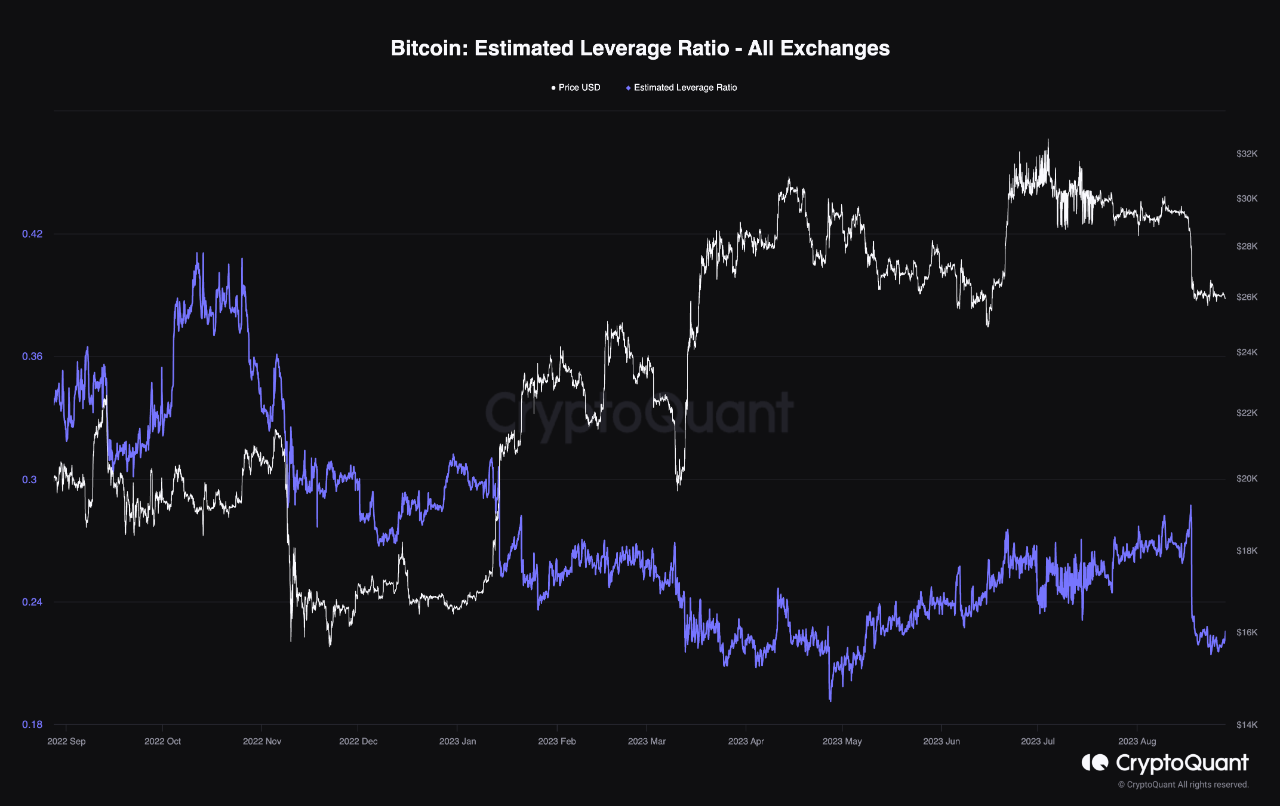
If we take a closer look at the market, we see that both estimated leverage ratio and general sentiment have plummeted drastically.
Therefore, it is reasonable to expect that at the end of the current consolidation phase, if we see a Q4 rally in the equity markets, then Bitcoin will also resume its upward march in an attempt to update the highs of 2023.

View original →The breakout of Bitcoin from its range has diminished the previously observed calmness in the ranging market during the past few weeks.
As we are aware, BTC tends to make decisive moves only in a few weeks each year, followed by months of accumulation, re-accumulation, or distribution phases.
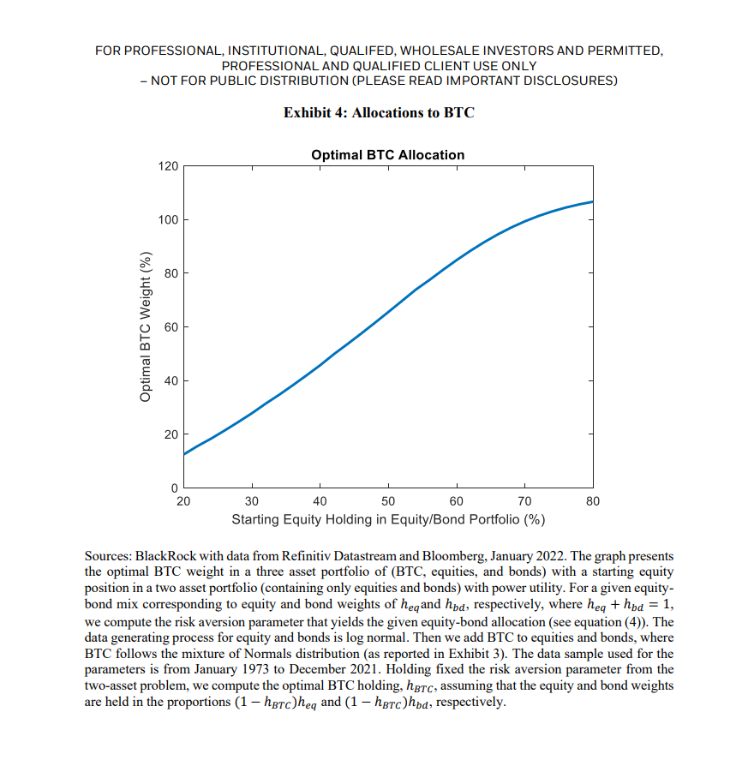
This characteristic essence of BTC has the potential to deliver incredible asymmetric returns over time. In fact, as shown in the attached chart from a BlackRock's 2022 report, the author suggests increasing exposure to Bitcoin for investors looking to optimize their classic 60/40 portfolio, leveraging BTC's significant positive skewness.
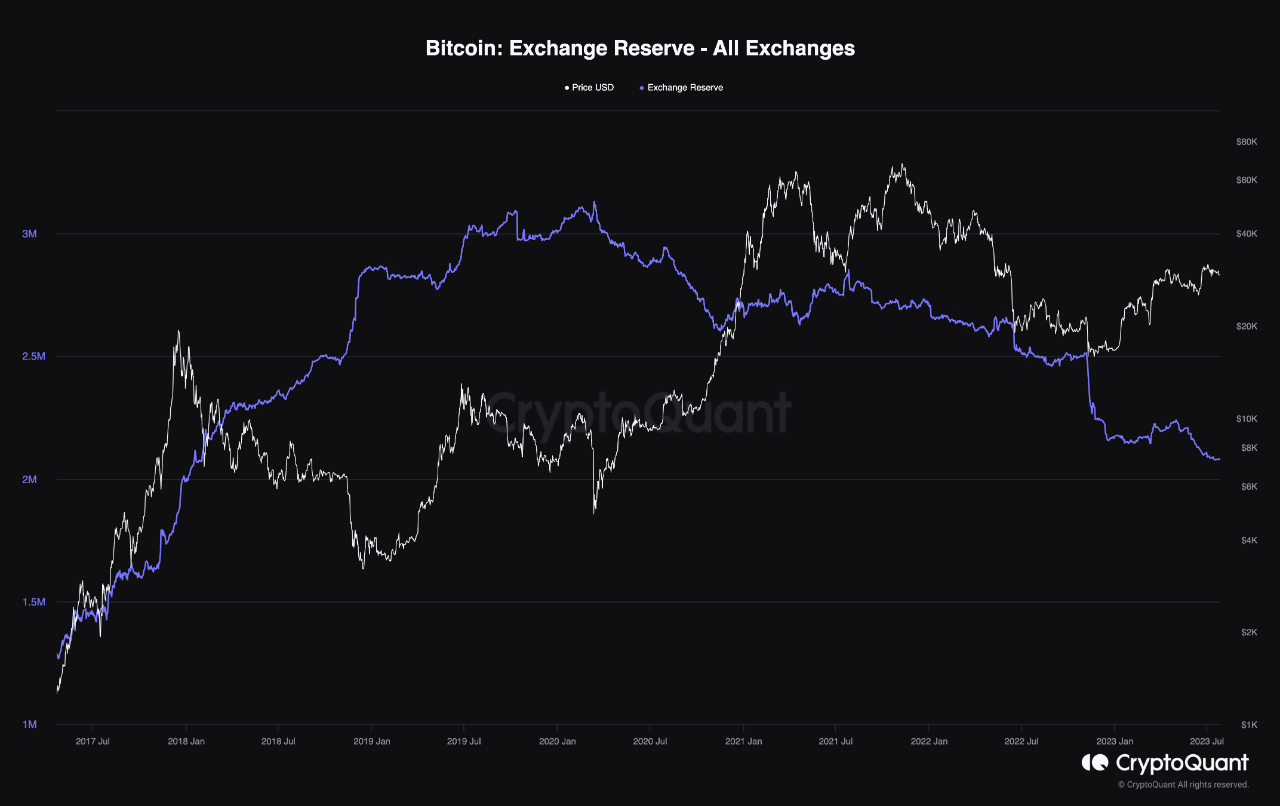
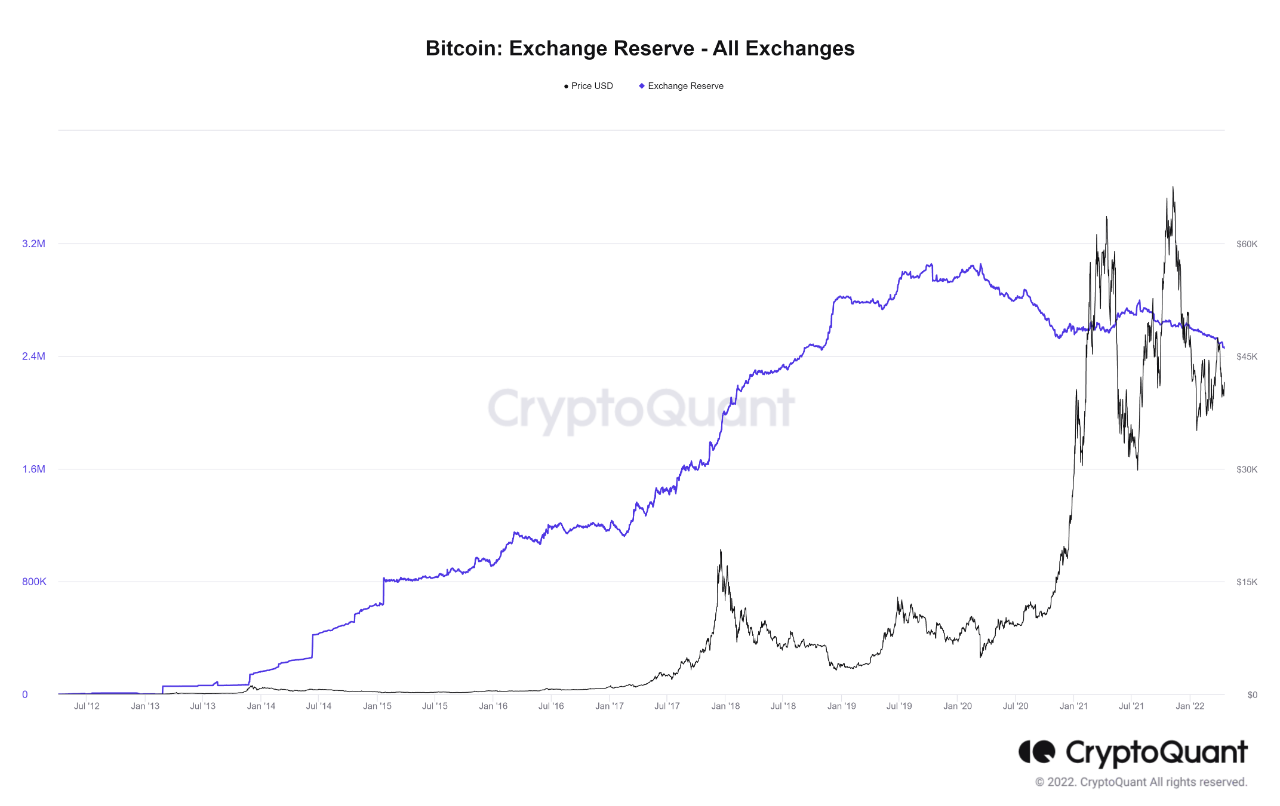
Furthermore, when considering the failure of lending and exchange platforms that adopted "Rehypothecation" as a business model (or even selling paper BTC), along with the decreasing circulating supply leading to increased illiquidity, as evidenced by declining BTC balances on exchanges (chart 2) approaching the levels seen in early 2018, the impact of Bitcoin's positive skewness promises to provide a potentially asymmetric return that could outshine the 2020 - 2021 bull market rally.
In conclusion, we will soon witness phase two of the global race for the acquisition of the remaining Bitcoin supply, and I bet it will become increasingly challenging to purchase 1 BTC for approximately half the average salary of an American.

View original →The liquidity crisis that has hit the international banking system is forcing central banks to review their long-term interest rate hike programs.
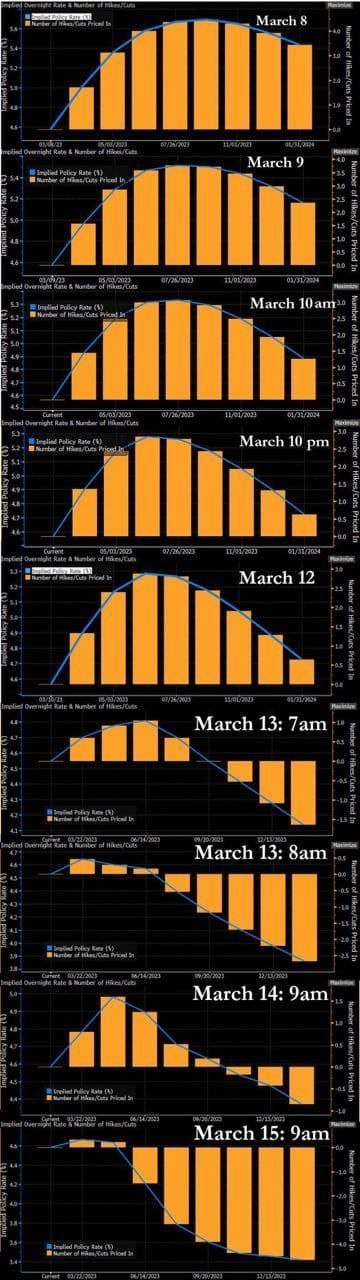
The implied policy rates of fed funds are impressive: within a week, we went from "higher for longer" (terminal rate at 6% and first cut in Q1 2024) to the first emergency cut already priced in June 2023.
And in the meantime, gold and bitcoin are flying.
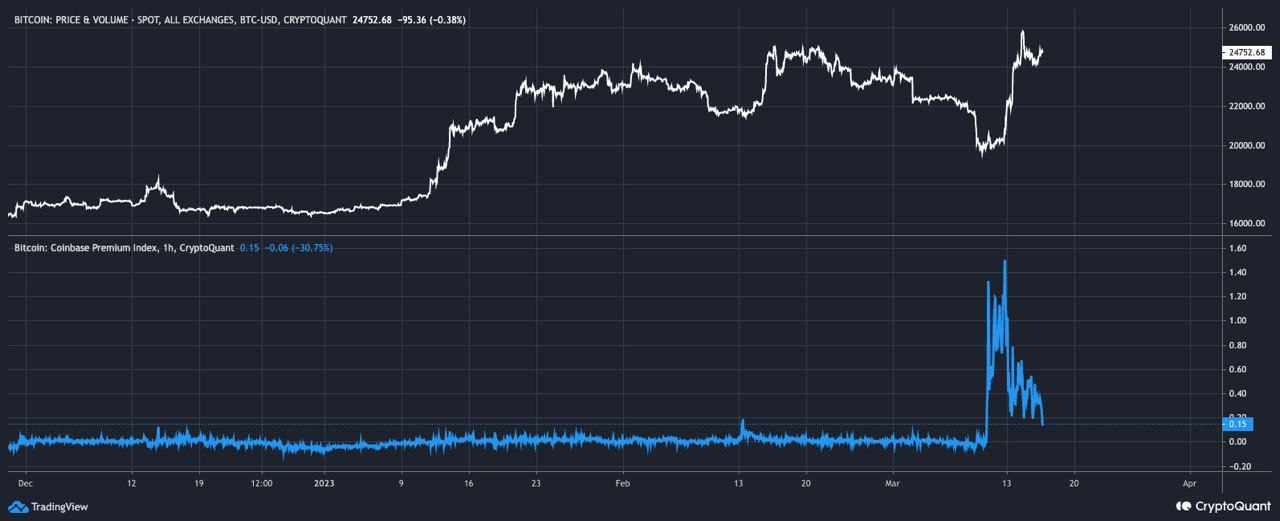
One of the elements that represented a clear buy signal emerged immediately after the bankruptcy and related bailout of the Silycon Valley Bank: the Coinbase premium. And if initially the spread could have had a double interpretation following the depeg of USDC, in light of the recent price action it is clear that instead the premium indicated the enormous buy pressure on the exchange due to the fact that American investors considered the $20K area as a very interesting level.
Finally, if we also take a look at the estimated leverage ratio, we see that we are far from the highs of October 2022, and this could represent further elements to fuel the rally when central banks formalize the pivot.
Pivot that shouldn't be far away, at least according to the implied policy rate seen at the beginning of the post. Moreover, just this morning, the investment bank JP Morgan stated that the Fed's Bank Term Funding Program (BTFP) will inject $2 trillion into the financial system.
And with a similar acronym, the buy the dip invitation seems pretty explicit.

View original →Bearish(Nuanced)1/4/2023
2022 is worth a decade in terms of the importance of the events that characterized it.
Main lessons learned:
1. The up-only era is over.
More than a decade of QE and zero interest rates produced the era of cheap money. Inflation put an end to it, with central banks embarking on a heavy tightening cycle.
2. End of globalization.
2022 has upset the current geopolitical chessboard.
3. Central banks will likely be forced to raise their inflation target by 2%.
Geopolitics and supply chain bottlenecks will cyclically produce inflationary blazes and central banks will need to adjust their inflation targets.
4. Bitcoin has confirmed correlation with stock indices.
The consensus for 2023 is for a flat crypto market with declining volumes and volatility, due to a lack of interest and new capital in the market.
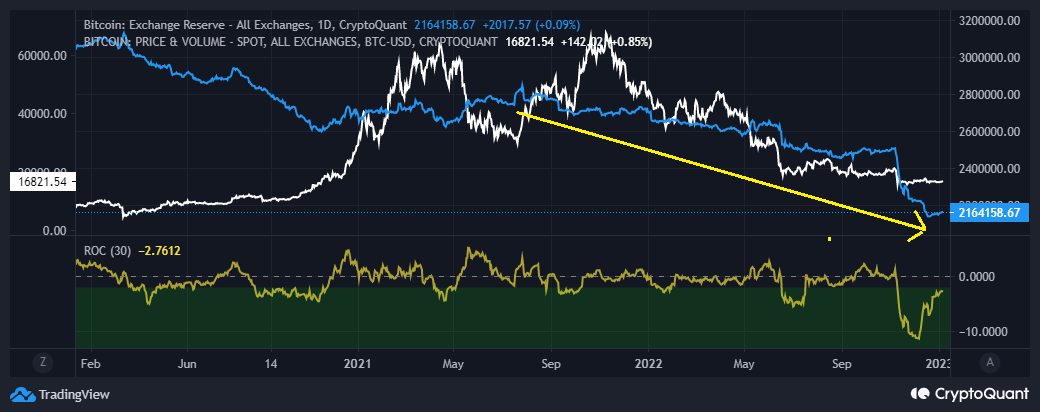
I agree, but we must not forget that even bear markets can offer significant relief rallies, with BTC reserves on exchanges at lows which will favor periodic contractions in supply.

View original →Bullish(Nuanced)BTC
10/31/2022 The liquidity crisis in the bond markets and the difficulties of the real estate sector, with mortgage applications falling to the lows of the past crisis, have fueled the prospects of a Fed pivot. However, demand and inflation keep the tension high and in a few days we'll know the size of the fed funds hike and the October data on the American labor market.
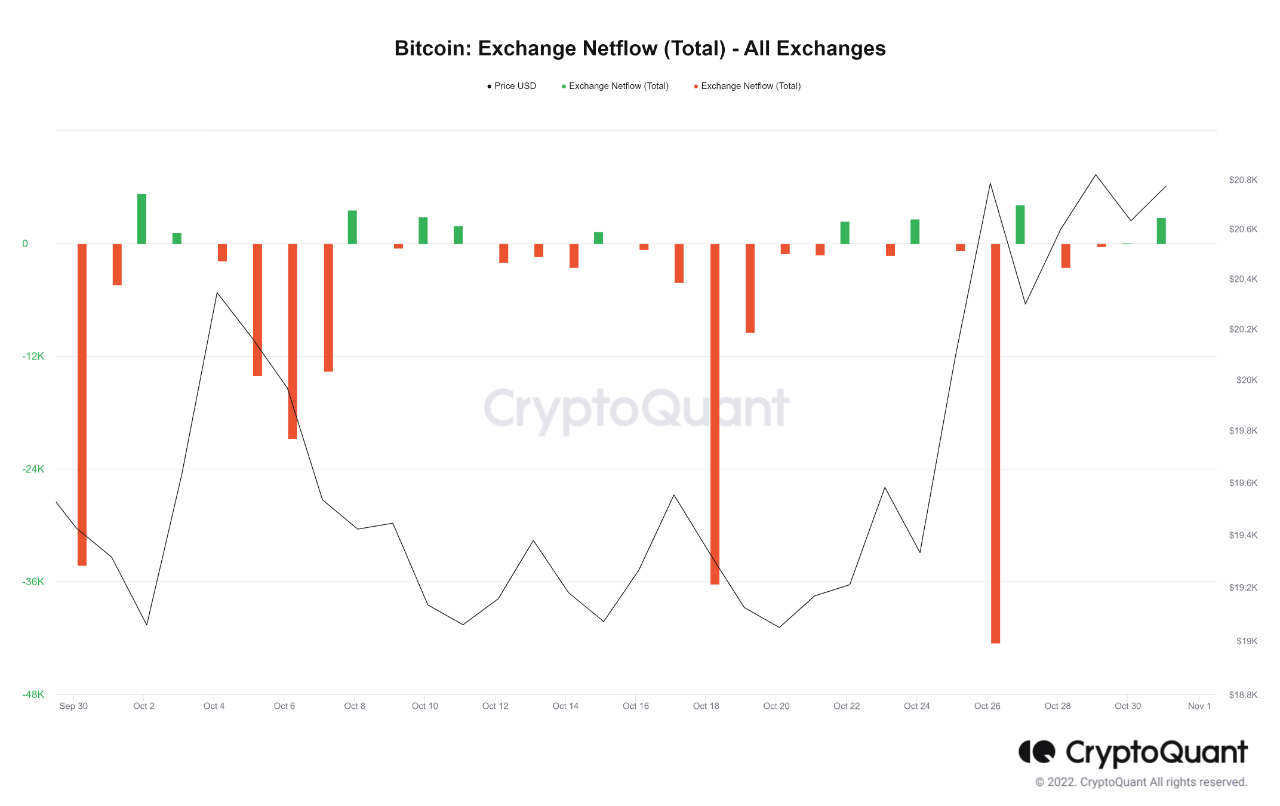
In this context, Bitcoin is demonstrating considerable resilience and despite the difficulties on traditional markets, in recent days there have been significant outflows from the main exchanges.
I believe that the next few days will be useful to understand the direction of the equity markets and, given the close correlation, also of the crypto market. We also add the tensions on the geopolitical front, with Russia suspending the wheat deal after the attacks on Sevastopol.
In short, it will not be boring and we will see if in such a scenario Bitcoin will have the strength to break the resistance at $ 21K.

View original →Bearish(Nuanced)4/21/2022
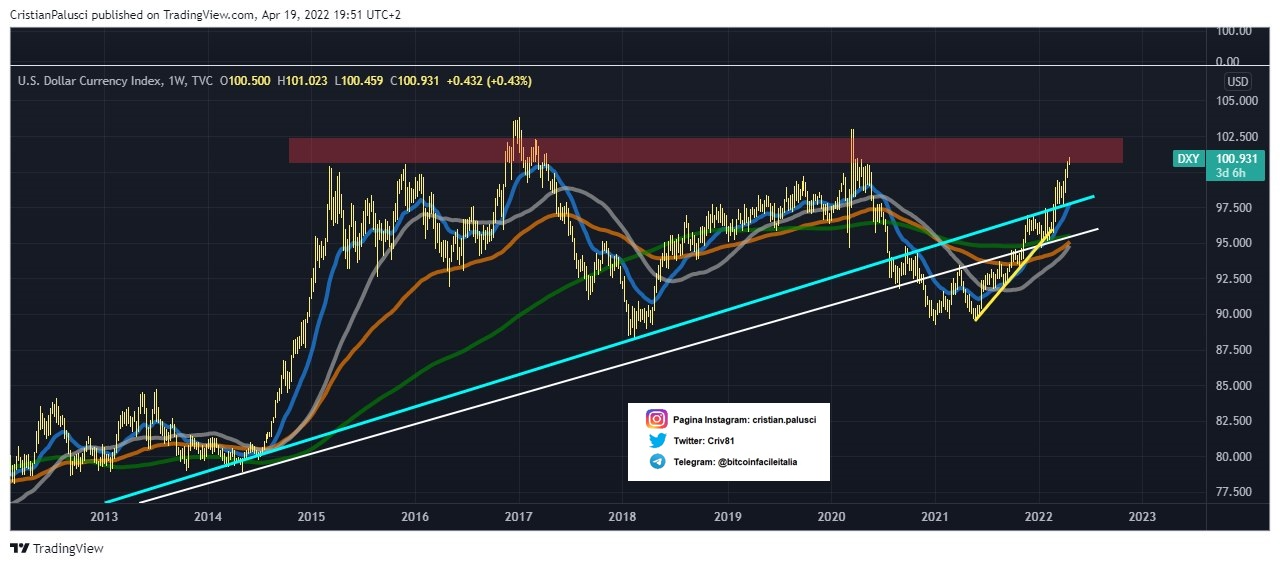
Despite high inflation in the US the dollar shows strength against other international currencies, but this does not mean that the bucks is doing well.
To see what is really happening, we need to look at how its value changes in relation to commodities and other asset classes.
Indices are still close to the highs despite the performance of most global companies not rising as much as their stocks and the raw materials and energy resources were at their peak even before the anti-Russian sanctions, in a context where demand is essentially flat.
With the mass of liquidity in circulation and inflation approaching double digits, investors do not have many alternatives to equities to adequately remunerate their capital.
Look at Ricardo Salinas Pliego, one of the richest people in Mexico.
Some days ago he said: “I definitely don't hold any bonds. I have a liquid portfolio: 60% in bitcoin and related stocks and 40% in tangible assets such as oil, gas and gold."
There's nothing else to add

View original →Bullish(Nuanced)BTC
12/8/2021 The fear on the market is tangible and I like this, in fact in these moments we have the best financial opportunities.
I think the time has come to seriously re-discuss the reliability of the classic four-year market cycle.
The reason is that today's market players are different from those of 2013 and 2017.
Now we have a significant presence of Wall Street (hence, the correlation with the S&P 500 index).
Everyone was expecting the peak of the current market cycle in December 2021 and clearly this was not the case.
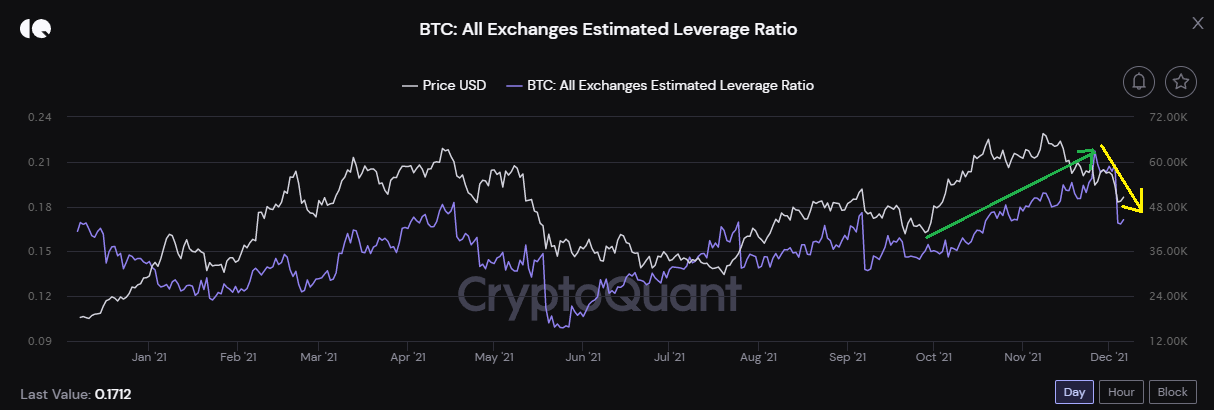
Indeed, the market has priced in a violent correction due to a perfect storm between Omicron variant, hawkish Fed and overleveraged derivatives (attached chart)
Now everyone is expecting a long bear market due to previous market cycles.
But I wouldn't be surprised if in the coming months, after a suitable period of consolidation, bitcoin returns to push towards new highs.
Generally when everyone expects one thing, the market moves in the opposite direction.

View original →

