


Bullish(Nuanced)7/27/2026
BitMEX and BitMart collapse but capital stays in crypto—investors flee to Binance and OKX instead of exiting. Zero market-wide liquidity crisis as funds migrate to trusted exchanges, breaking...
View original →Sentiment timeline shows relative sentiment within this analyst's history. A perma-bull showing 8 bullish : 2 bearish in a bear market sets that as their baseline. If you notice any errors, claim @theKriptolik to submit corrections.
BitMEX and BitMart collapse but capital stays in crypto—investors flee to Binance and OKX instead of exiting. Zero market-wide liquidity crisis as funds migrate to trusted exchanges, breaking...
View original →When we examine the total stablecoin supply, we see that the circulating supply has been steadily increasing. The rise in stablecoin supply is a positive development for the growth of the crypto market. Looking at where this growing flow of supply is directed, we observe that while the amount of stablecoins entering spot markets is increasing, the inflow into derivatives (futures) markets has remained stable. This indicates that the recent uptrend over the past week is fundamentally healthy. Stablecoins entering spot markets help make price increases more sustainable and well-supported, which in turn reduces market volatility and ensures the continuation of a steady upward momentum. 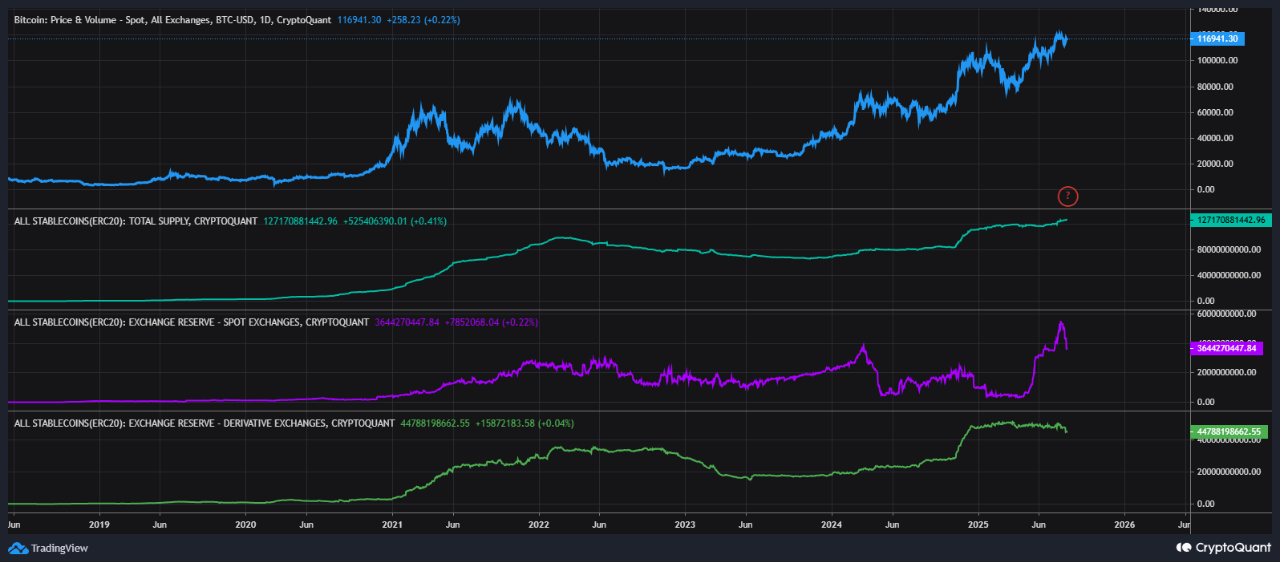 
View original →ETF companies usually create the strongest buying pressure in the market. If the decline in Bitcoin ETF volume isn’t part of a strategic move, it suggests that ETF companies’ demand for Bitcoin is decreasing. When their demand drops, the buying pressure on the BTC order book weakens, which can lead to a price decline. Unless the decreasing demand for Bitcoin is offset by a rising interest in Ethereum, this is a negative signal for crypto investors. As seen in the chart, there’s no positive divergence in Ethereum’s volume either — and this indicates that things could take a turn for the worse in the short term. 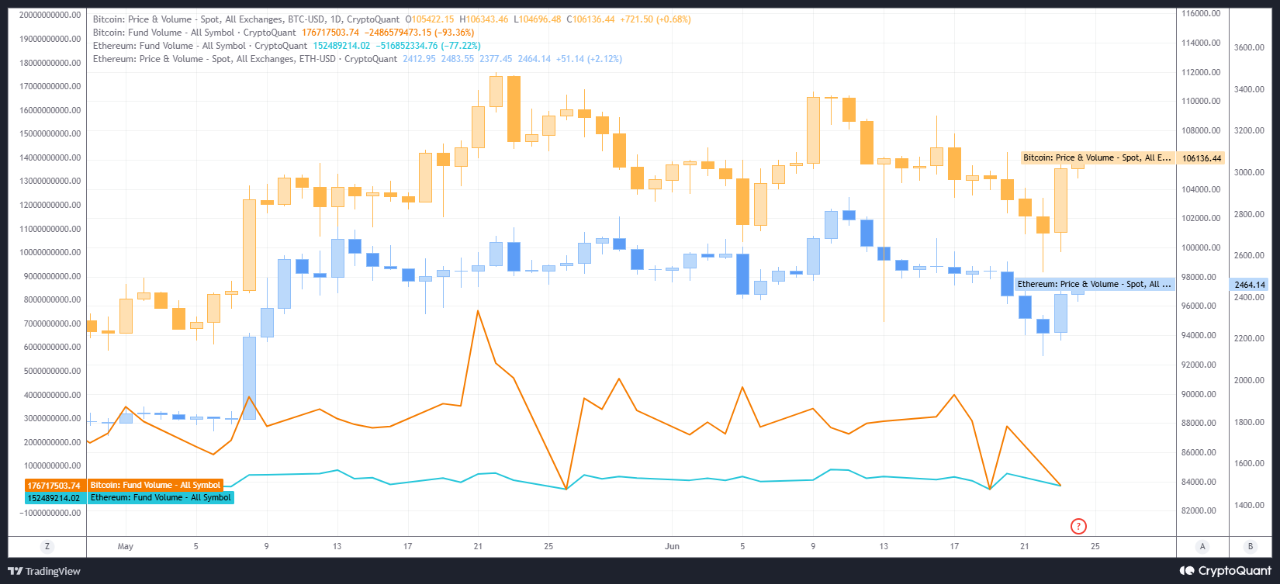 
View original →First, let’s start with the basics: What is Realized Price? In simple terms, the Realized Price is a metric that recalculates the market value of a cryptocurrency based on the price at which each coin last moved on the blockchain. Don’t worry if that sounds too technical — by the end of this post, it’ll all make sense. Let me break it down in an easier way: Each ETH is evaluated based on the price it was last transferred at. When you average out all those prices, you get the Realized Price. This gives us a much more “realistic” sense of what the average investor paid for their ETH — and it often paints a very different picture from the current market price. What Happens When ETH Price Falls Below the Realized Price? Realized Price often acts as a strong support or resistance level: Above it? Strong support. Below it? Strong resistance. To help you better understand its implications, let’s break it down into a few key points: 1. Increase in Loss-Driven Selling When ETH drops below the realized price, most holders are suddenly in a loss position. In times of market fear and uncertainty — like now — this often leads to panic selling. 2. Market Psychology Drops below the realized price often mark the capitulation phase, where investors lose confidence and begin selling en masse. Historically, these moments have occurred near the end of major downtrends. 📈 3. Historically Indicates Market Bottoms Past data shows that whenever ETH dips below its realized price, it's often coincided with long-term bottom zones. These periods have consistently been followed by strong recoveries — making them strategic accumulation points for long-term investors. You can see this clearly reflected in the chart below. Final Thoughts Ethereum falling below its realized price signals widespread panic in the short term — but in the bigger picture, it suggests we may be trading in a historically und 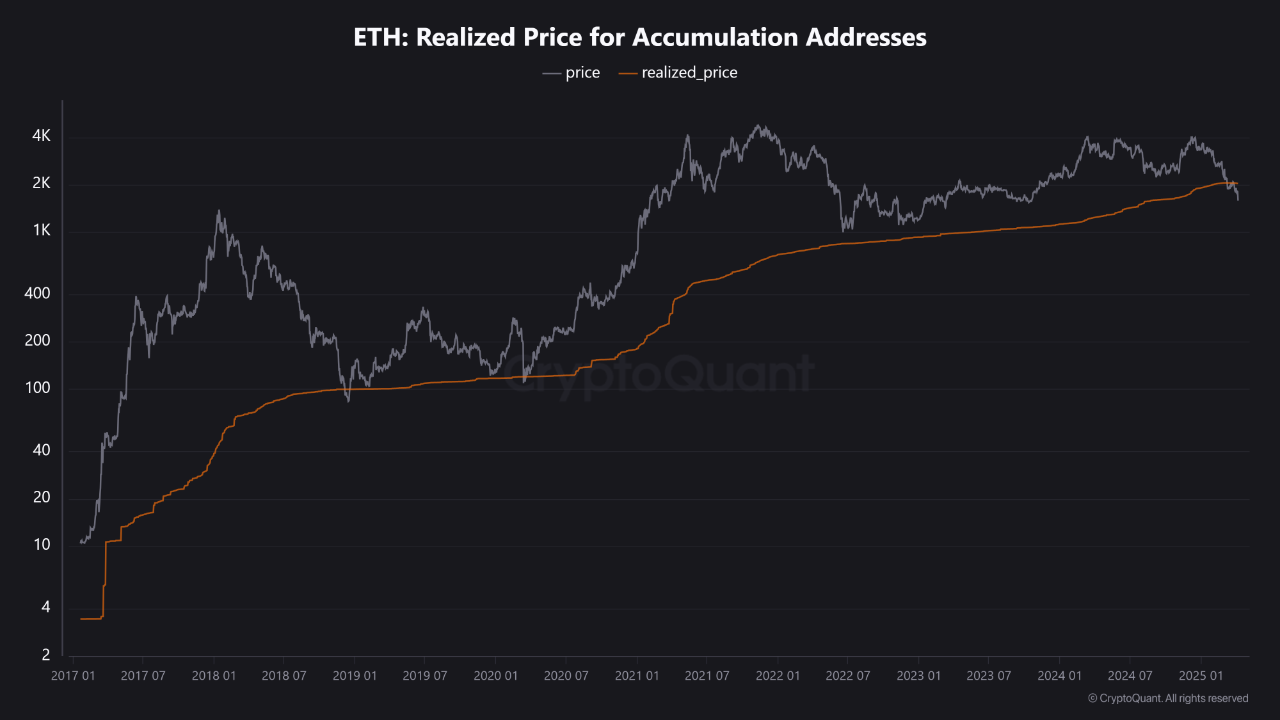 
View original →When we analyze the volume and circulation of stablecoins, which act as fuel in the market, we see that despite a rapid increase in total stablecoin supply since November 2024, this has not necessarily benefited the market or investors significantly. As shown in the chart, while the total stablecoin supply has increased, stablecoin reserves on spot exchanges have declined, whereas reserves on derivatives exchanges have risen sharply. This indicates that price movements and market liquidity are predominantly driven by derivatives trading rather than spot markets. As long as stablecoin volume in derivatives exchanges does not flow into spot markets, we are likely to continue seeing high volatility in the short term. In other words, the market is experiencing a demand crisis for spot trading rather than a liquidity crisis. Until this distribution normalizes, avoiding high-leverage (high-risk) trades may be the most prudent approach.  
View original →Due to global tensions and uncertainty in financial markets, many Bitcoin investors are selling at a loss. However, the majority of these sales come from short-term investors. On the other hand, long-term investors are mostly selling at a profit. One of the main reasons for this is that Bitcoin's price is near all-time highs. Overall, panic selling dominates the market. 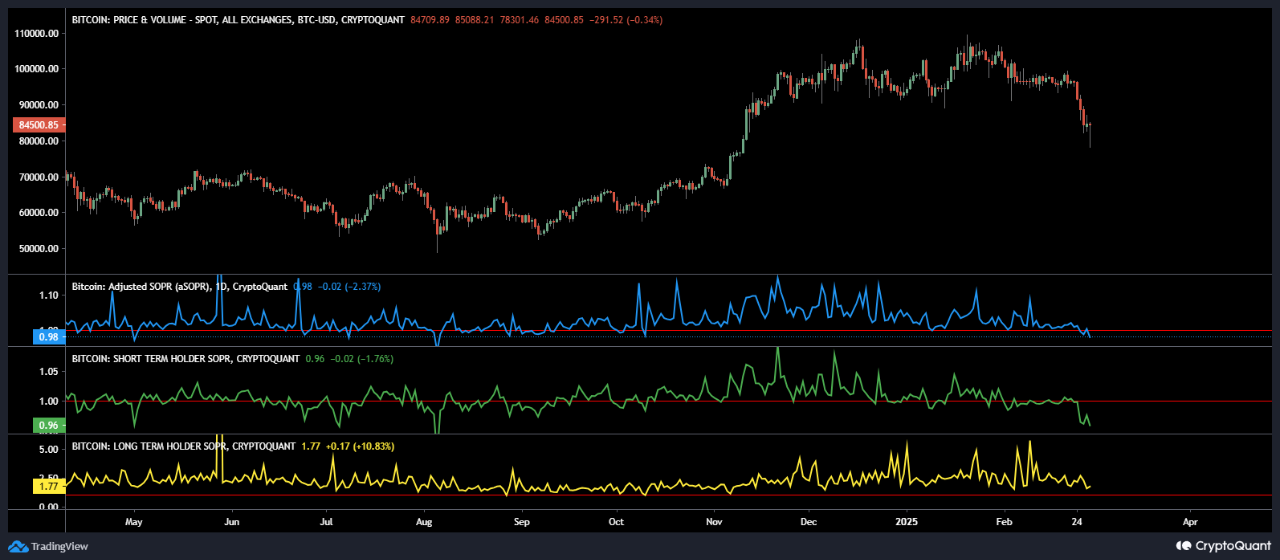 
View original →Although Bitcoin has reached its all-time high price, the rate at which Bitcoin holders are withdrawing BTC from exchanges to cold wallets remains higher than the rate of BTC flowing into exchanges. This supports the idea that investors believe Bitcoin is undervalued at its current price. A funny yet true argument: 1 BTC = 0.1 million dollars :) 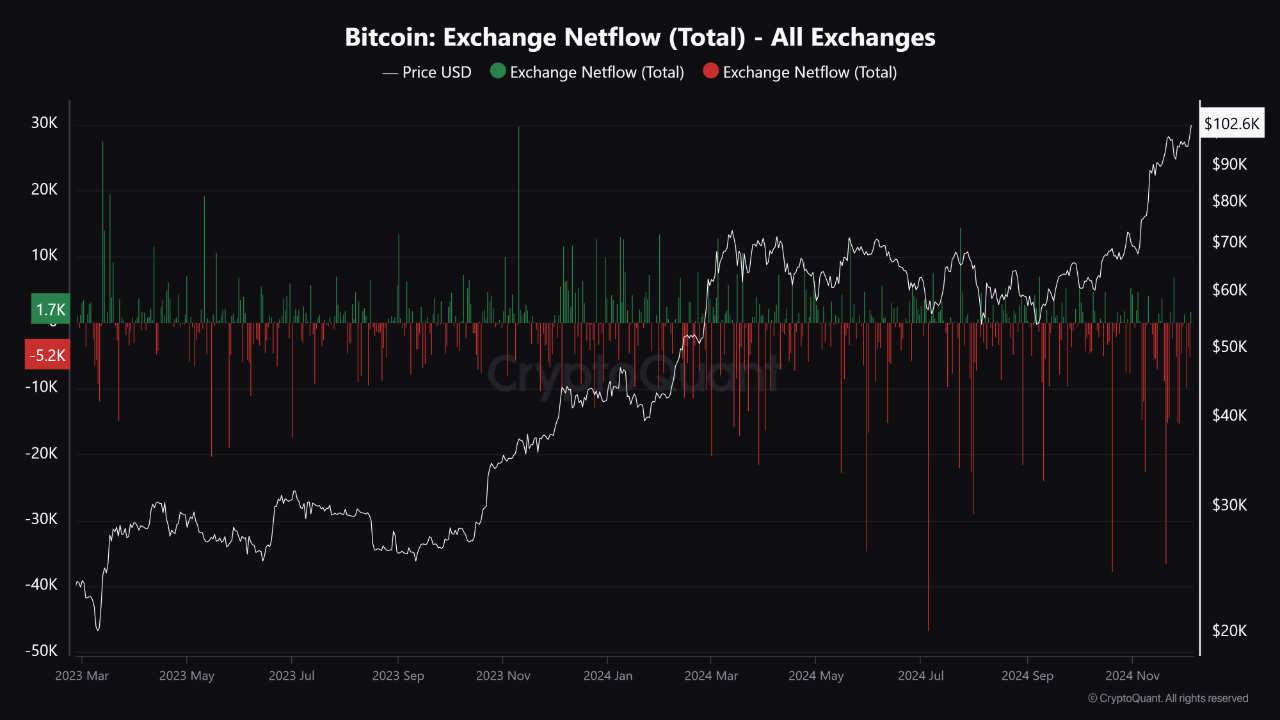 
View original →Since its launch, XRP has never caught the attention of whales to this extent. XRP whale activity is at an all-time high, indicating that XRP has now been embraced as a valuable asset by whales. 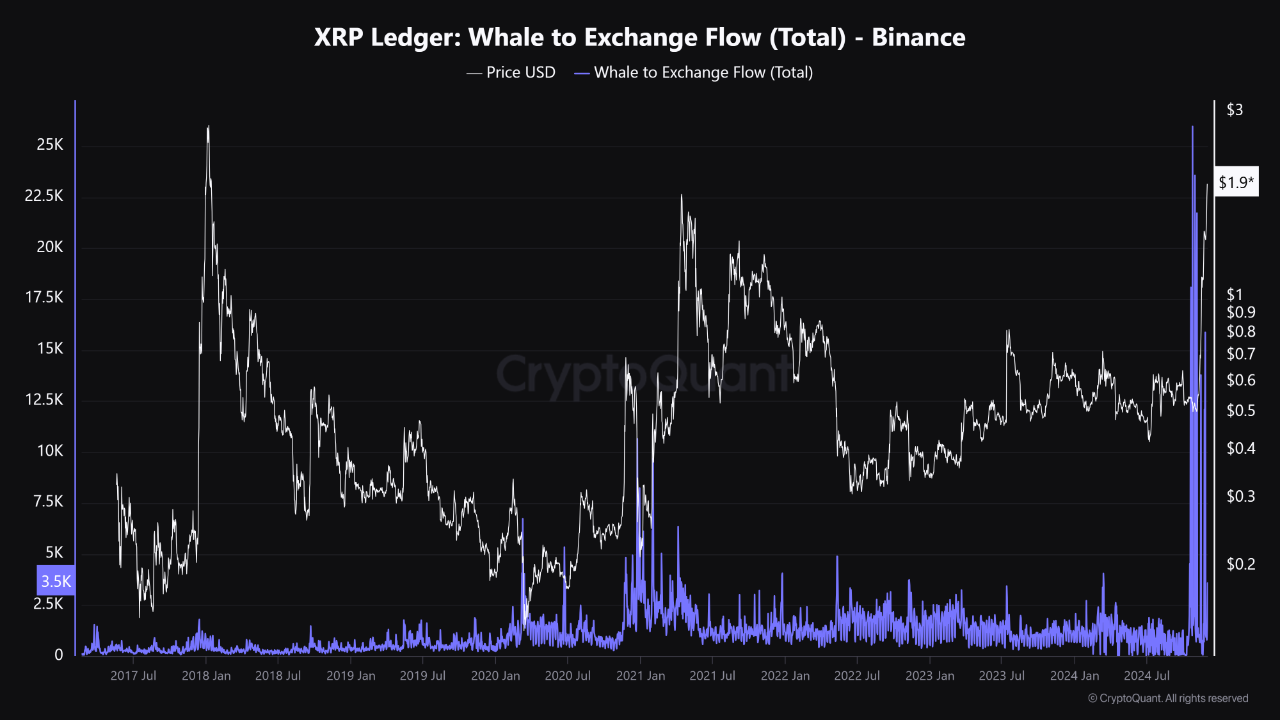 
View original →When we examine the ETH Exchange Supply Ratio, we see that despite Ethereum’s low price, the amount of Ethereum held on exchanges has dropped to 2016 levels, even as the circulating supply has increased. This indicates that many investors still view Ethereum as a safe haven and continue to accumulate it.  
View original →Stablecoins entering spot exchanges act as fuel in the market. To confirm the continuity of trends, it is necessary to examine the stablecoins entering or leaving spot exchanges. When we look at the stablecoins entering spot exchanges to verify whether the ongoing uptrend in Bitcoin will continue, it is observed that there is a continuation of a higher-than-normal influx of stablecoins. This suggests that, barring any additional news flow, the Bitcoin bull market has not yet ended. 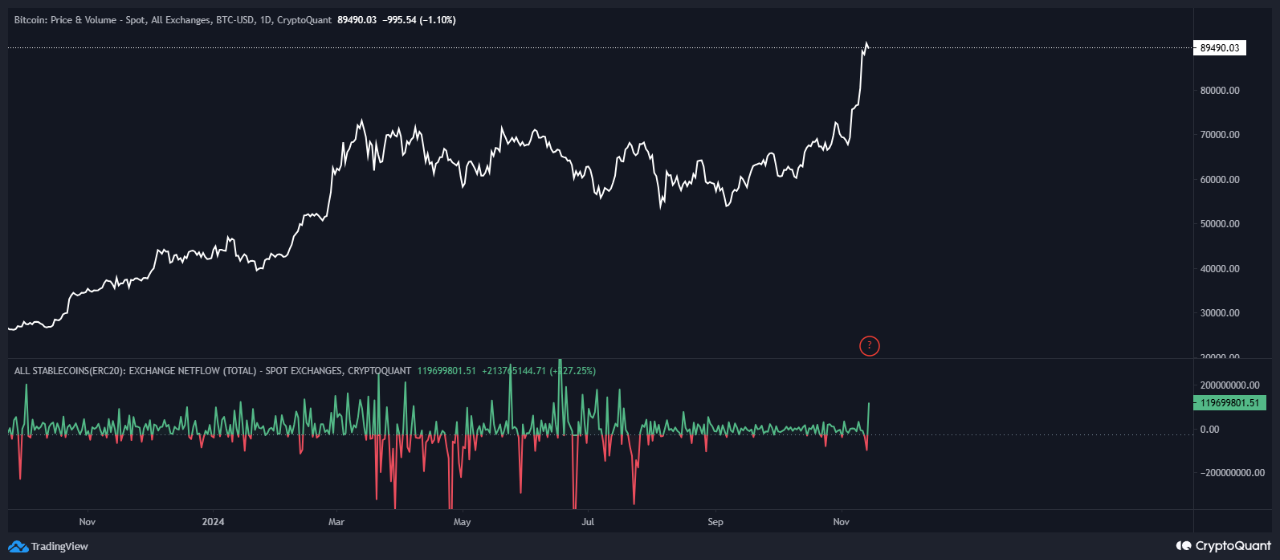 
View original →