Bearish(Nuanced)BUSDBNB
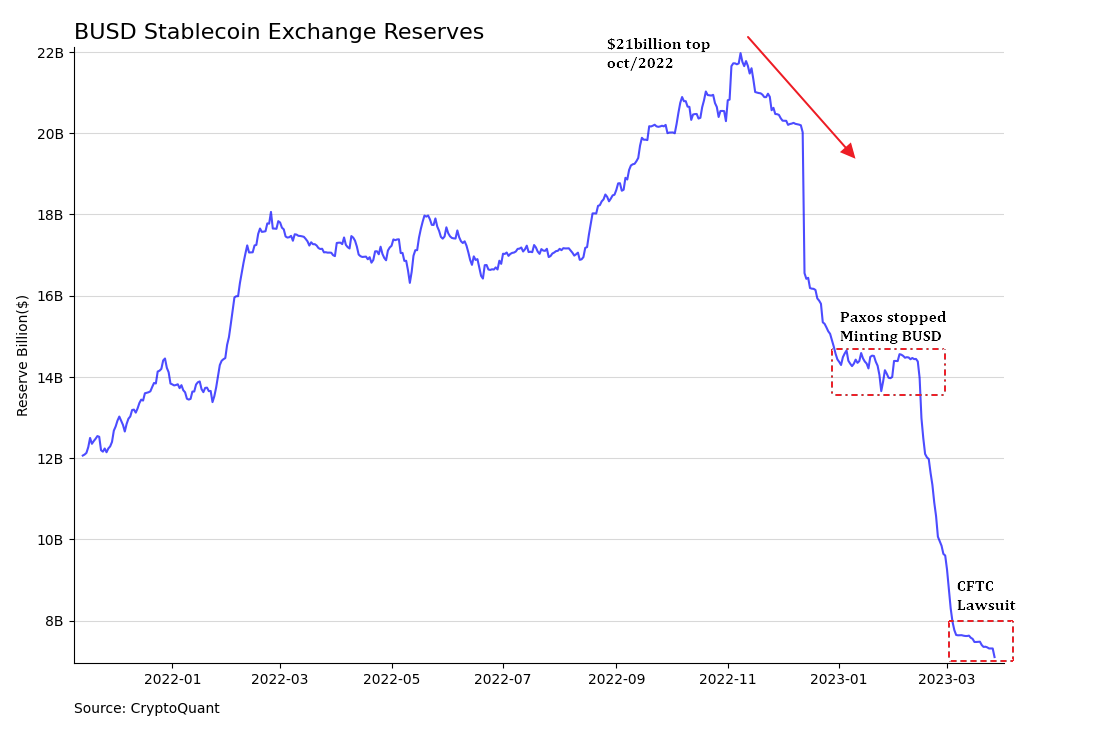
3/28/2023 The recent news about the CFTC suing Binance and its CEO CZ seems to have had an impact on the BUSD exchange reserves. According to Crypto quant Data, the BUSD exchange reserves have dropped by 500 million since the news broke. This development is not surprising given that Binance is a major player in the cryptocurrency space, and any regulatory action against it is likely to affect its associated projects and partners. It remains to be seen how this lawsuit will play out and what the long-term implications will be!

View original →Bullish(Nuanced)BTC
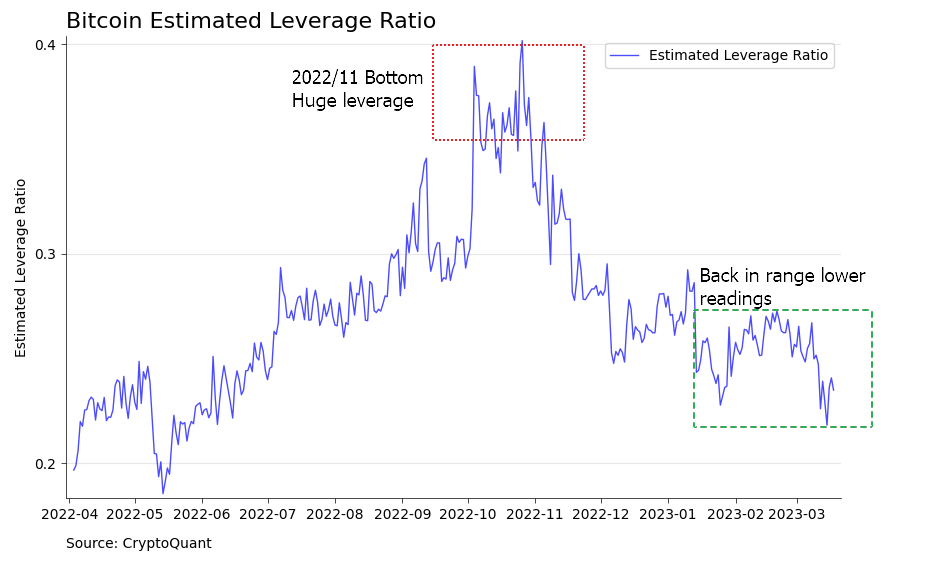
3/19/2023 Despite recent rallies, there has been a significant drop in the estimated leverage ratio for BTC margined Bitcoin futures. A more cautious approach among traders and suggests that the market is not yet heavily influenced by latecomers who tend to use excessive leverage.
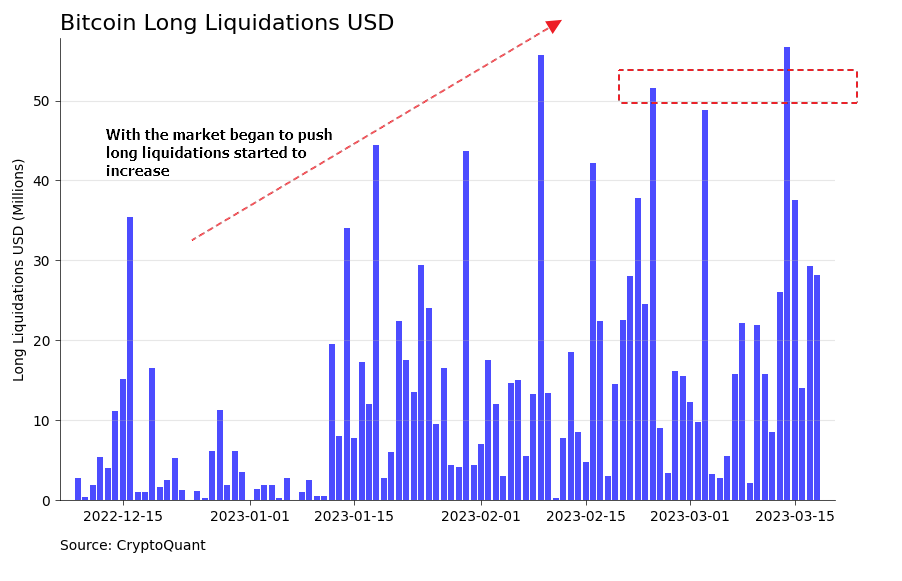
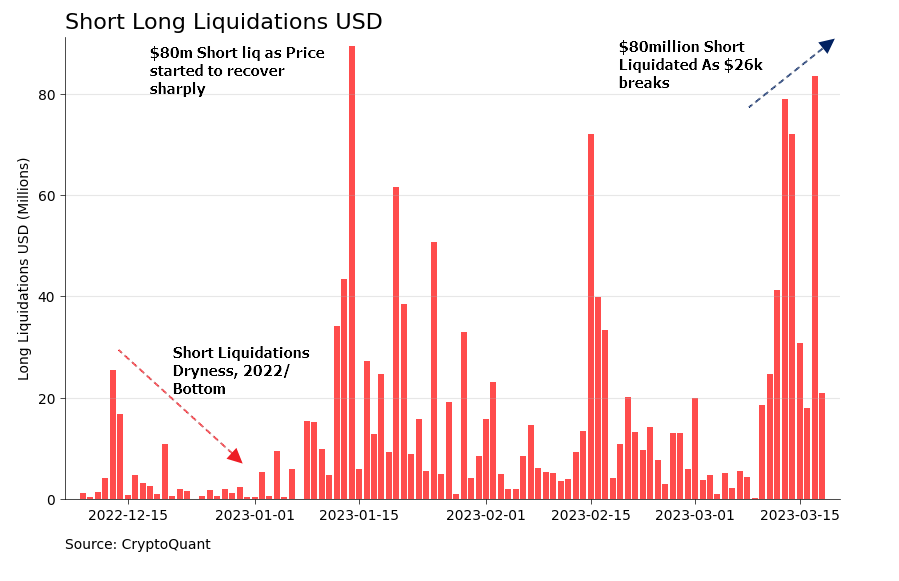
Another important metric to consider is Long/Short Liquidations, as it provides insights into market sentiment. In October 2022, when the price of BTC was trading around $15,500, we observed a dryness in Short liquidations.
However, as the price started to make a sharp push upward, we saw $80 million in Short liquidations at the start of 2023, indicating the number of traders who were short.
We are currently seeing a similar trend, with $80 million in Short liquidations following the break of the $26,000 price point.
Notably, there are no major long liquidations nearing the $25/$30 million range. As we monitor this metric, we can gain a better understanding of market sentiment and potential price movements. #Bitcoin #Crypto #OnChainMetrics
The current on-chain metrics outlook for Bitcoin shows a slight positive bias, with not much heavy short positioning and less involvement of leverage. Short positions are getting rekt as the price breaks new highs, while long liquidations stay within the normal range.
the ongoing banking crisis creates more risks in the market, and it will be interesting to see how the US deals with this situation and how the market reacts. So far, the banking crisis has proven to be positive for crypto, as more investors shift funds into the crypto economy..

View original →Key Summary:
1- Bitcoin's Best Week : A Defiance of Negative Market Sentiment
1- Biggest Week for Crypto is up more than 11% so far this week
2- And open interest of Bitcoin starts to decrease
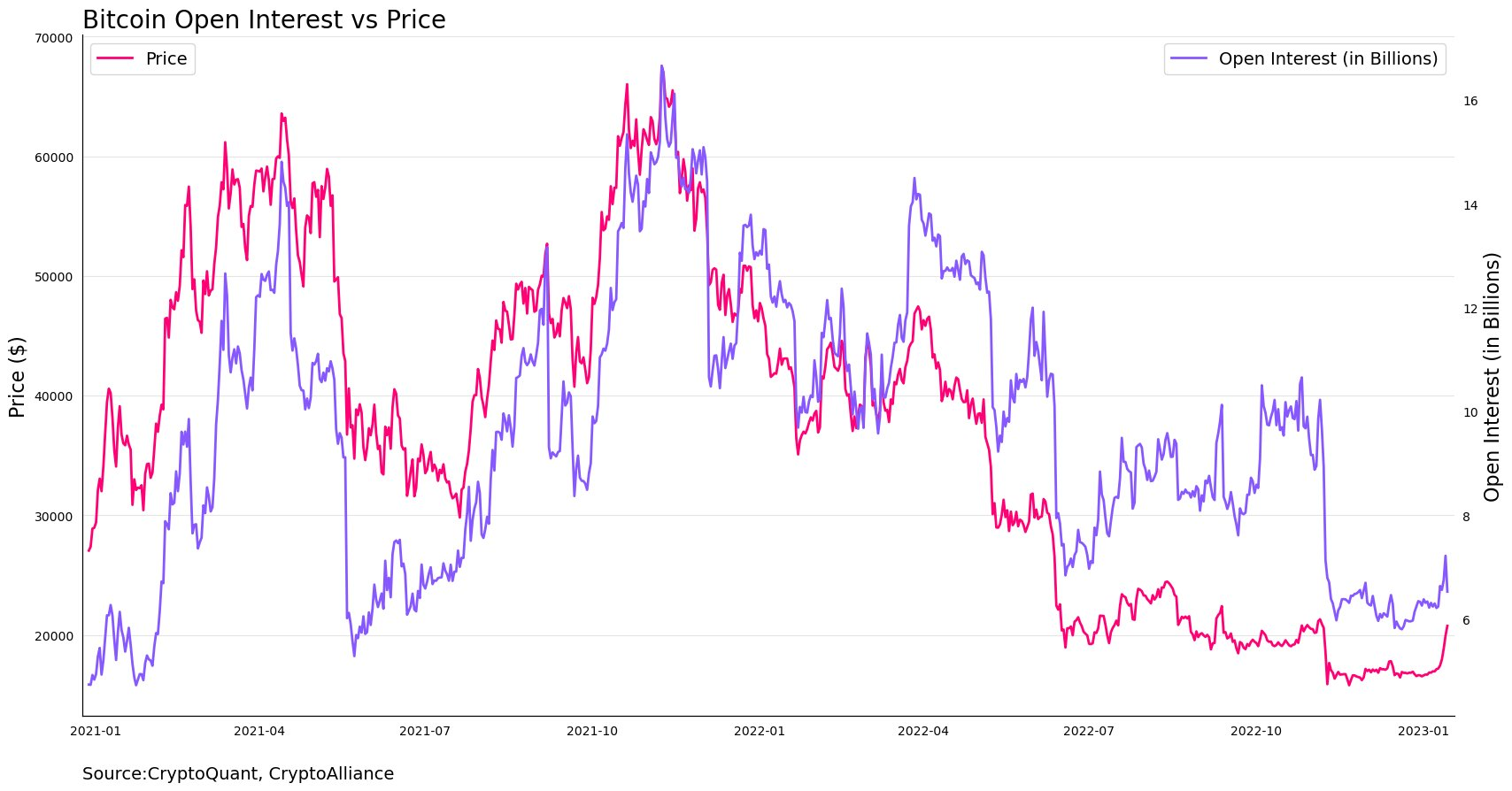
It's a promising start to the new year for the tokens, which in 2022 lost more than 60% in its second-worst annual performance on record. Solana tokens are up 60% on a cumulative basis and are ranked as the top sector abroad. While the rally in bitcoin is becoming the most hated rally where many miss out and watching from the sidelines, it starts to hate the rally. On the other hand, we saw $700 million shorts liquidated in just a few hours after Bitcoin breaks $21,000. However, Open Interest for Bitcoin starts to drop again, (Graph;1 below) indicating a correction or reversal in bitcoin prices. It would be interesting to see where the market leads in the next few coming days and weeks. I would suggest investors and traders to keep an eye on open interest, which is currently starting to turn. OI is one of the metrics that traders and analysts often use to gauge the market sentiment and predict price movements. That's it for now, until next time; Crypto Alliance

View original →Bearish(Nuanced)BTC
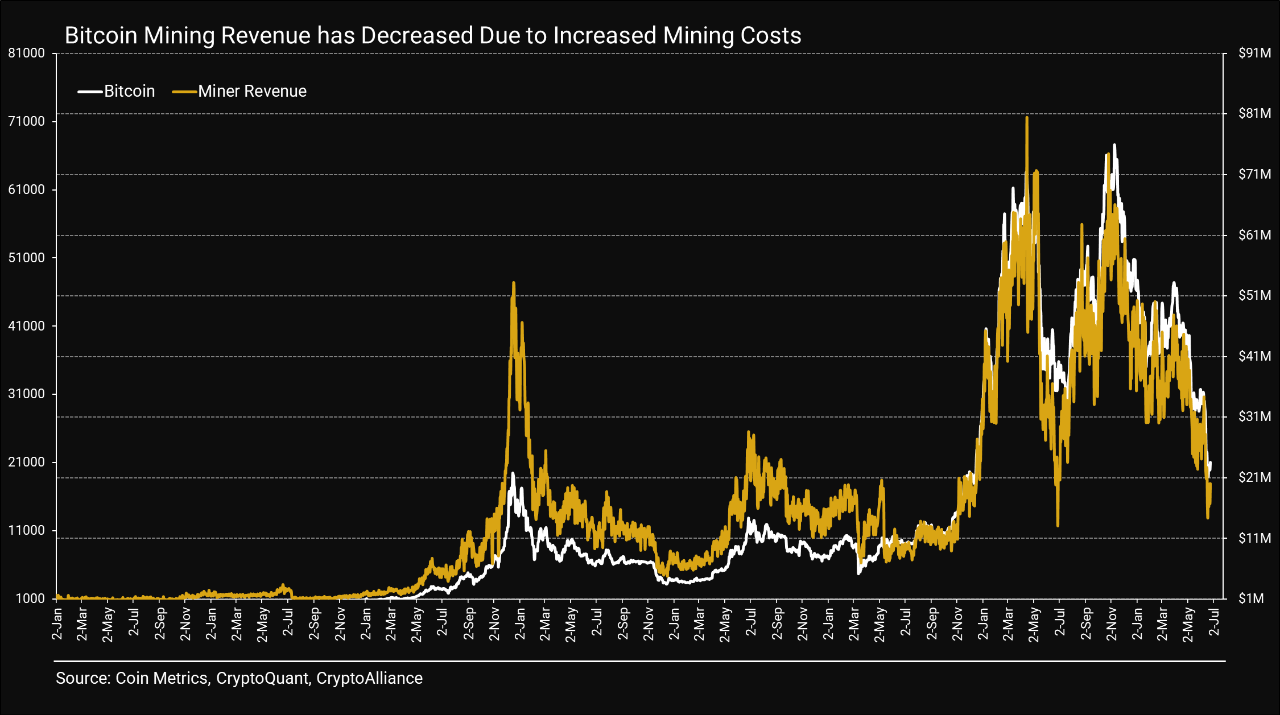
6/24/2022 Bitcoin miners are experiencing record-low Revenue. Miners earn Revenue from two sources: protocol-integrated subsidies and transaction processing fees. However, Bitcoin miners rely heavily on block subsidies to generate revenue; block subsidies account for more than 90% of their revenue. Since August 2021, their monthly revenue has consistently exceeded $1 billion, but in May-June 2022, it fell below $1 billion. Therefore, maintaining Bitcoin's security (approximately measured by total miner revenue in USD) at current levels over the long term is contingent upon (1) generating more aggregate transaction fees, via the network, (2) sustained increases in BTC's price, or (3) lower mining costs or a combination of these three factors. For instance, if Bitcoin's total transaction fees remain unchanged, the BTC price must double every four years for miner income to remain constant. It would be interesting to see how miners tackle it if the BTC price slips below $10k.

View original →Since April, the hash-rate of Ethereum has dropped by 10% because mining has become much less profitable.
Over the past three months, the price of Ethereum has trended downwards from 3,500 to a low of 900. The drawdown in prices means that miners now earn less in dollars. The triple toxic mix of reduced income, increased operating costs, and the impending merge has caused some miners to stop their mining operations. This means that miners have to sell their balances to pay for mining and other costs of running their business. It is likely that many newly started mining operations will close down or be acquired by some of the larger, more established ones. It would be interesting to see how miners tackle this in upcoming days if the (BTC-ETH) price dropped more.


View original →The sell-off in the crypto market was far more drastic than in equities, but that’s to be expected given how influential leveraged trading is on short-term price moves in crypto.
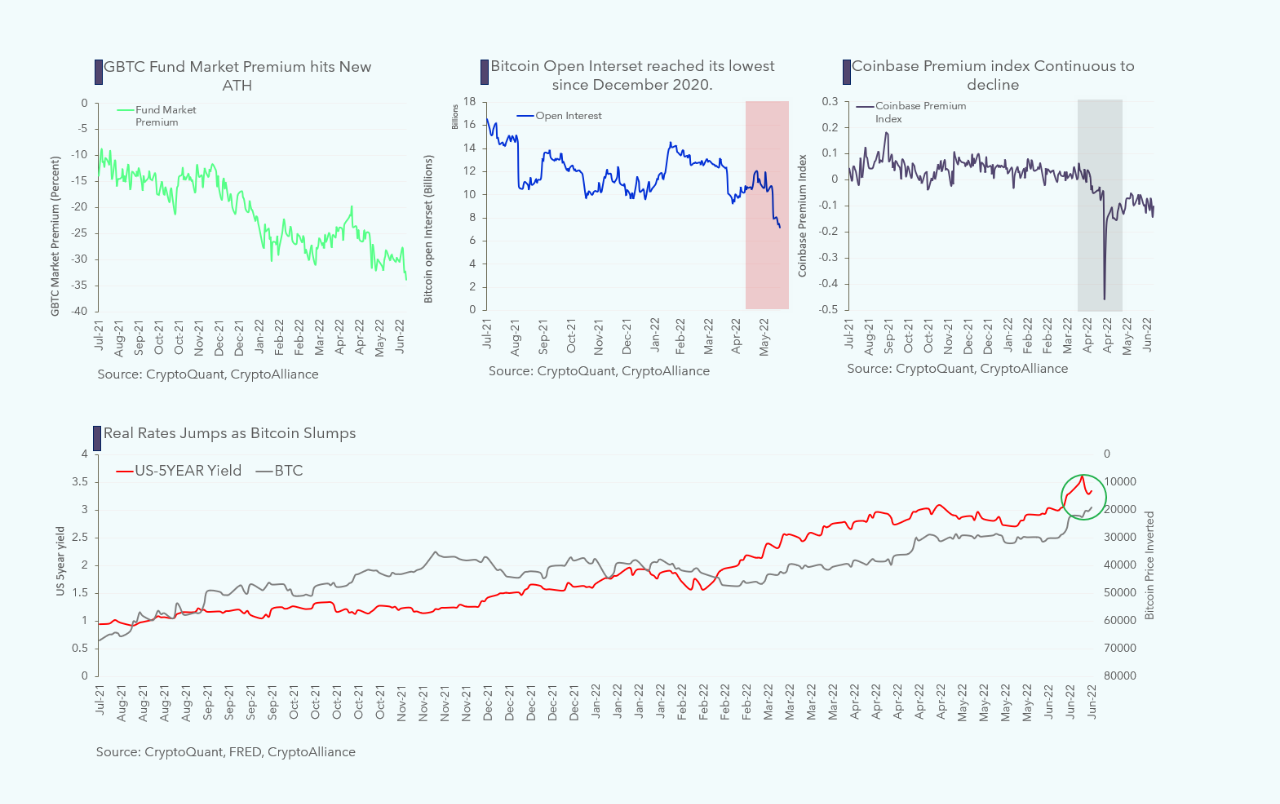
Bitcoin funding rates have been dropping over the last couple of weeks. Even as the price of the digital asset has fallen, prompting some to call it a "discount," these funding rates have remained negative.
On the other hand, the GBTC premium hit a new ATH (all time low). As 3AC fails to meet margin call requirements this week, a marked gap is opening between GBTC and its competition. According to a January 2021 SEC filing, 3AC owned almost 39 million units of GBTC at the end of 2020.
Real yields, which measure the difference between inflation expectations and nominal Treasury yields, also increased this week; higher real rates are also less favorable for non-income producing assets like BTC. If the US enters a recession, it will be interesting to see how Bitcoin Perform for the first time in a recession.

View original →Bearish(Nuanced)6/16/2022
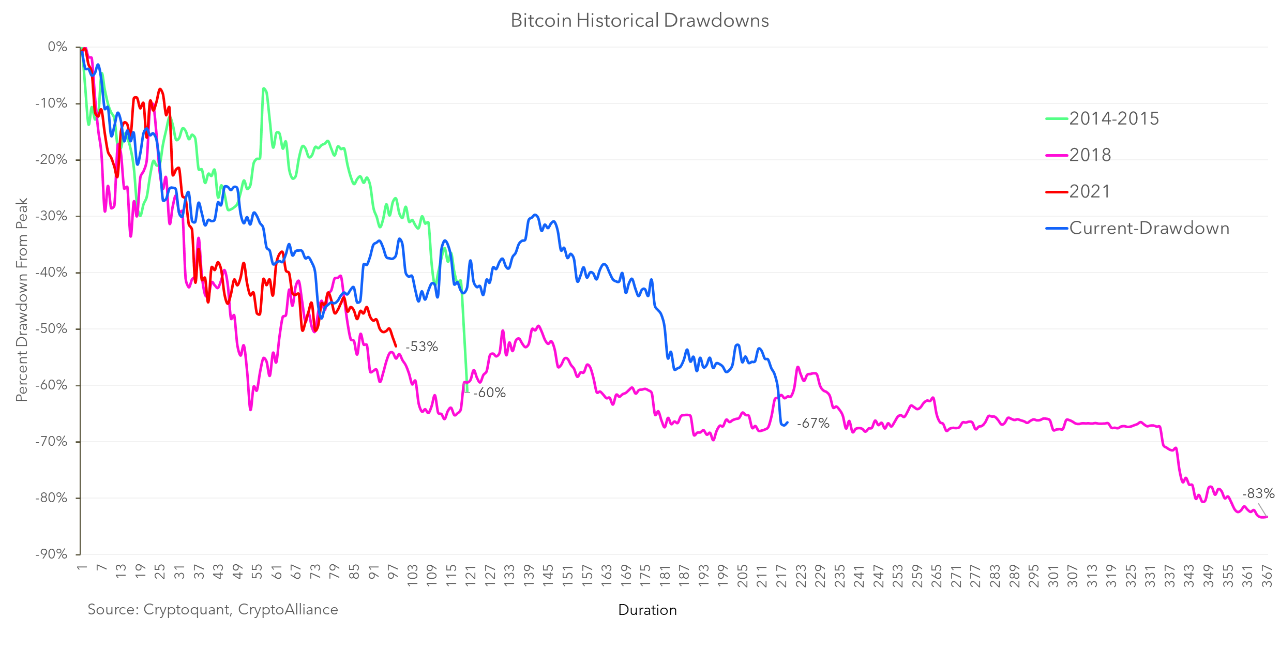
The current drawdown in Bitcoin (BTC-USD) since its all-time high in November is now circa -67%. Again, this is to be expected from such an asset class, and as shown below, historically, bear markets for BTC have seen prices fall by -75% to -90%. History would tell us there may be more pain ahead. Even though crypto and equities have a high level of correlation to the underlying cryptocurrency markets, as they are typically much more volatile, a 40% drawdown in Bitcoin is widely seen as a correction, and a drawdown of -70% is considered a bear market. In fact, Bitcoin has spent more than 80% of its history in a drawdown of -20% or more. While looking at historical drawdowns vs the current drawdown, we can see that all major historical bear market drawdowns bottomed around a -75% to -85% range. Whereas the current drawdown is around -67%, one can use this metric to track the bottom levels that could be in the -75% to -85% range.

View original →Bearish(Nuanced)BTC
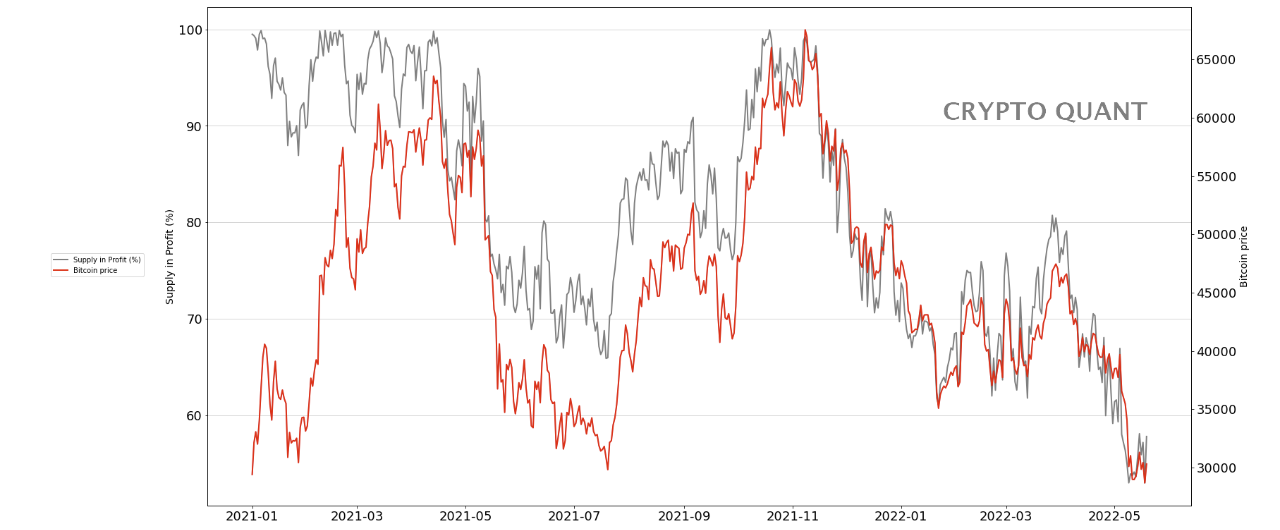
5/20/2022 Bitcoin’s recent price action has caused the percentage of BTC in profit to fall to levels not seen since July last year, and it currently stands at 57.77%. This suggests that over 30% of Bitcoins have exchanged hands within the last year, when the cryptocurrency was trading above current prices and these entities are holding on to an unrealized loss.
With BTC’s price action turning positive over the last few hours, some of this may have trivially changed. And the percentage of supply in profit hitting lows tends to point to a mid-term bottom — but not always. (chart-1) attached below.

View original →Bearish(Nuanced)BTC
5/15/2022 GBTC discount to BTC spot price took a massive hit, and is down -27% against spot prices as of yesterday. Since the start of the year, GBTC has plunged -46.42% compared to BTC which has declined -34.12 %.
Investors of GBTC must go through a 6 month lock-up period before they can sell their shares in secondary markets. Furthermore, there is no redemption function for the current Trust, which is a contributing factor to the large GBTC discount today.
Grayscale has been trying to convert the trust into a spot BTC ETF. If and when they succeed, The biggest unlocks are happening over the next two months, which could lead to heavy selling of GBTC on the open market. "it could actually put BUY pressure on bitcoin, not sell pressure, as those who sell GBTC will have to buy back bitcoin to cover the short leg of the trade. It would be interesting to see upcoming developments. Please see my recent posts about why I have been BTC short/biased since $50k . Until the next time, stay tuned!


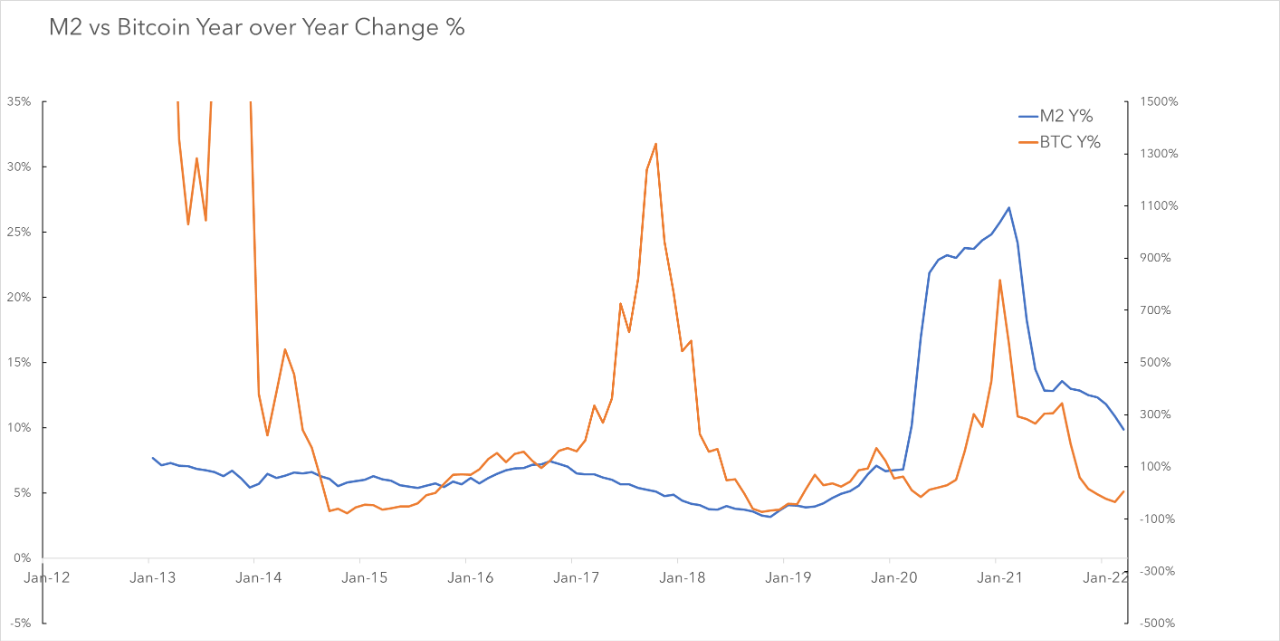
View original →A bear market has settled in for tech stocks as the Fed turns hawkish. It doesn’t bode well for Bitcoin and other cryptocurrencies. Not only is the Fed raising interest rates; it is also seeking to slow the economy by shrinking its balance sheet. Those macro headwinds could make it much tougher for Bitcoin and other cryptos to revive from their own bear markets. Bitcoin, at around $39,000, is down 16% this year. It remains down more than 40% from its peak last November, when it was near $69,000. A chart of the global M2 money supply since 2014 overlaid on Bitcoin shows that they move in lockstep, with stocks and Bitcoin rising and falling in lockstep as the money supply expands and contracts. (Chart-1) below. Bitcoin is even more sensitive to changes in the money supply than stocks. A more hawkish Fed and a stronger dollar will both put pressure on the money supply. Which can lead to more bearish crypto and stock bias.

View original →

