


Bearish(Nuanced)
BTC
3w agoSTH SOPR hits 1.03—the exact level that triggered corrections in every previous bull run. Short-term holders are taking profits, flashing the classic overheating signal. Smart money waits for SOPR...
View original →Sentiment timeline shows relative sentiment within this analyst's history. A perma-bull showing 8 bullish : 2 bearish in a bear market sets that as their baseline. If you notice any errors, claim @MAC_D to submit corrections.
STH SOPR hits 1.03—the exact level that triggered corrections in every previous bull run. Short-term holders are taking profits, flashing the classic overheating signal. Smart money waits for SOPR...
View original →Bitcoin hits $76.4K but ETF inflows are fading fast. Profit-taking surged to highest since February as whales dump BTC onto exchanges. Futures open interest diverging from price—bulls aren't...
View original →Short-term holder ratio crashes to 3.98%—below the 4% threshold that historically marks cycle bottoms. Buying pressure now outpacing selling as BTC rebounds harder than equities on every...
View original →BTC futures traders refusing to add risk as price tests $74K—classic bull trap setup forming. Spot buying masks dangerous divergence: futures market 10x larger than spot, yet open interest...
View original →IFP indicator just flashed a golden cross on the 90-day MA—historically a bullish signal for leveraged positioning. Catch: the cross formed during sideways action, not a rising trend, weakening...
View original →Bitcoin open interest surged while price dropped yesterday—classic reversal setup forming. Traders adding long exposure into weakness signals growing risk appetite despite pullback. Macro events...
View original →The crypto market continues to climb ahead of the upcoming FOMC meeting, supported by rising expectations of an interest rate cut. However, one notable aspect of this move is the widening divergence between Bitcoin’s rising price and its declining Open Interest (OI).Since...
View original →uncertainty surrounding Nvidia’s earnings pushed the U.S. equity market lower, and the crypto market followed with a similar decline. Ethereum fell to $2.87k, breaking below its previous low again and weakening investor sentiment. However, Nvidia’s earnings came in above expectations, allowing both U.S. equities and crypto assets to recover swiftly. The $2.8k area is likely to act as an important on-chain support level for Ethereum. This zone aligns with the realized price clusters of both retail investors and whales. Historically, realized price levels have often marked cycle bottoms, suggesting that this range could once again provide a foundation for a short-term rebound. The ‘Balance by Holder Value’ metric also shows a notable divergence: retail wallets have been selling, while whales holding over 10k ETH continue to accumulate even as the price trends lower. This indicates a clear rotation of supply from short-term traders to larger, long-term-oriented holders — a classic sign of ongoing redistribution. Another important factor is the sharp decline in long liquidation volume when ETH breaks to new local lows. This implies that forced-liquidation selling pressure is steadily weakening. Meanwhile, short positions have expanded, creating conditions where even a modest price bounce could trigger a sequence of short liquidations and potentially lead to a short squeeze in a low-liquidity order-book environment. 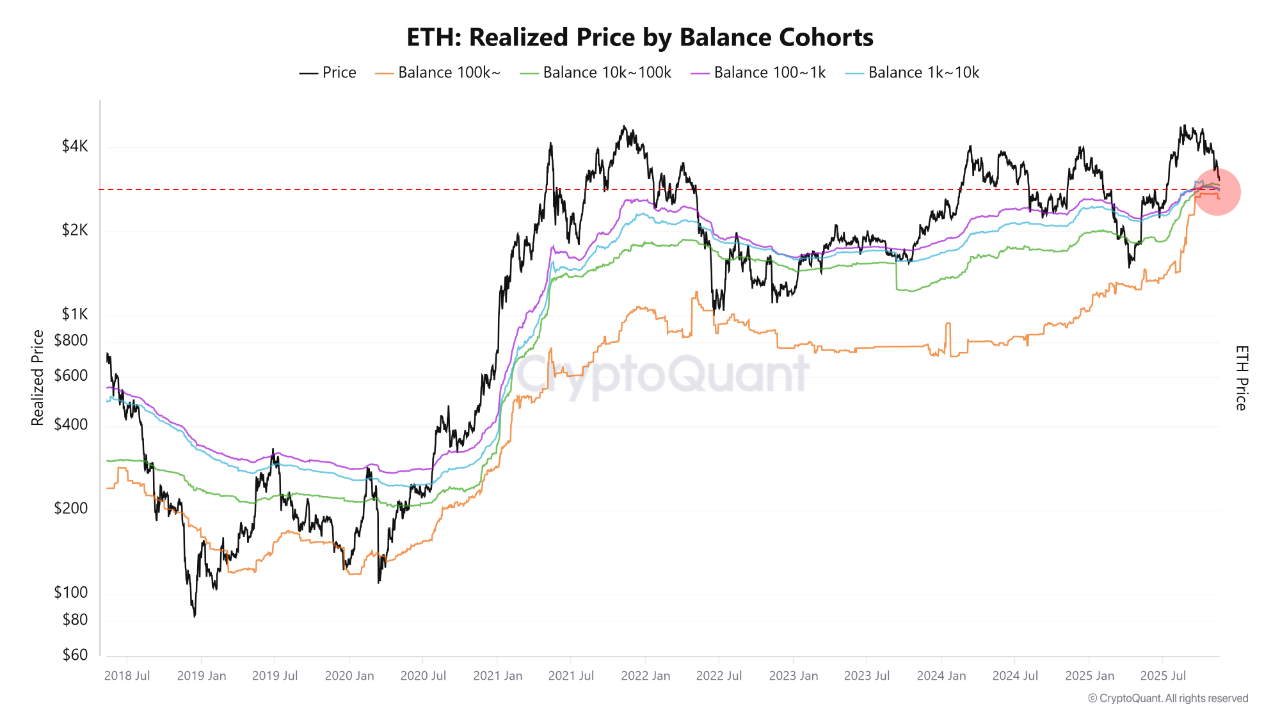 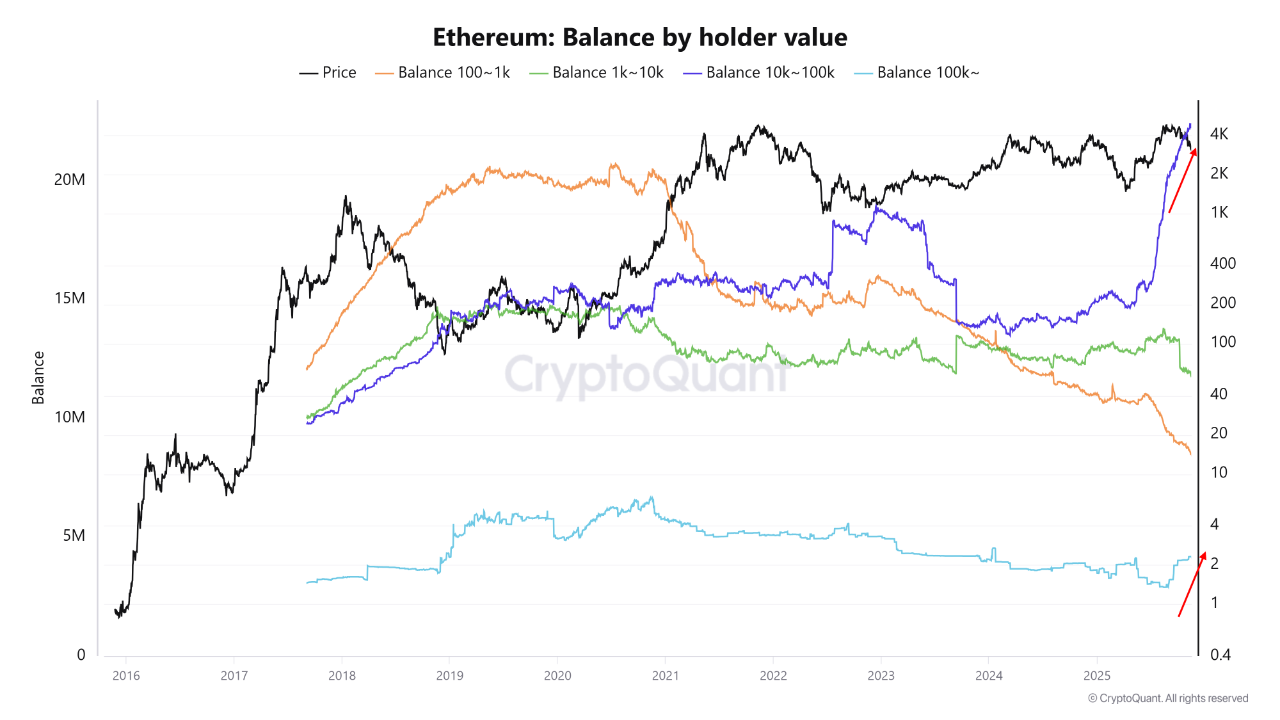 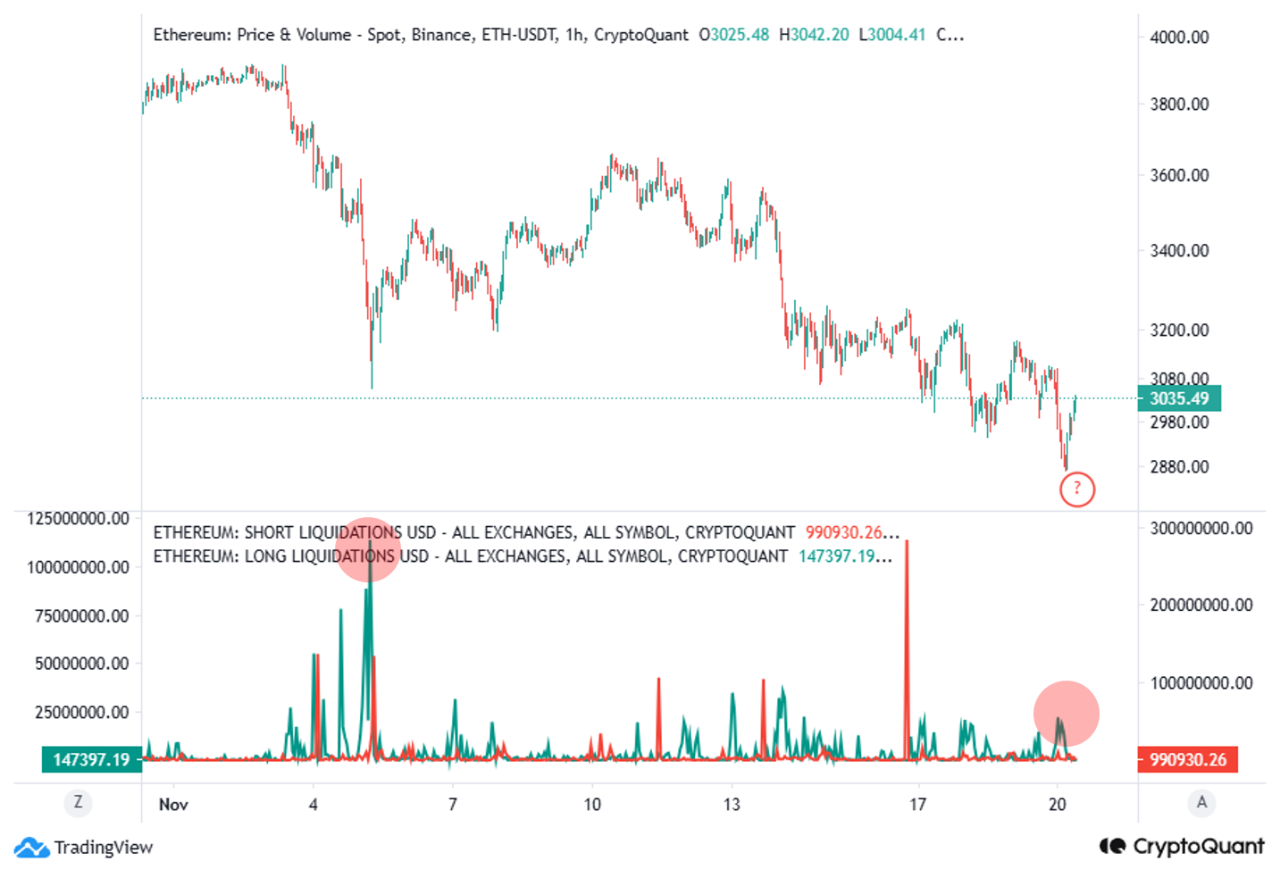 
View original →Ethereum’s net taker volume in the futures market has been rapidly contracting following its deepest negative reading in September and the subsequent price decline. This indicates that selling pressure in the futures market is gradually easing, but the fact that the metric remains in negative territory shows that selling activity still outweighs buying activity. Historically, when this indicator shifts from negative to positive, the market has often formed a bottom. Therefore, it is likely that both price correction and time correction will be required before the market fully establishes a bottom and reverses its trend. Chart by: Maartun 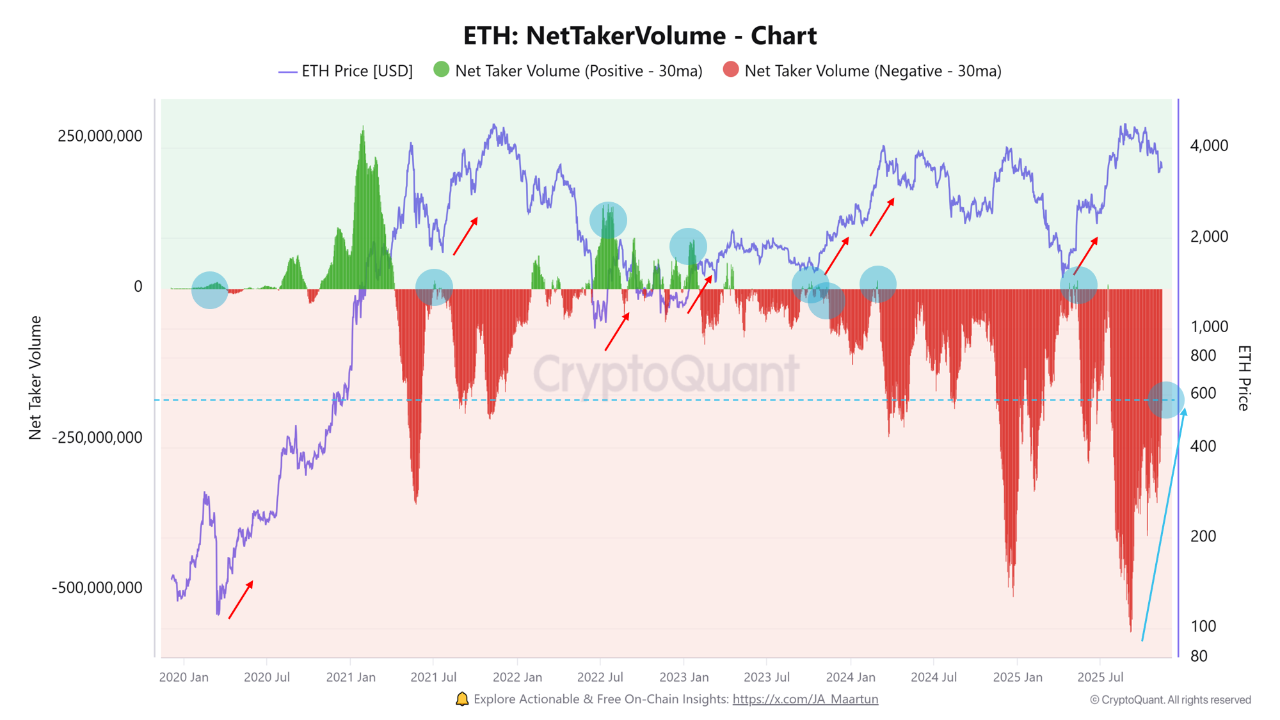 
View original →Despite the sharp decline in #BTC’s price since November, inflows into “permanent holder” wallets — addresses that have never recorded a single outflow — have continued to rise steadily. Moreover, the realized price (average acquisition cost) of these holders has continued to climb, reaching around $78.52k, indicating that long-term-oriented capital (institutions, funds, and whales) is accumulating even at relatively higher price levels, while short-term selling pressure is being absorbed by these stronger hands — signaling an ongoing ownership rotation. In my view, the true “crypto winter” would begin only if the market were to break below this cost basis ($78.5k). In the short term, however, factors such as a potential U.S. government shutdown, equity market corrections, and elevated Korean premium could lead to additional downside or temporary volatility. That said, the market is now entering a liquidity expansion phase, supported by rate-cut expectations, the end of quantitative tightening (QT), and rising M2. Given these conditions, I believe that unlike previous prolonged downturns, the current cycle is more likely to see a faster recovery in price momentum. 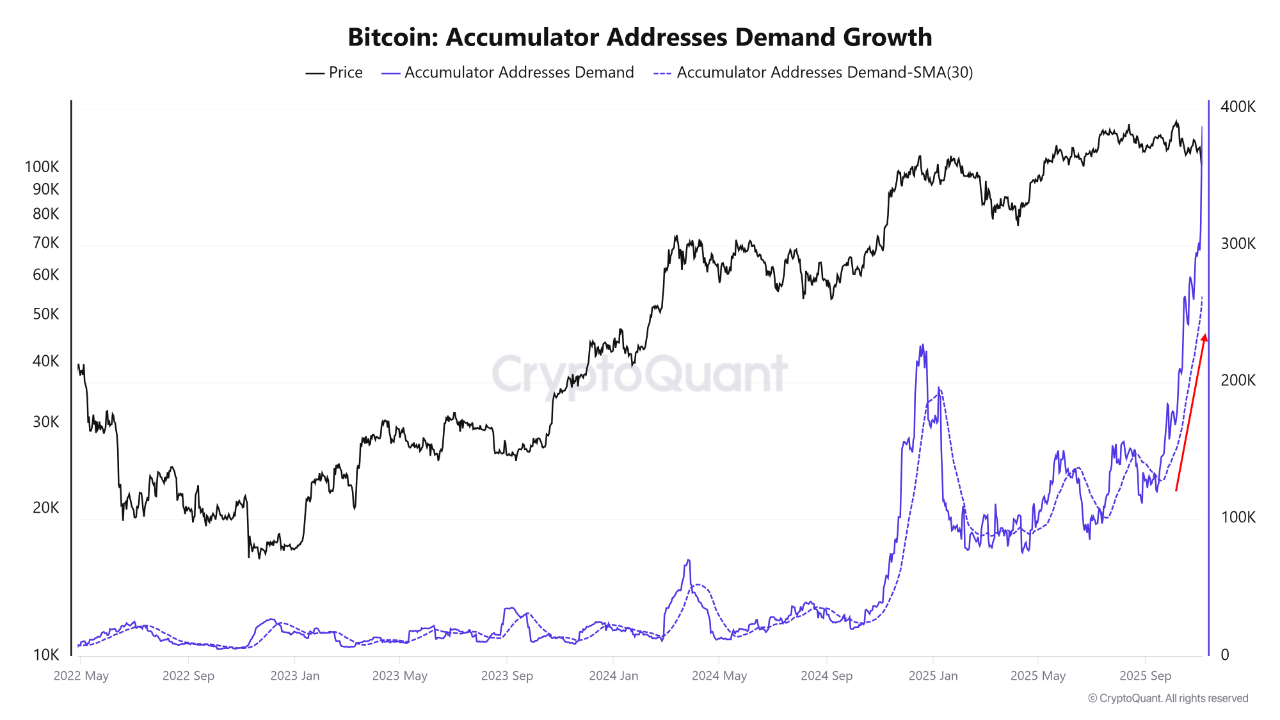 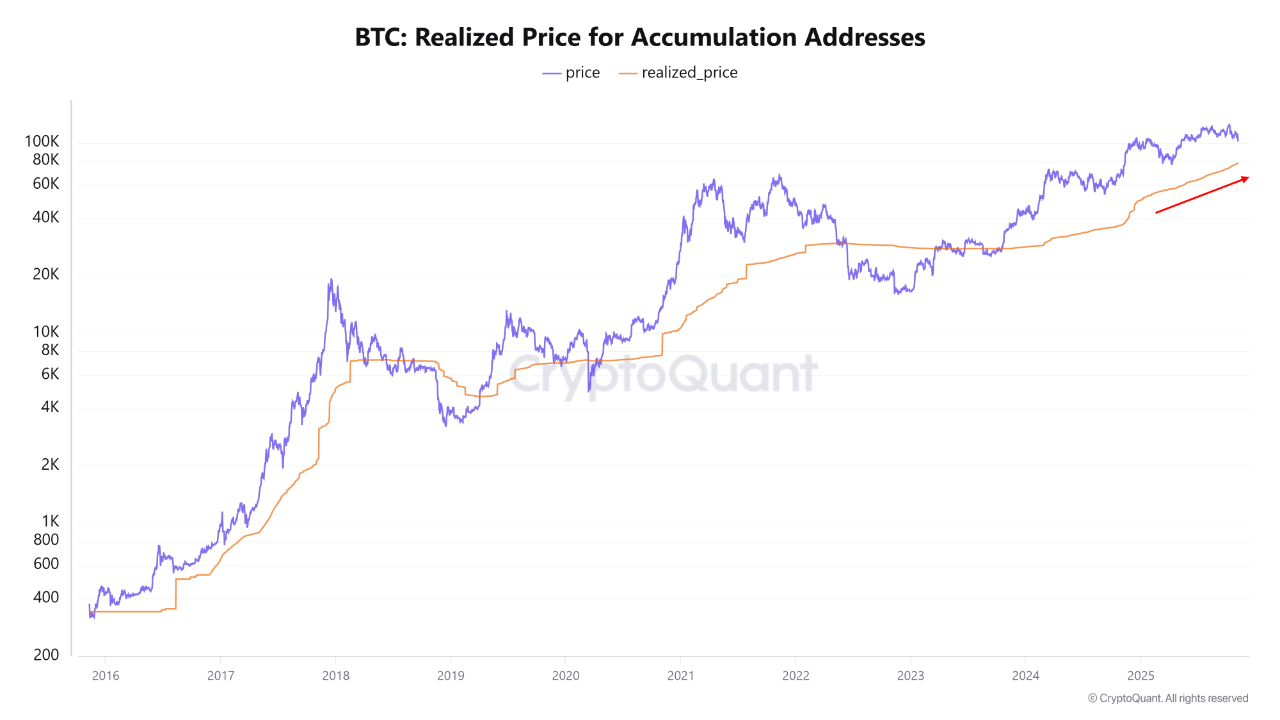 
View original →