


Neutral
BTC
4/17/2026MVRV ratio crashed from 2025 highs to hover near 1—market excess fully flushed. Bitcoin no longer expensive but not deeply undervalued either. Extreme optimism gone; reset phase often precedes next...
View original →Sentiment timeline shows relative sentiment within this analyst's history. A perma-bull showing 8 bullish : 2 bearish in a bear market sets that as their baseline. If you notice any errors, claim @BaykusCharts to submit corrections.
MVRV ratio crashed from 2025 highs to hover near 1—market excess fully flushed. Bitcoin no longer expensive but not deeply undervalued either. Extreme optimism gone; reset phase often precedes next...
View original →Exchange netflows spike green during rallies—whales moving BTC to sell while retail celebrates. Red bars dominate drawdowns as smart money withdraws during panic. Distribution at tops, accumulation...
View original →📉 Long-Term Lens (Exchange Reserves) From 2020, coins have been systematically moving off exchanges, and in 2025, reserves sit at multi-year lows. What this tells us: Less “ready-to-sell” supply means structural support for Bitcoin prices. Sellers are thinning out. ⚡ Short-Term Pulse (Netflows) Red outflow bars dominate — investors are actively moving BTC to cold storage. Summer 2024: Green inflows coincided with price corrections. Spring–Summer 2025: Heavy outflows aligned with BTC crossing $100K. Recent weeks: Net outflows remain high, showing a clear “hold” mentality. 🔗 Putting it Together Declining reserves + outflow-heavy netflows → long-term supply is tightening. Historically, this supports price resilience. ⚠️ But keep an eye on sudden inflows — those have historically signaled short-term pullbacks. 🦅 Takeaway (Not Investment Advice) Long-term: shrinking liquid supply reduces selling pressure. Short-term: outflows indicate strong preference for secure storage. Risk: sudden big inflows to exchanges could trigger short-term selling. Bitcoin’s exchange dynamics confirm a supply squeeze. The market psychology is leaning heavily toward holding, not selling. 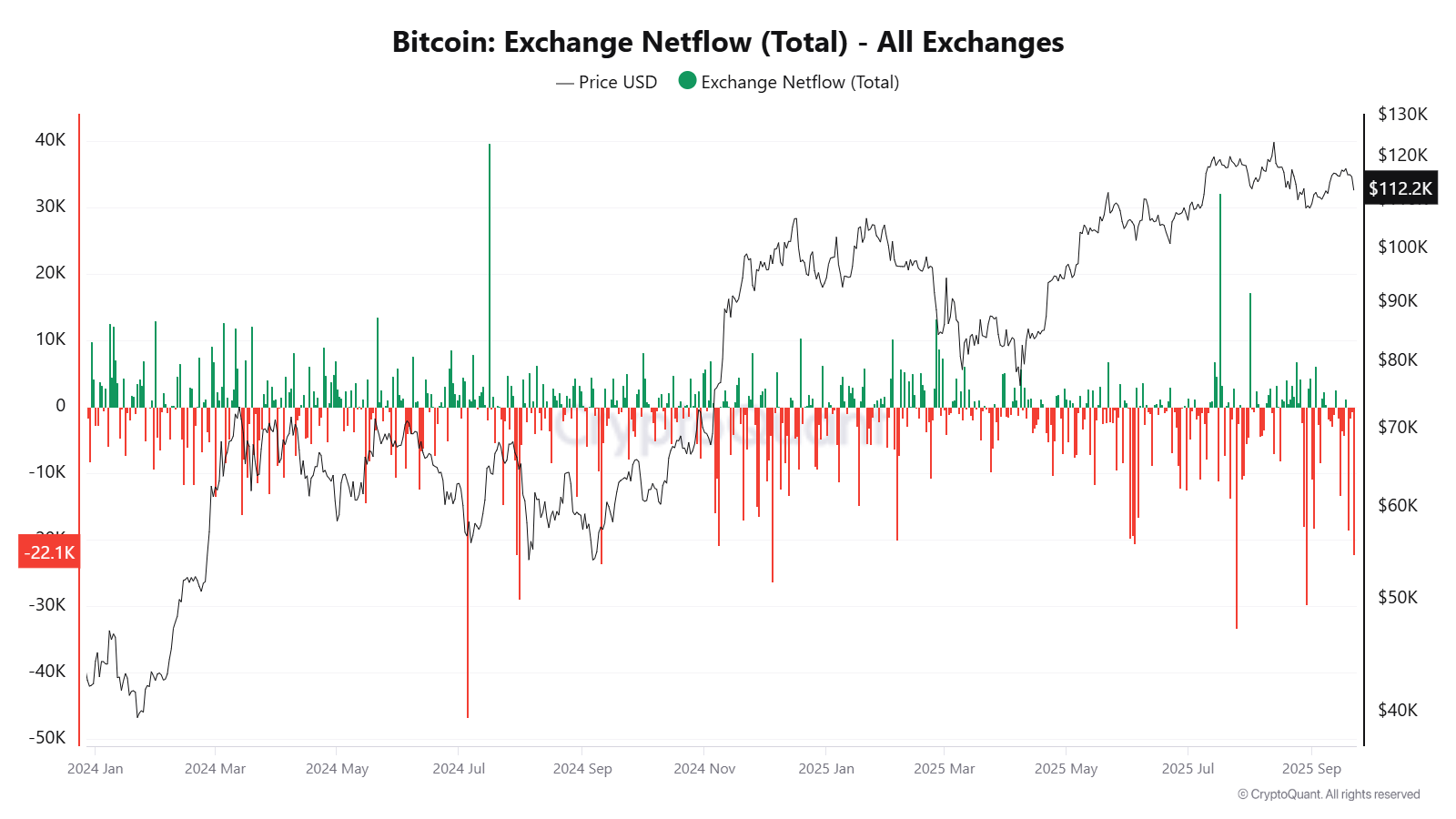 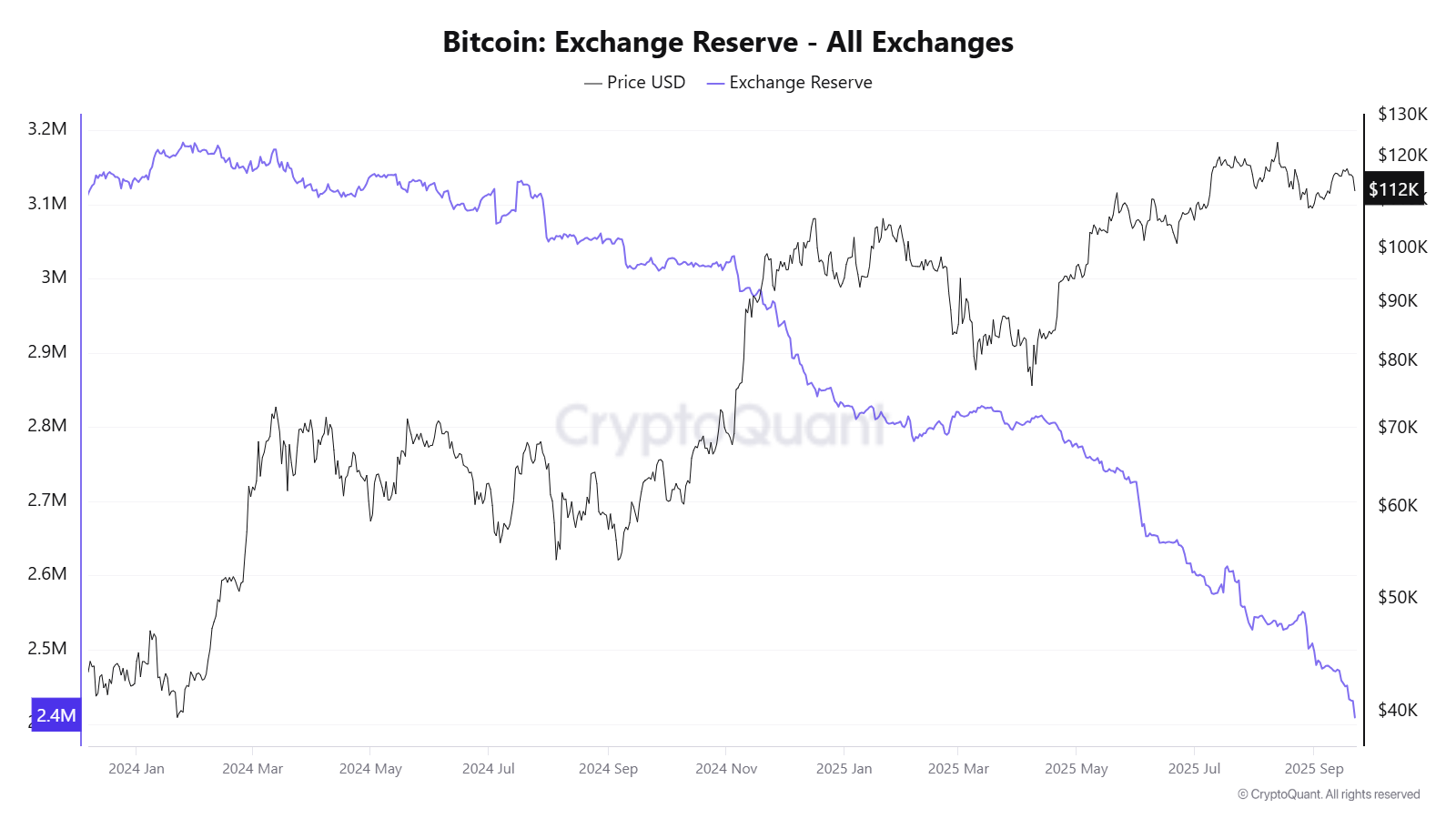 
View original →Every rally is the result of unseen preparation. As Bitcoin marches toward $110,000, what are investors doing? The answer is simple: They're pulling BTC off exchanges. Slowly but surely, with steady determination. Is Bitcoin Disappearing from Exchanges? July 2024: Exchanges held 1.55 million BTC. Now: Only 1.01 million BTC remain. That means 550,000 BTC has been withdrawn from exchanges in just one year! This isn’t just a routine move. People aren’t selling—they’re holding. They’re not day trading, they’re holding for the long term. How Has Price Responded? As BTC on exchanges decreased, the price moved in the opposite direction: up! The logic is simple: ➡ Supply is shrinking (people are withdrawing) ➡ Demand is growing (more buyers entering) ➡ Result: Price is exploding! What Does This Mean? This data tells us one thing: "Bitcoin is no longer seen as a speculative asset—it’s becoming digital gold." People aren’t buying for short-term gains, but for the future. So What Happens Next? If BTC keeps leaving exchanges → Prices could go even higher. Big investors (whales) haven’t fully entered the game yet. This quiet accumulation could be the prelude to a massive rally. Bottom line? If BTC is being pulled from exchanges, it’s not a sign to sell. it’s time to HODL! 🚀 P.S. Of course, the crypto world is always full of surprises, but this trend looks strong.  
View original →Behind every crypto rally lies a power struggle. As Bitcoin flirts with $100,000 as a support level, who’s really pulling the strings behind the curtain? This chart speaks quietly but clearly: Binance isn’t as dominant as before. But it’s far from out of the game. 📉 What Happened in 2024? At the start of the year, Binance controlled nearly 80% of BTC spot volume. The very image of centralization. But as spring arrived, that share plunged to around 40%. Other exchanges rose to the challenge. Regulatory pressure? User distrust of a single gatekeeper? Maybe both. 📈 But Then? As 2025 rolled in, the tide turned again. BTC surged. The market got excited. Binance regained ground. Because liquidity still lives there—and when big money flows, trust follows volume. 🔍 So What Does This Mean? This isn’t just about trading volume. It’s a deeper battle over the soul of crypto. A central giant vs. a decentralized ecosystem. And perhaps this chart whispers something to the sharp investor: “In calm markets, explore alternatives. But when the tide rises, follow the liquidity.” Binance may have stumbled but it hasn’t vanished. Power is being redistributed, but the stage is still partially theirs. The war’s not over. Only the positions have shifted. 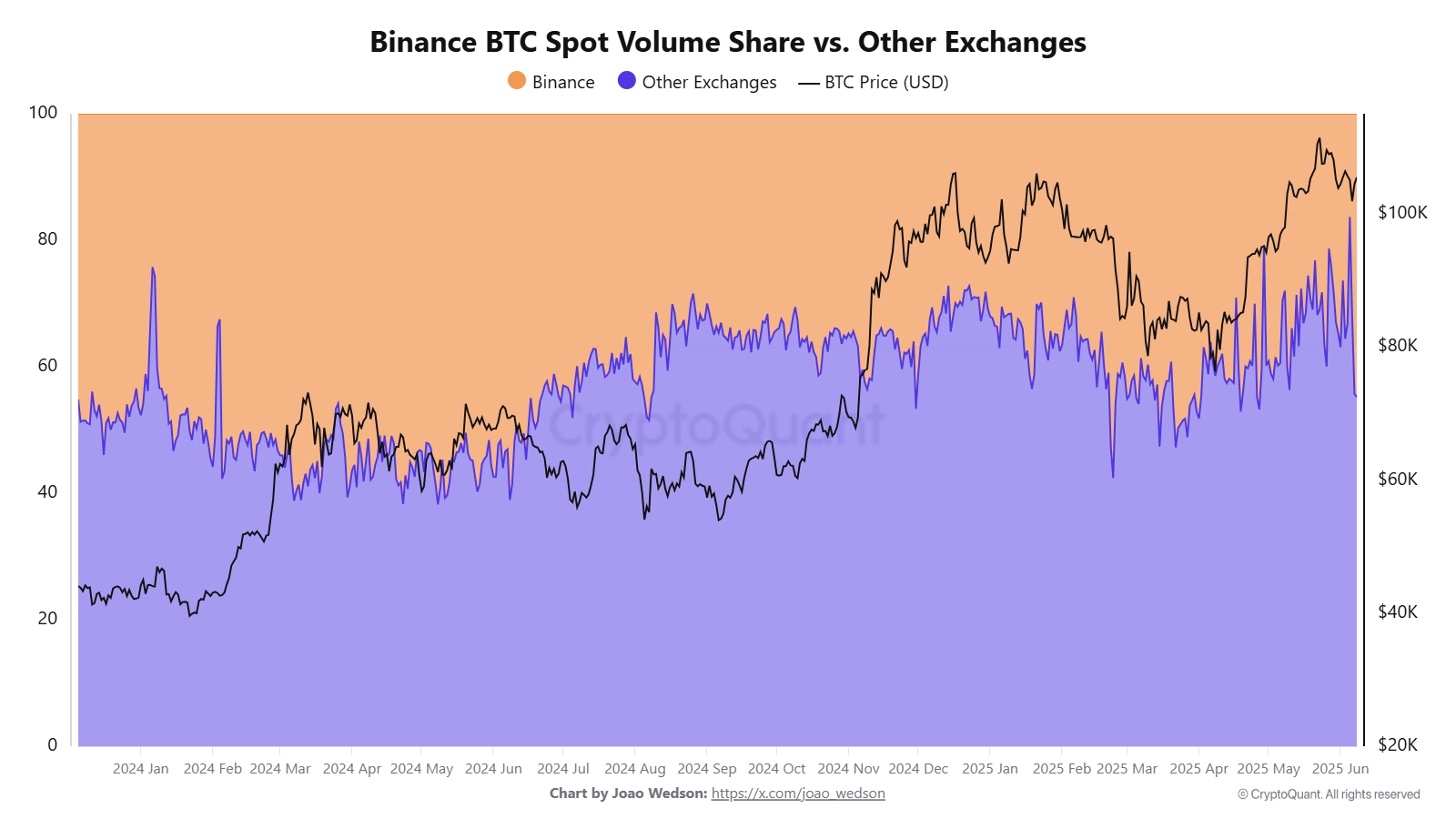 
View original →When the price doesn't move, it feels like nothing is happening. But behind the scenes, a completely different game unfolds. And that's exactly what's happening with Bitcoin lately. 22,500 BTC Pulled in a Single Day In early June, 22,500 BTC was withdrawn from exchanges. This wasn’t a handful of small transactions. It was a serious move. And when that much Bitcoin is moved off exchanges, it's rarely to sell — it's usually to store. In short, people are pulling their BTC into wallets. Not to trade it, but to hold it. Why Isn’t the Price Moving? With that much BTC leaving exchanges, you'd expect the price to climb. But that didn’t happen. Bitcoin is still hovering around $102K. It’s not dropping, but it’s not breaking out either. Maybe this tells us something new. This time, it’s not about hype — it’s about strategy. These aren’t fast-money plays. These are long-term conviction moves. Who’s Buying? It’s not retail investors making these massive withdrawals. Most likely, it's ETF providers, institutional custodians, or OTC desks. In other words, it’s not the small fish — it’s the big players stepping in. And when the big players buy, they don’t make noise. They stay quiet. Just like now. What Should You Do? There’s no reason to panic. This chart tells us that trust in Bitcoin is still strong. Maybe the price won’t explode right away. Maybe we’re just in a waiting phase. But as selling pressure fades, opportunities become clearer.  
View original →The chart tracks miner reserves (blue) and BTC price (black) throughout Q1 2025. 📉 Miner reserves declined from 1.812M to 1.809M BTC. 📊 The price dropped sharply from its $105K peak to $75K. But what is this silent chart really telling us? Rising Sales or Forced Liquidation? 🔹 A noticeable spike in reserves in early February — but then the decline accelerates. 🔹 After mid-March, both price and reserves crash simultaneously. What does that mean? ⚠️ Miners are still selling even as prices fall → This isn’t profit-taking, it’s likely a liquidity need. 🛠️ Miners might be offloading BTC to cover operational expenses like electricity, equipment, or maintenance. What Should Investors Read From This Chart? 📌 Miner reserves reflect on-chain market sentiment. 📉 Falling reserves → Increased supply → Downward price pressure. 📈 Rising reserves → HODL behavior → Bullish signal. Current outlook: Miners are selling. Price remains under pressure. But if this decline in reserves stops, the price rally could accelerate. 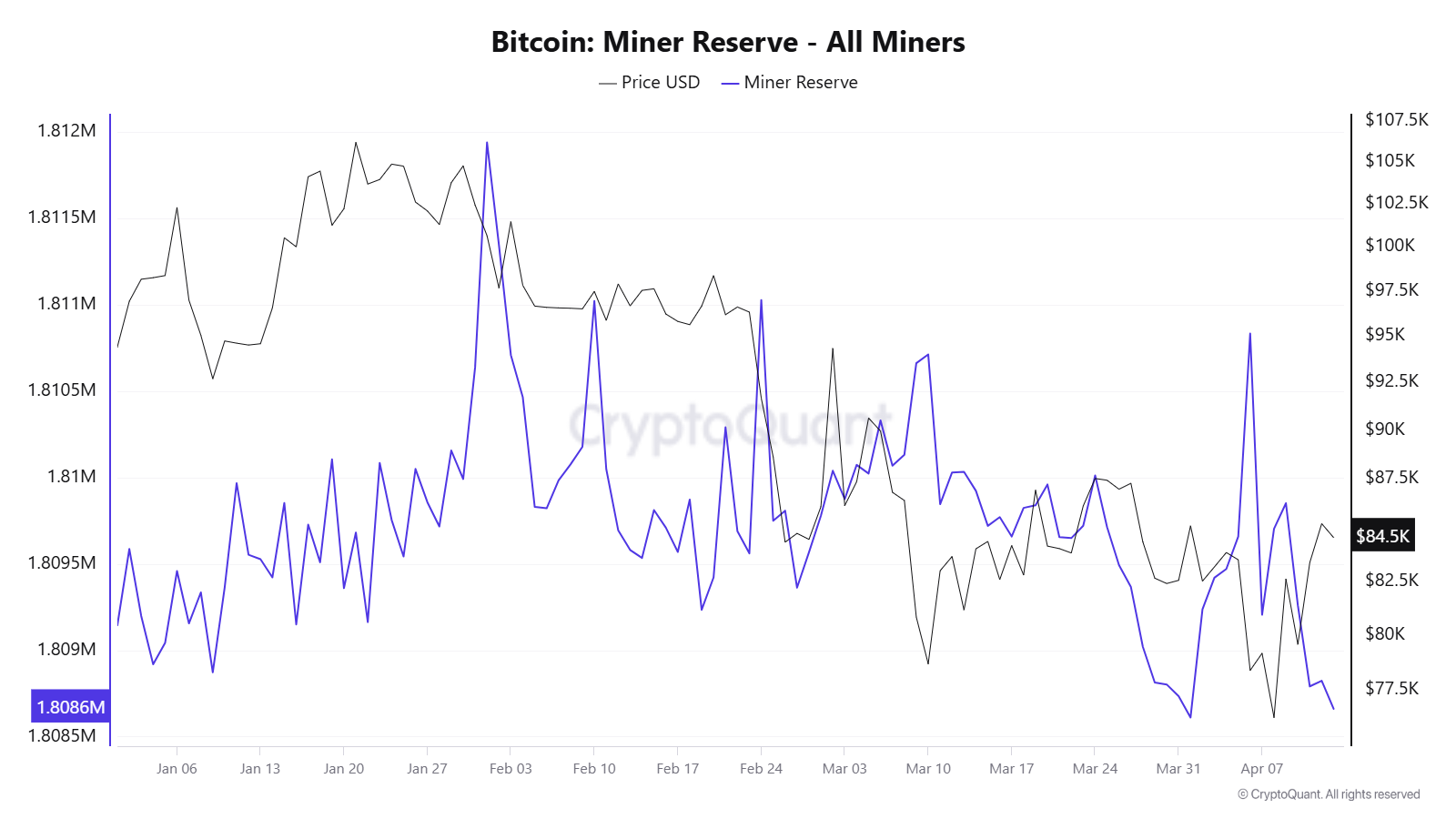 
View original →One of the crucial data points to consider when interpreting price movements in the crypto world is miner reserves. Bitcoin miners either hold the BTC they earn in reserves or put them up for sale. Therefore, changes in miner reserves can directly impact market sentiment and price dynamics. Notable Decline in Miner Reserves Since mid-2024, a significant downward trend has been observed in Bitcoin miner reserves. This decline may indicate that miners have been selling more and reducing their BTC holdings. The reduction in reserves, particularly during periods of rising prices, suggests that miners are inclined to realize profits. Increased sales alongside rising prices might also be driven by the need to cover operational costs or reduce risk. Critical Points in the Price and Reserve Relationship Despite the sharp rise in Bitcoin prices at the end of 2024 and the beginning of 2025, miner reserves have remained at low levels, which is noteworthy. This situation may indicate that miners continue to sell despite price increases, seeing the rally as an opportunity to secure profits. However, as of March 2025, reserves have shown a sideways trend. This may indicate that miners are holding onto their BTC or waiting for the market to rise further. How Should Investors Act? Declines in miner reserves typically signal an increase in selling pressure in the market. Therefore, investors should be cautious if they observe a significant drop in reserves during price surges. On the other hand, stable or increasing reserves may reflect miners' confidence in the market and indicate the potential for further price increases. Regularly monitoring changes in miner reserves is highly valuable for investment strategies. Accurately interpreting the relationship between miners' selling tendencies and price movements can help optimize risk management and seize profit opportunities. 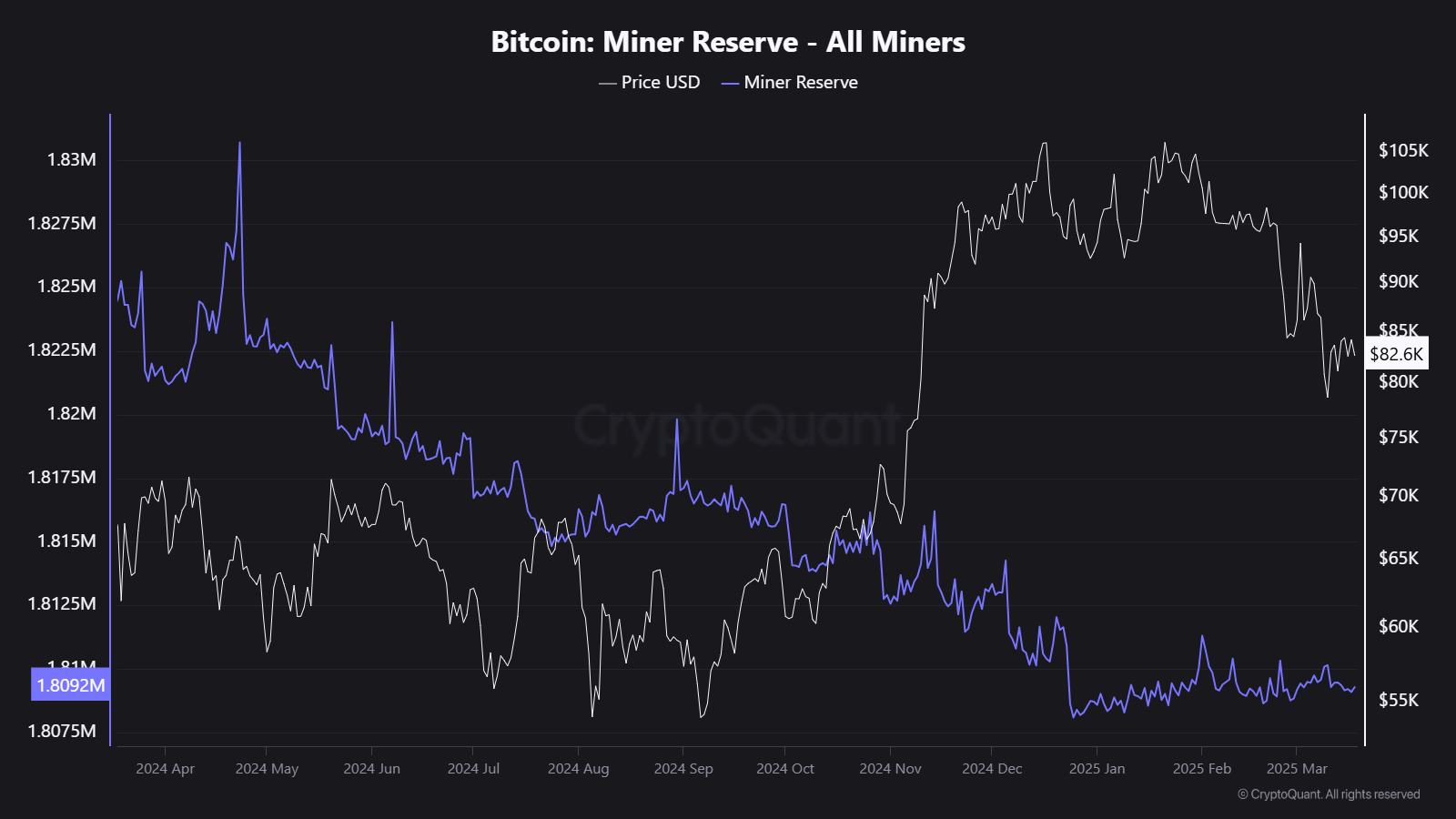 
View original →The cryptocurrency markets have been quite volatile in recent days. When we look at Bitcoin’s total exchange net flow, an interesting pattern emerges. The inflows and outflows of Bitcoin provide crucial insights into investor strategies. So, what do these data tell us? First, an intriguing event occurred on February 25: A large amount of Bitcoin flowed into exchanges. Around 8.4K BTC entered the exchanges, which typically signals increased selling pressure and a potential price decline. As expected, Bitcoin’s price dropped following this movement. However, the opposite happened on February 26. Investors withdrew a significant amount of Bitcoin from exchanges. Such outflows usually indicate that Bitcoin is being held for the long term, reducing selling pressure. As seen in the chart, the price stabilized after this event and began recovering in the following days. As of March 2, Bitcoin’s price has started to rise again. Historically, when outflows from exchanges increase, prices tend to move upward. This is because when investors withdraw Bitcoin from exchanges, the circulating supply decreases, and selling pressure diminishes. This paves the way for a potential price increase. In summary, those closely monitoring Bitcoin’s exchange movements should take note: Large inflows into exchanges may indicate heightened selling pressure, requiring caution. On the other hand, significant outflows suggest that investors are opting to hold, which could lead to price appreciation. We will see in the coming days how these trends continue. The cryptocurrency market is always full of surprises. However, by analyzing available data correctly, it is possible to make the most of these fluctuations. Keeping a close eye on market trends is crucial when making investment decisions! 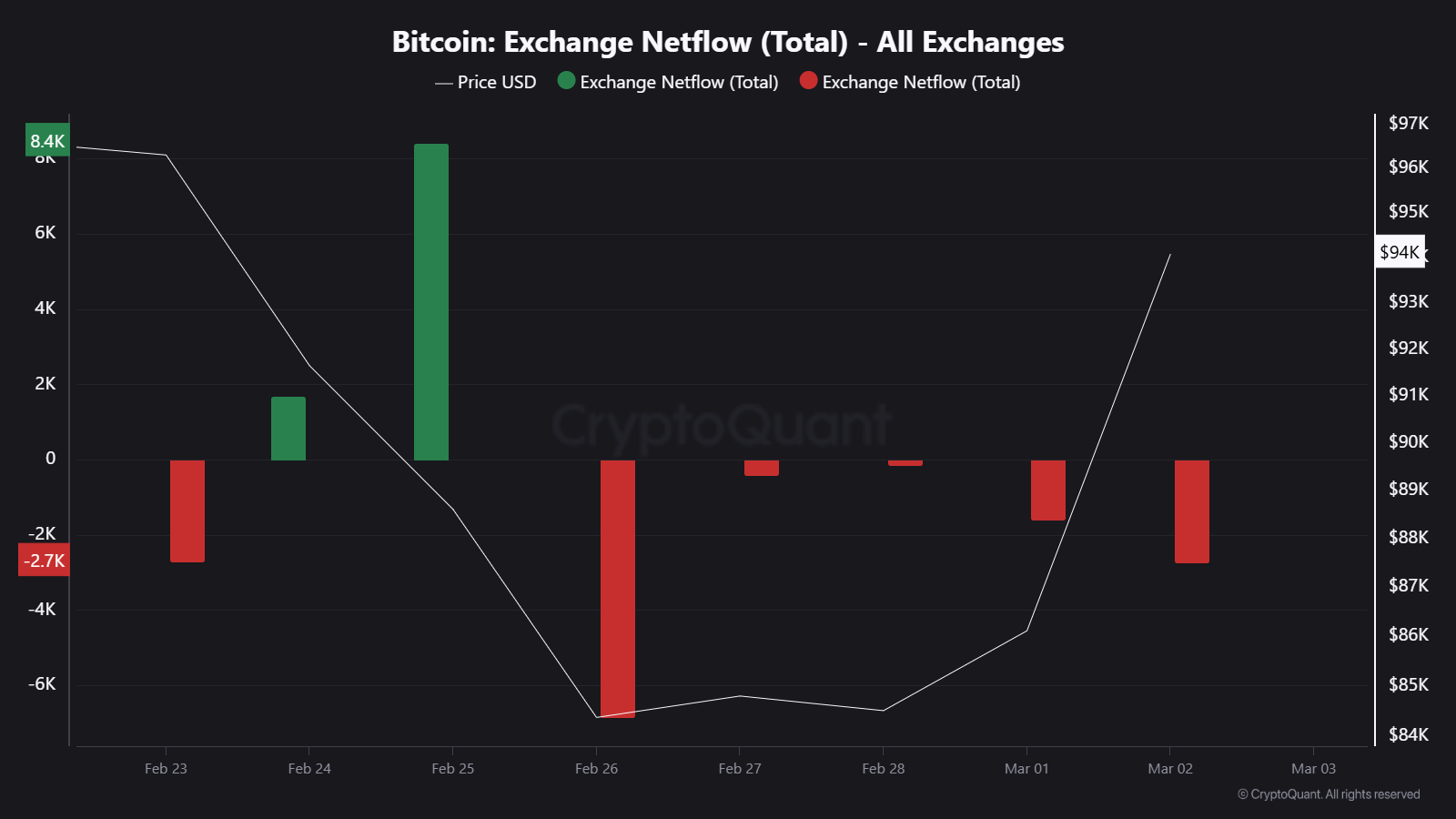 
View original →Bitcoin has surged to $110.000, exciting investors while also raising questions about the future of the market. Net Unrealized Profit/Loss (NUPL) data shows that the majority of investors are in profit, but there are also some risks to watch out for. So, will Bitcoin’s rally continue, or is a correction on the horizon? Key Risks to Watch in Bitcoin Potential Profit-Taking: The NUPL metric has reached 0.5, a critical level where investors might start realizing their profits. Sustaining the current price levels requires new buying interest. Global Economic Risks: Changes in interest rates, inflation, and regulatory news could put pressure on Bitcoin. Keeping an eye on macroeconomic developments is crucial. FOMO (Fear of Missing Out) Risk: As Bitcoin crosses the $100,000 psychological barrier, investors might rush to buy in, leading to increased volatility. Whale Movements: Large investors selling their holdings could push prices down. Monitoring whale activity can provide valuable insights. Investor Recommendations Implement Risk Management: Protect your profits by setting stop-loss levels. Adopt a Gradual Approach: Avoid emotional trading by buying and selling in portions. Base Decisions on Data: Keep track of market sentiment and on-chain data. Conclusion: Cautious Optimism is Key Bitcoin is showing strong momentum, but it’s important to remember that every rally may come with a correction. Investors should remain cautious and follow solid risk management strategies. Remember, opportunities in the market are always present; the key 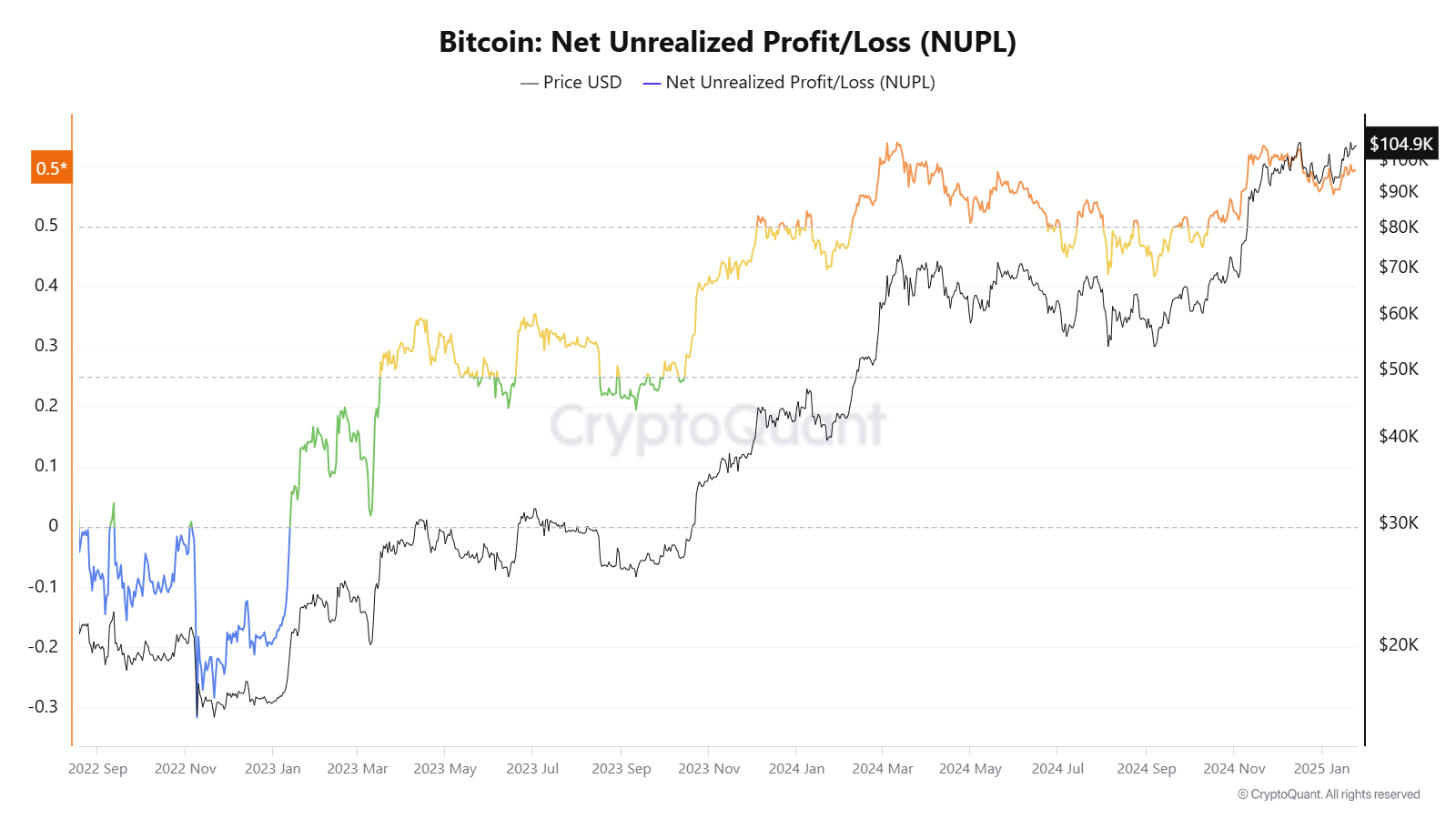 
View original →