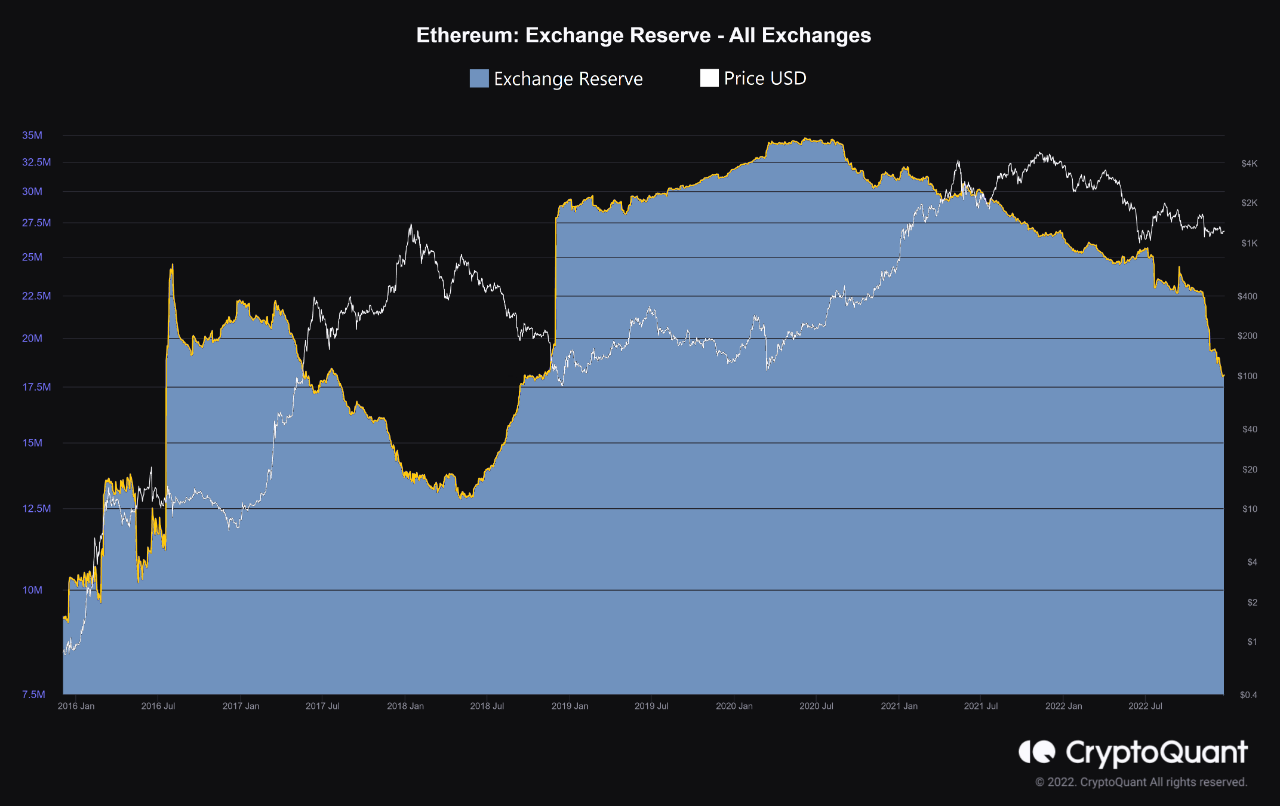
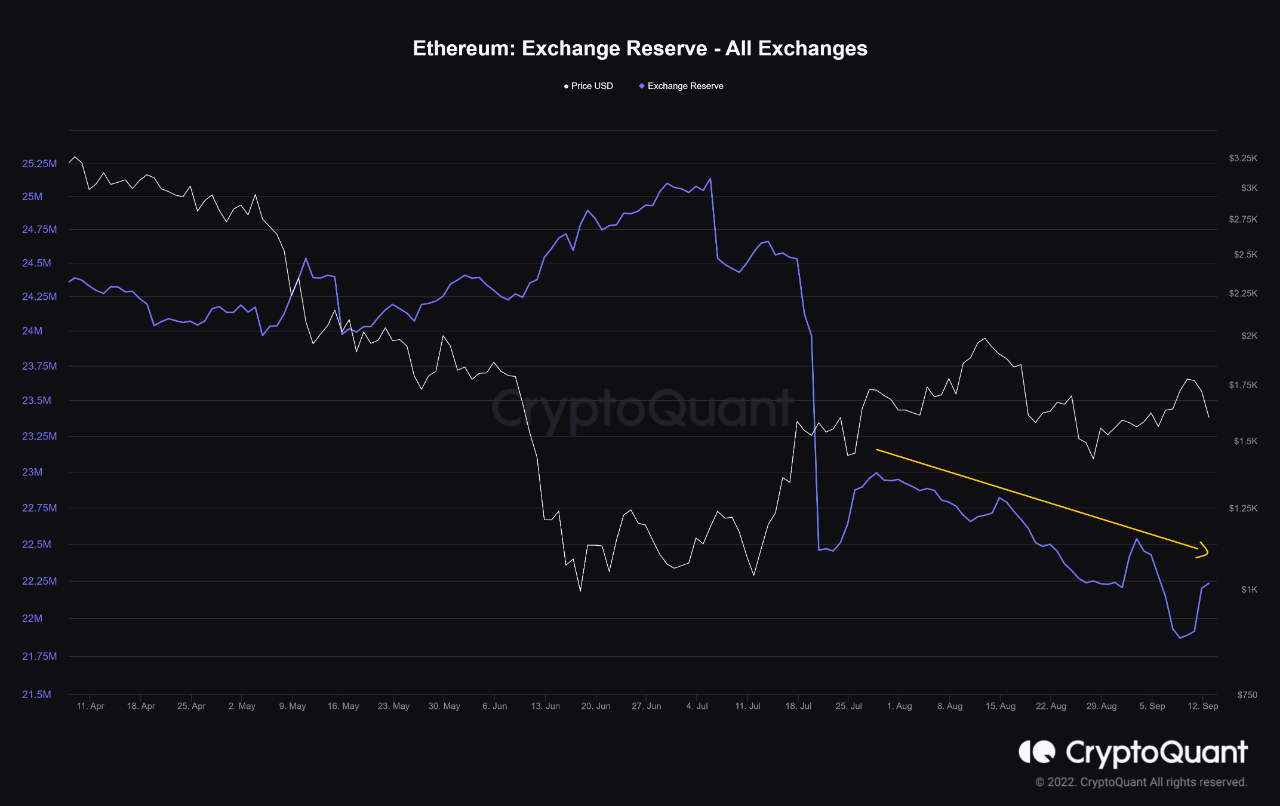
ETH reserves on CEX are depleting fast. In the year they have already fallen more than 30%, even at a speed greater than that of BTC.
One of the best thing in the year has been the possibility of having a deflationary ETH… It seems that investors believe it too and have withdrawn large amounts of CEX with the most likely purpose of holding them for the long term.

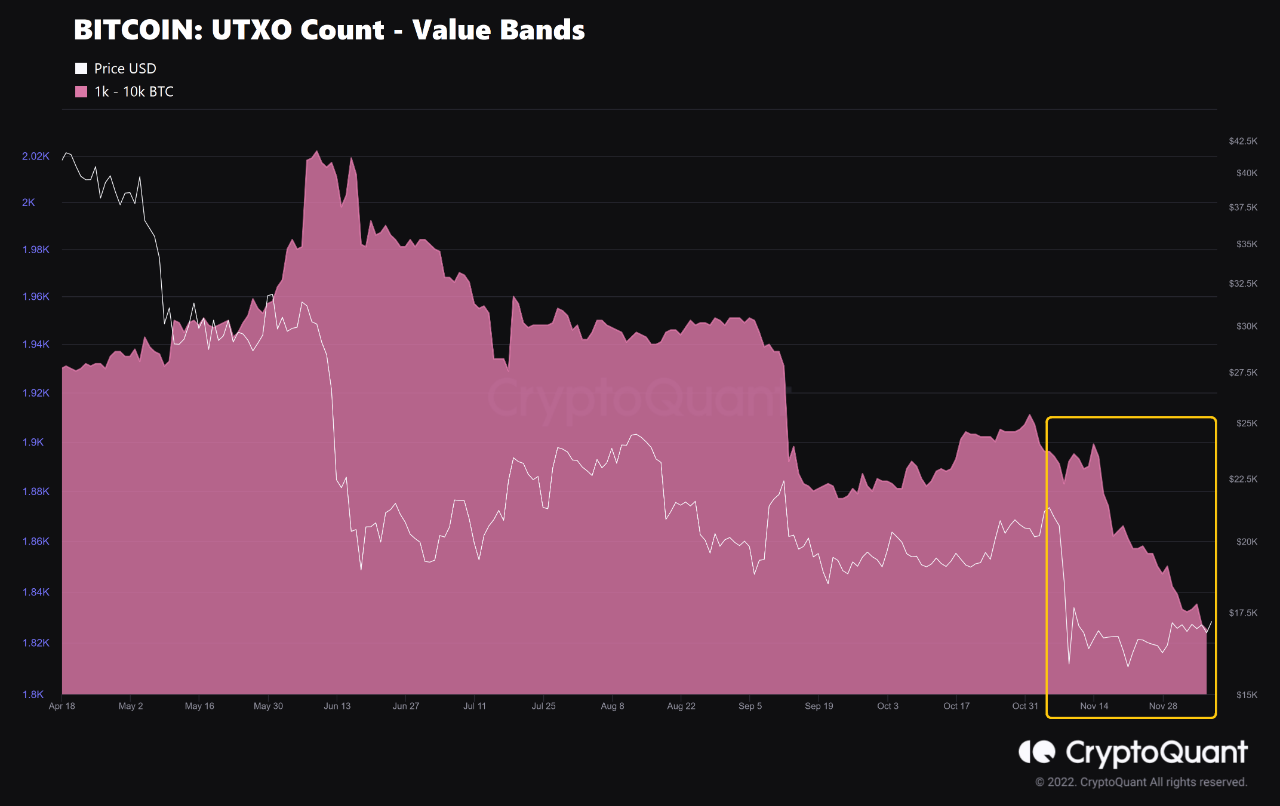
View original →Despite giants like Goldman Sachs have said that at these prices there are great opportunities in crypto, there are fewer and fewer UTXOs with a value greater than 1,000 BTC. These UTXOs that usually belong to large investors continue to decline despite recent price recoveries.
Maybe a good indicator to determine a good market bottom could be when we see this segment increase again or at least stabilize.
At the moment their expectations do not seem to be positive at all...

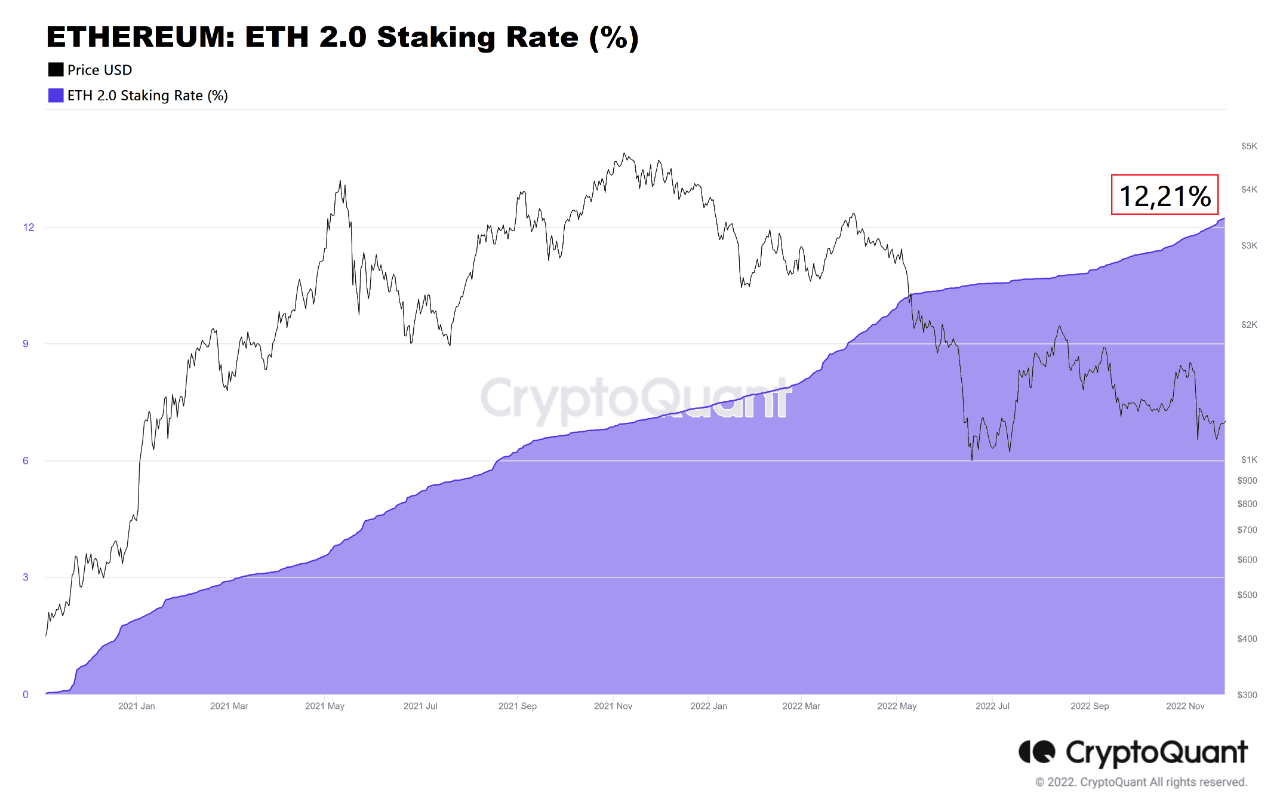
View original →Ethereum seems to be resilient despite the bear market and the conditions for what was once called the triple halving of Ethereum are riper than ever:
👉 Ethereum is Deflationary
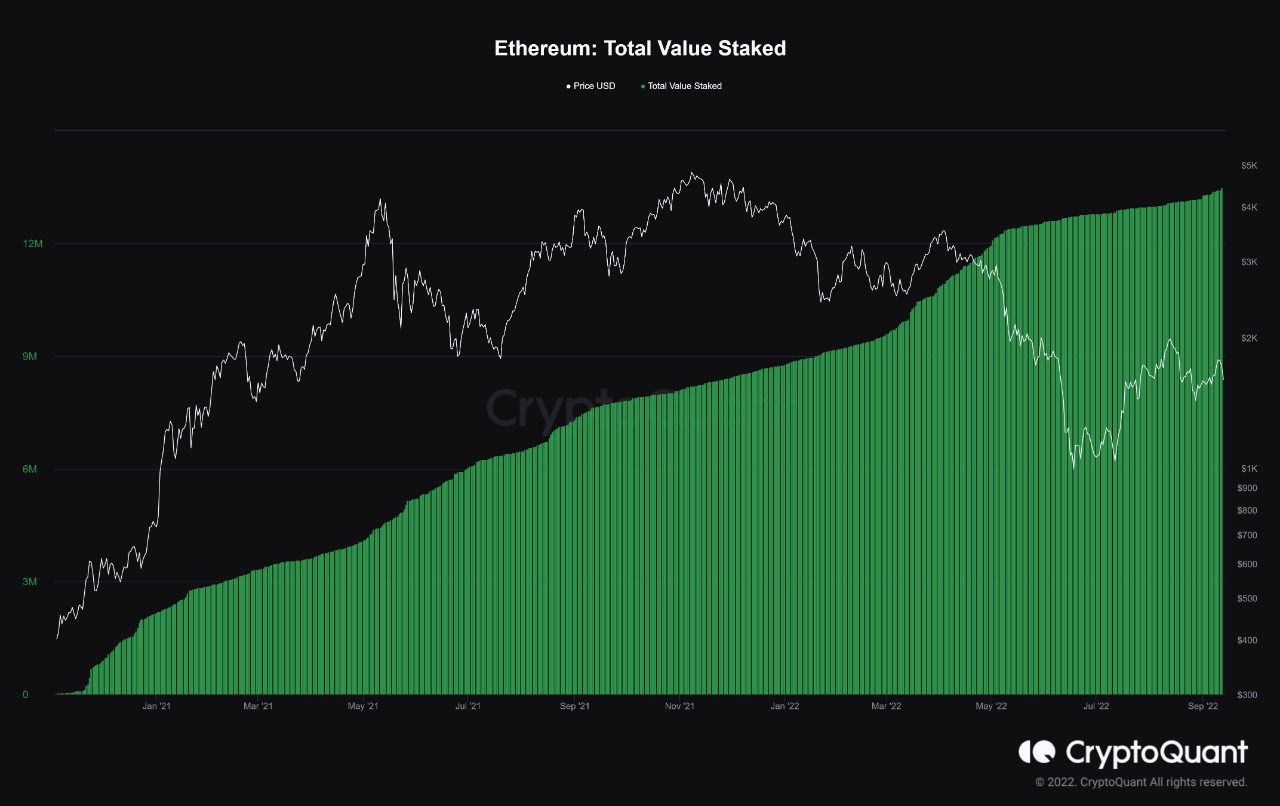
👉 More ETH "locked" in staking every day.
There are already more than 15 MILLION ETH in staking, currently that represents more than 12,2% of his supply. Every day the ETH available is less…

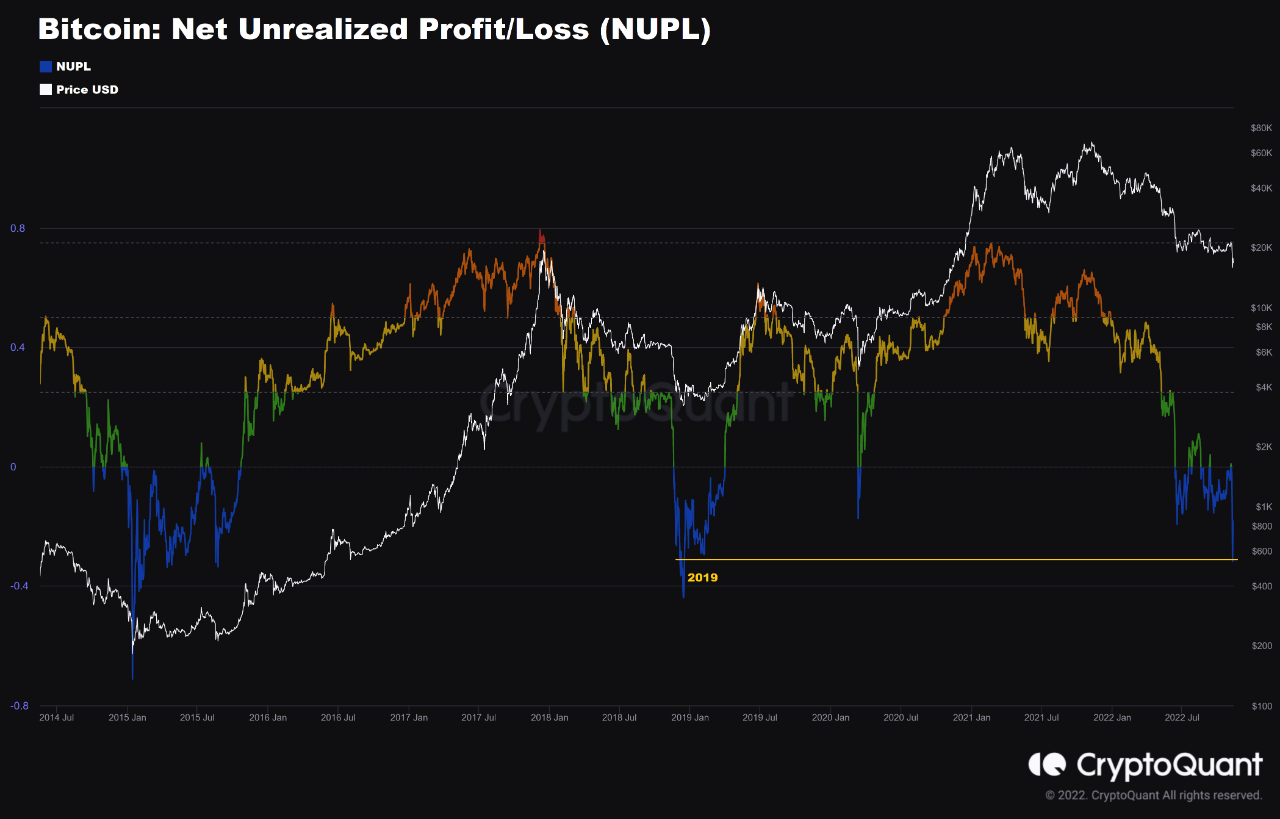
View original →We are seeing investors starting to suffer huge unrealized losses. Levels of unrealized losses not seen since 2019, during the last stages of the true bear market.
For a long time, we told ourselves that over time investors have learned and started to invest in a better way, which supposedly would cause unrealized losses to become smaller and smaller. However, we are currently seeing the reality, investors have not improved. We haven't had another bear market since 2019…until now.
🧸 Considering the chart and evaluating previous scenarios, we could think that we are entering the last stages of the bear market. But if we go back to previous scenarios, we see how this "last stage of the bear market" has lasted more than 1 year... There is still a long way to go.

View original →Bearish(Nuanced)ETH
11/1/2022 Context:
The market currently seems to be dominated by derivatives.
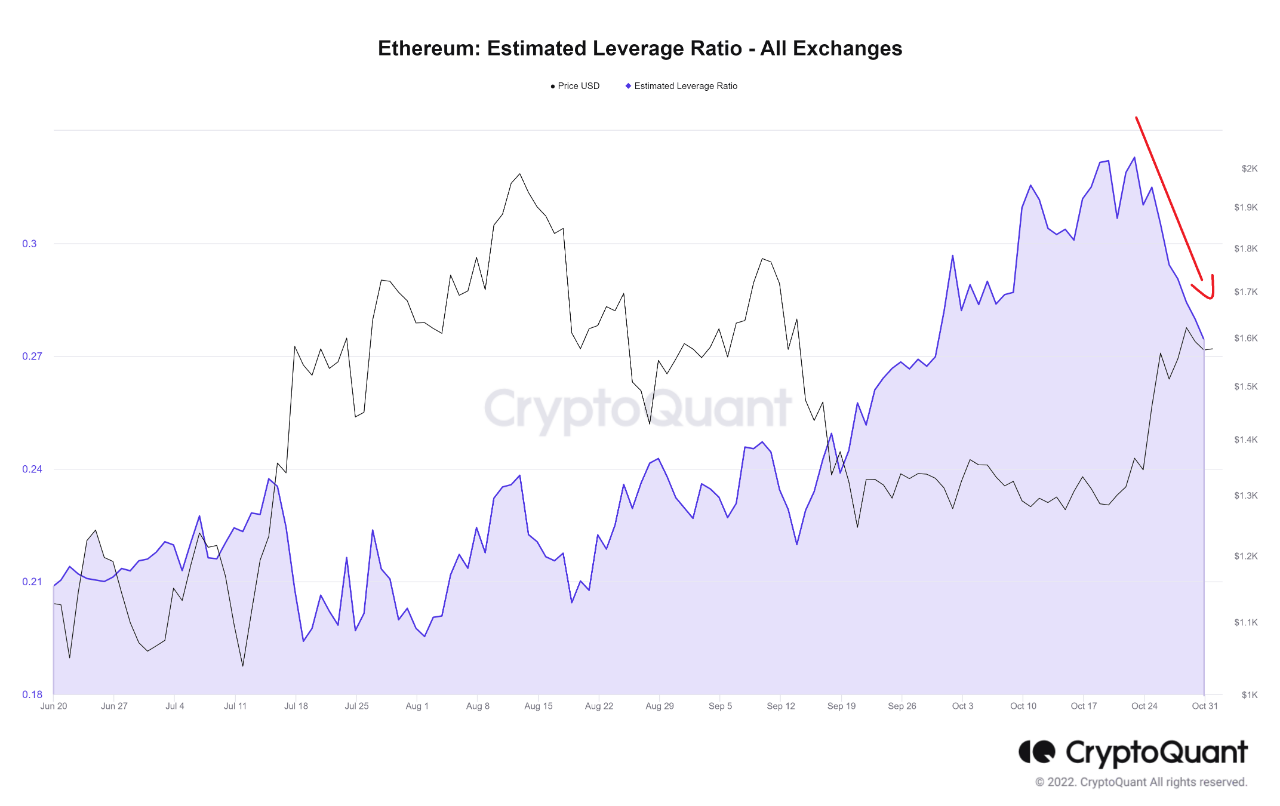
In addition to this, during the last few months the leverage in Ethereum (ELR) has reached levels never seen before (The OI increases too). Investors were taking extra risks in their positions.
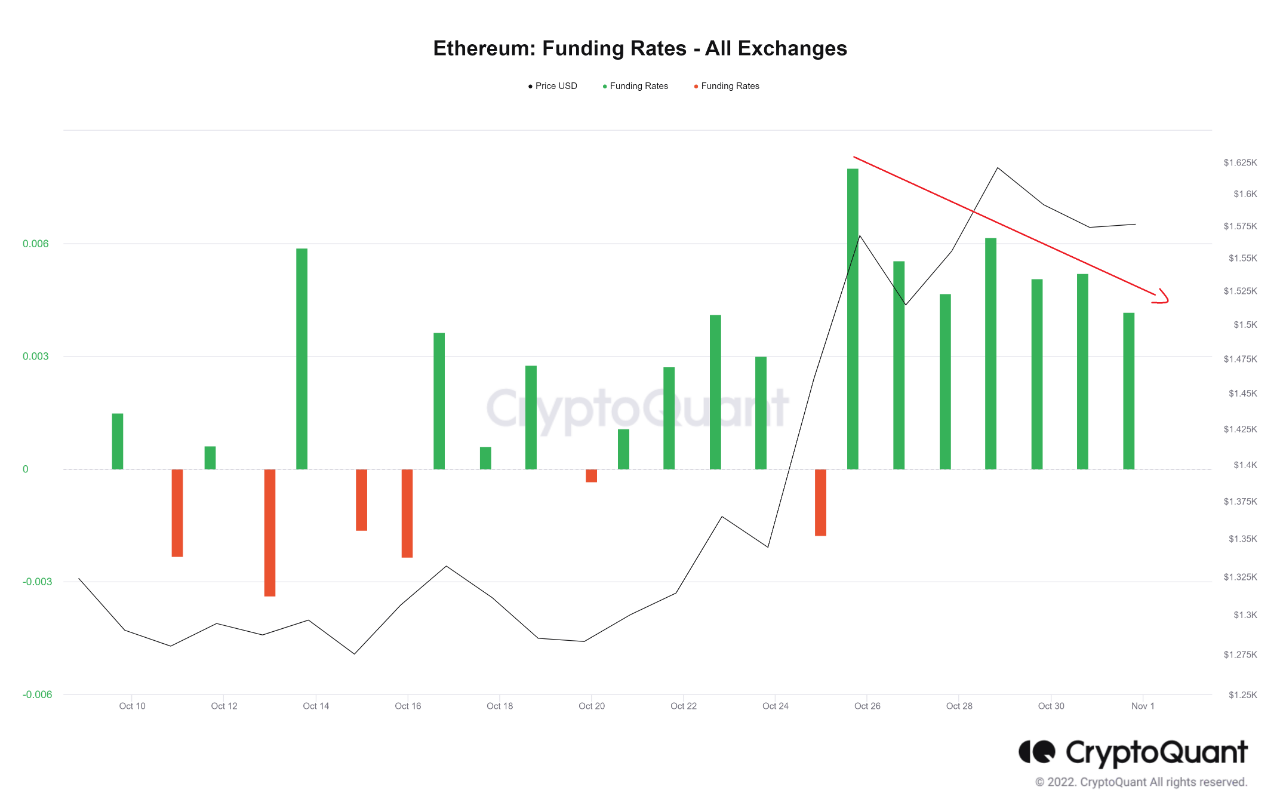
All this led Ethereum to increases in approximately 30% during the last month. Likewise, we could see from the Funding Rate that most speculators were long on Ethereum.
📍 The Important Part:
Currently, we are seeing leverage start to wane, same as the enthusiasm reflected in the funding. This could indicate that investors who were initially willing to take huge risks have already decided to gradually close their positions... It seems that the long pressure from derivatives is beginning to shrink.

View original →Bullish(Nuanced)ETH
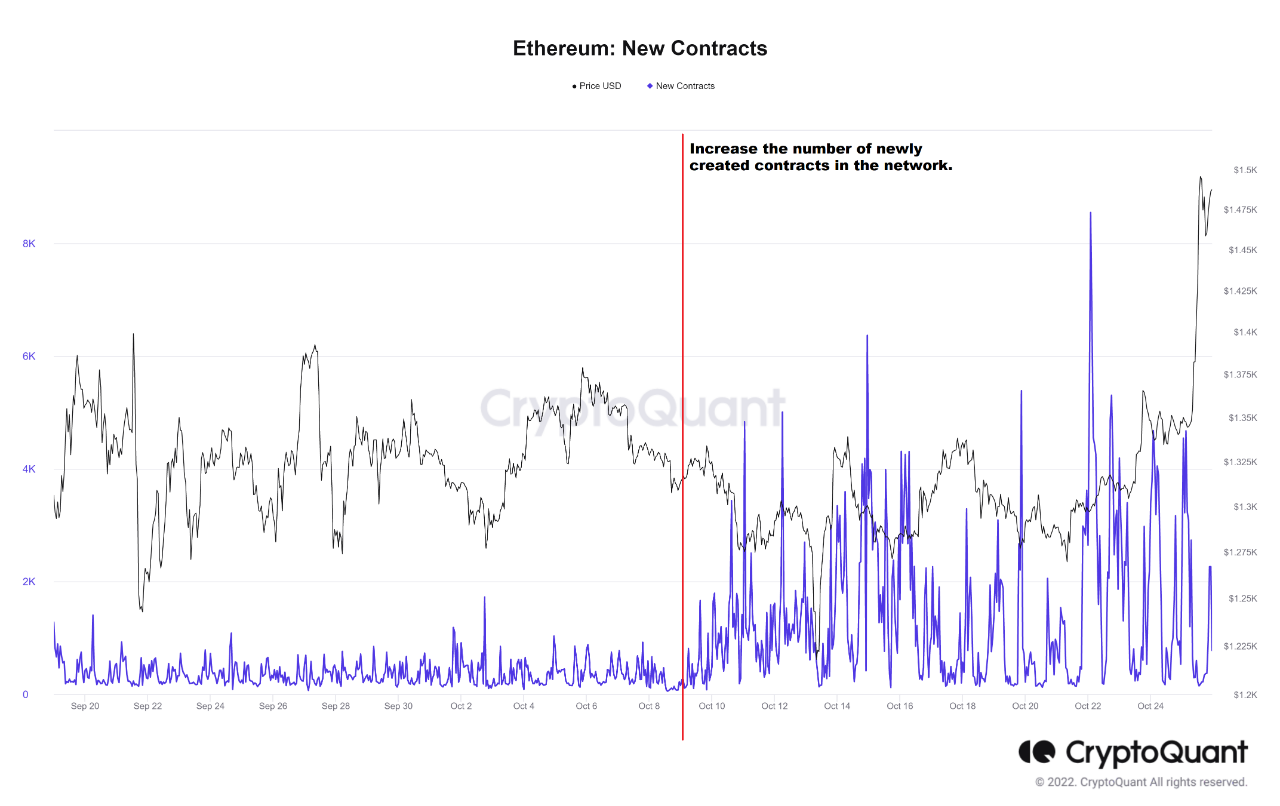
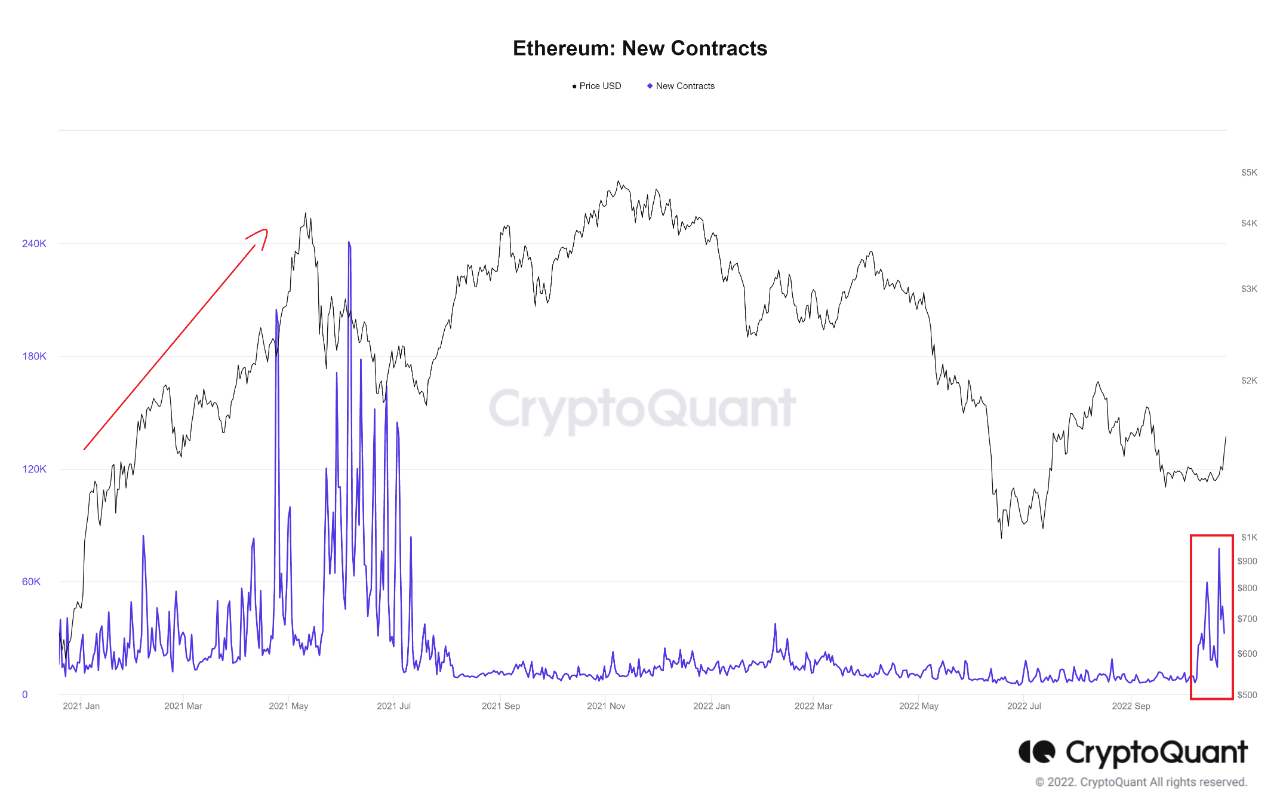
10/26/2022 During the bear market, the development of new Smart Contracts decreased. Among other things, this is probably because no one wanted to put out a new dApp project while the market was going down.
📍 However, since October 9 we have noticed some changes. The number of new Smart Contracts deployed on the Ethereum Blockchain began to increase, reaching levels not seen since July 2021. This could indicate that developers have improved their expectations about the future of the market and activity on the network. Probably, if these new Contracts are developed for new applications, we will be able to see many launches in the near future what could stimulate activity on the network.

View original →Bearish(Nuanced)BTC
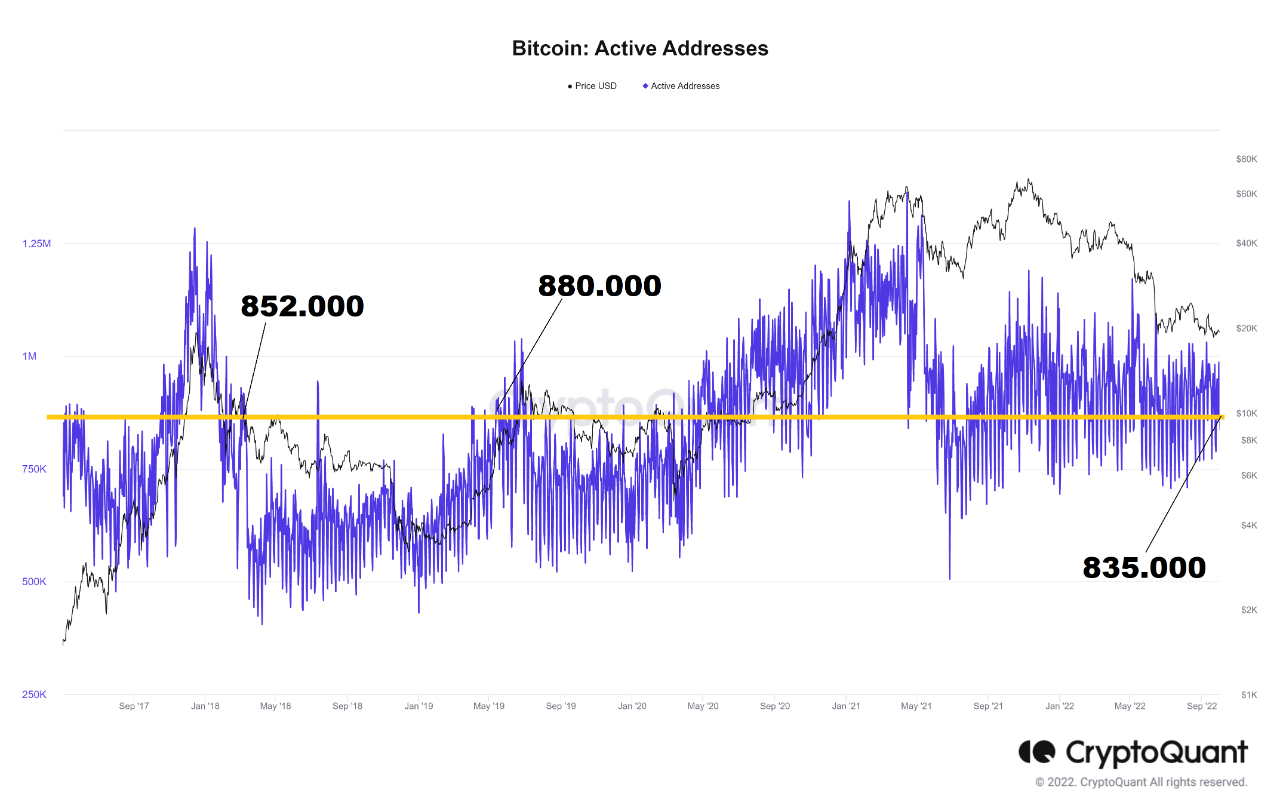
10/3/2022 According to Metcalfe's Law: the value of a network will be determined by the number of users in the system.
But we are currently seeing levels of Active Addresses similar to those in 2019 and 2018.
🔴 October 2022: 835,000
⚪️ May 2019: 880,000
⚪️ February 2018: 852,000
Despite the global development of cryptocurrencies. We can see how Bitcoin has not been able to move towards true global adoption.
In my opinion, a real price growth will come with mass adoption, which will only be achieved when new users start to interact with the network, causing Active Addresses to also increase, and for now we are not seeing it, something worrying even in the long term.

View original →With the Merge a few hours away, it is important to know what is about to happen:
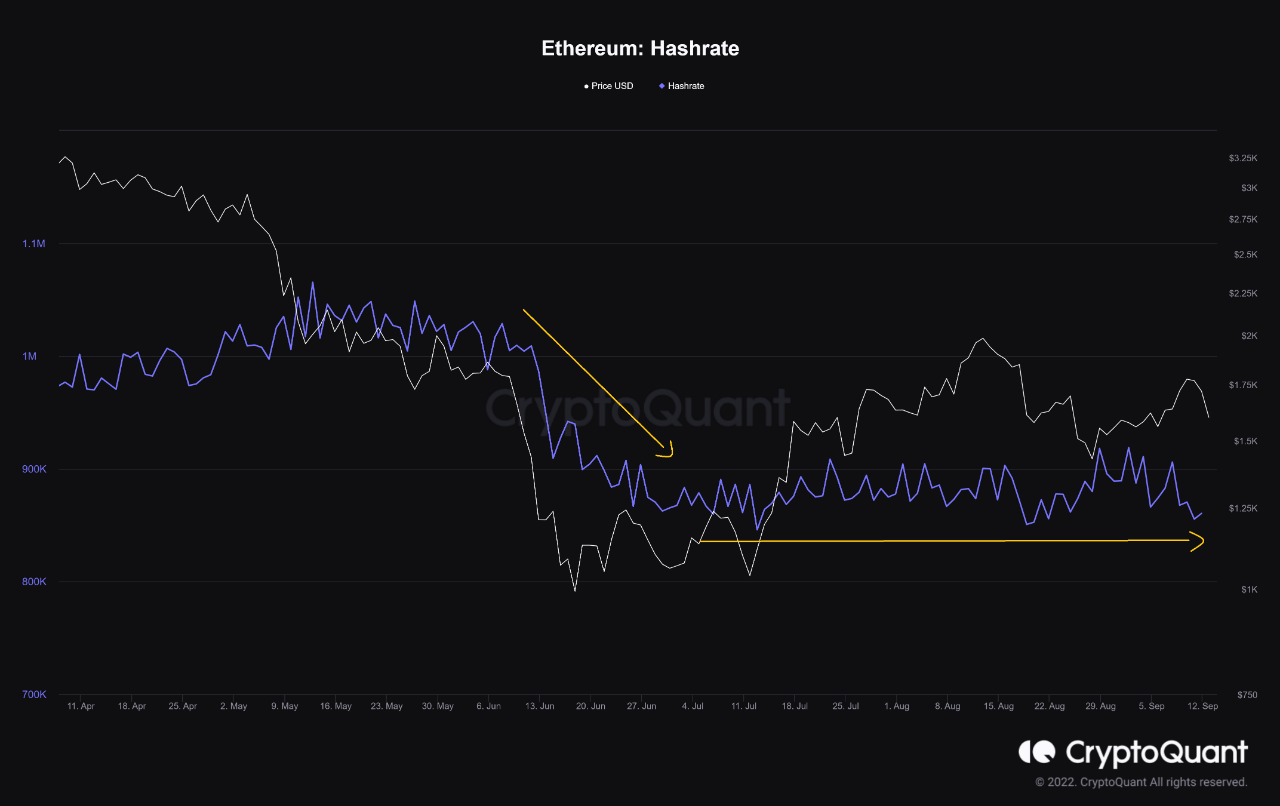
The Becon Chain will be integrated into the Mainnet, changing from a PoW model to a PoS.
⚪️ Hashrate: (first image) some miners have been disconnected from the Ethereum network, while most of them have continued to take advantage of mining, while waiting for a possible Fork.
⚪️ Gas Fees & TPS: neither of them will benefit much because the Merge will not increase the capacity of the network. So you won't see a big spike in network activity yet.
⚪️ ETH in Stake: (second image) as soon as the Merge occurs, ETH cannot be withdrawn from the stake, so we can think that in the short term there will be no massive sales of stakers taking profits.
⚪️ ETH in Exchange: (third photo) it is interesting to see how the ETH: Exchange Reserve continue to remain low, so the idea that a massive sale will not occur after the Merge could be supported. OI is low as well.

View original →Bearish(Nuanced)8/31/2022
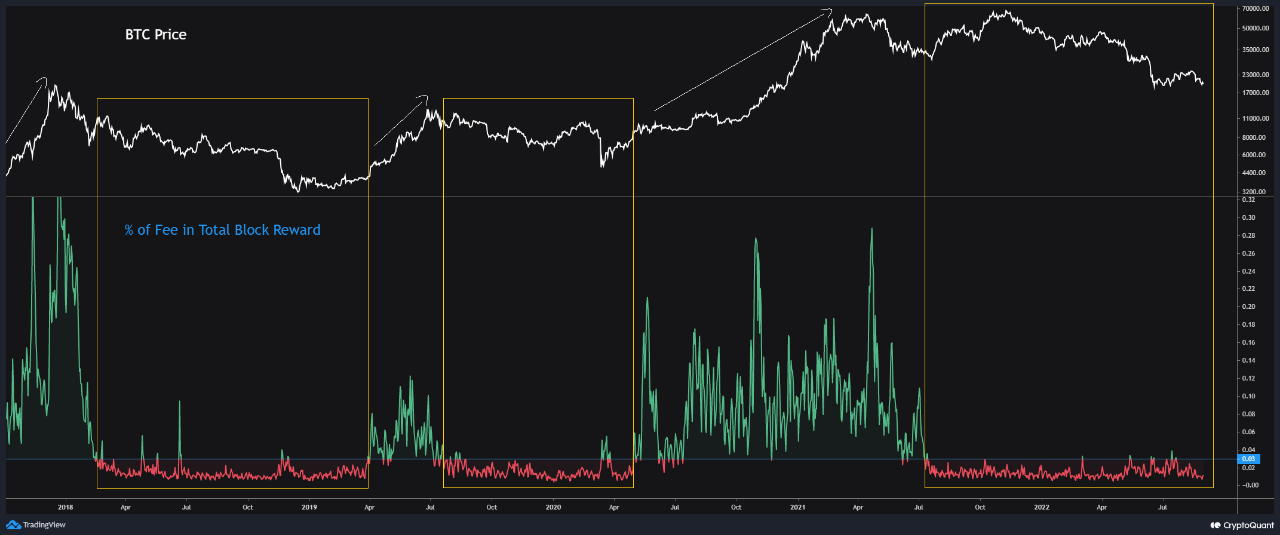
This metric allows us to evaluate the percentage of fee in total block reward. This indicates that if the network demand is low, the percentage of fee in the block reward will be low. Conversely, as network demand increases, the fee reward increase too.
As we can see, every time the percentage of fee in the block reward drops and remains below 3%, it could mean that the price is oversold causing the development of a bearish cycle that will be driven by the low demand from the network, and that usually ends just when the fees manage to exceed 3% again among the block reward.
What should be expected? 🤔
We should wait until the percentage of fee in total block reward manages to remain above 3%, which would indicate new demand in the network, suggesting that the network is useful once again and a potential market strength.
What is currently happening? 😖
The demand in the network is still at its lowest points, which indicates that the new bull cycle is still far.

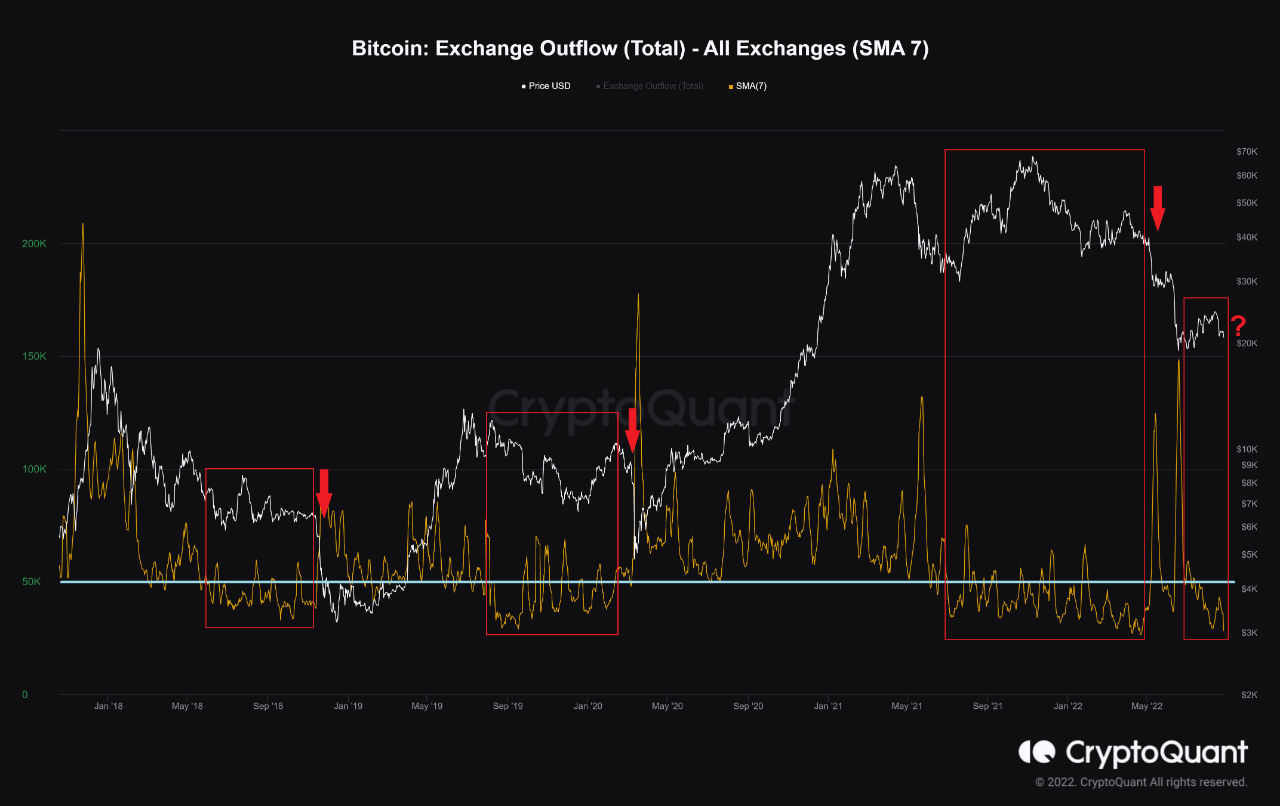
View original →Currently, there are very few withdrawals taking place within the Exchanges, indicating that these price levels are not yet considered for long-term accumulation. In previous scenarios, whenever withdrawal levels remain this low, there are usually strong downward price movements.
For this reason, there could be further drops in price to encourage long-term investors to generate a higher buying pressure that allows to establish a more solid market bottom.

View original →

