The landscape of Spot ETF Bitcoin holdings is undergoing notable shifts. Specifically, Grayscale's GBTC experienced a large outflow of 13,793 Bitcoin in a single day, while other ETFs collectively saw inflows of 21,400 BTC.
This contrast signals a shift in how institutional investors are distributing their investments within the Bitcoin ETF market. These trends are crucial as they reflect changing institutional views on risk, returns, and investment strategies in cryptocurrencies.
For a detailed analysis of these market dynamics, Julio Moreno's dashboard provides key data in an accessible format, making it a valuable resource for those tracking changes in the Bitcoin ETF sector.
Link to dashboard: https://cryptoquant.com/analytics/dashboard/65a933dda0dbf57b023b2e03


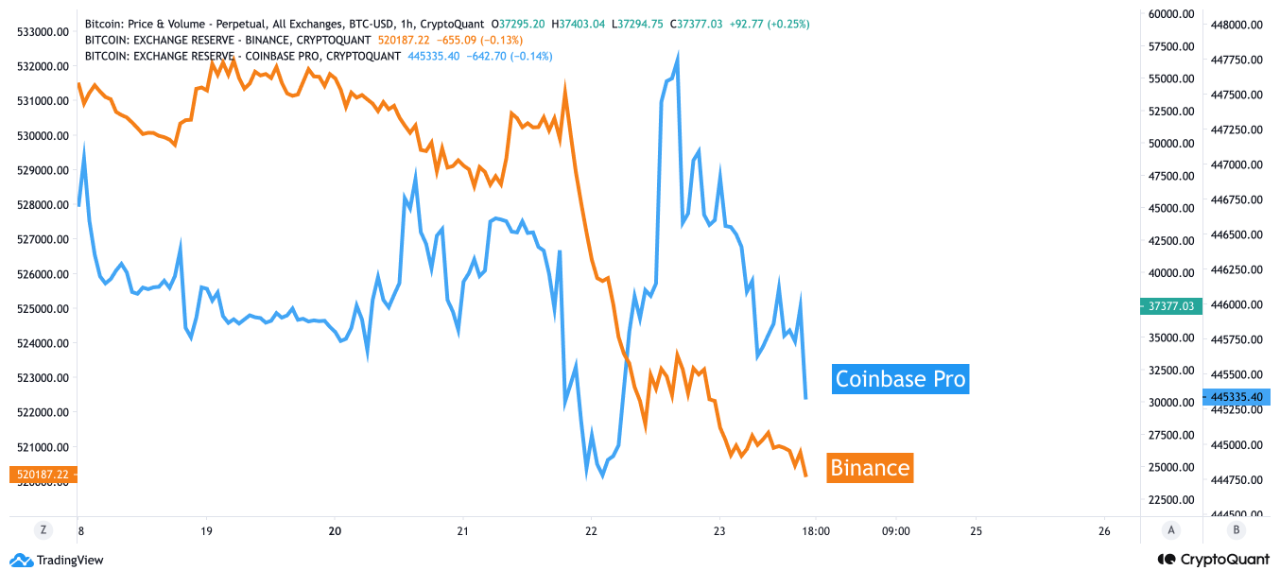
View original →In recent shifts within cryptocurrency exchanges, some changes in reserves have been observed. Coinbase witnessed an initial increase of around 5000 BTC, followed by a subsequent decrease of around 3000. Conversely, Binance experienced a reduction of around 12000 BTC in its reserves.
Although the numbers do not match, the decrease following Binance CEO Changpeng Zhao's legal challenges hints at a potential flow of funds from Binance to Coinbase. Despite the movement of funds, the fact that the outflow is not significant implies ongoing confidence in Binance's security and integrity.

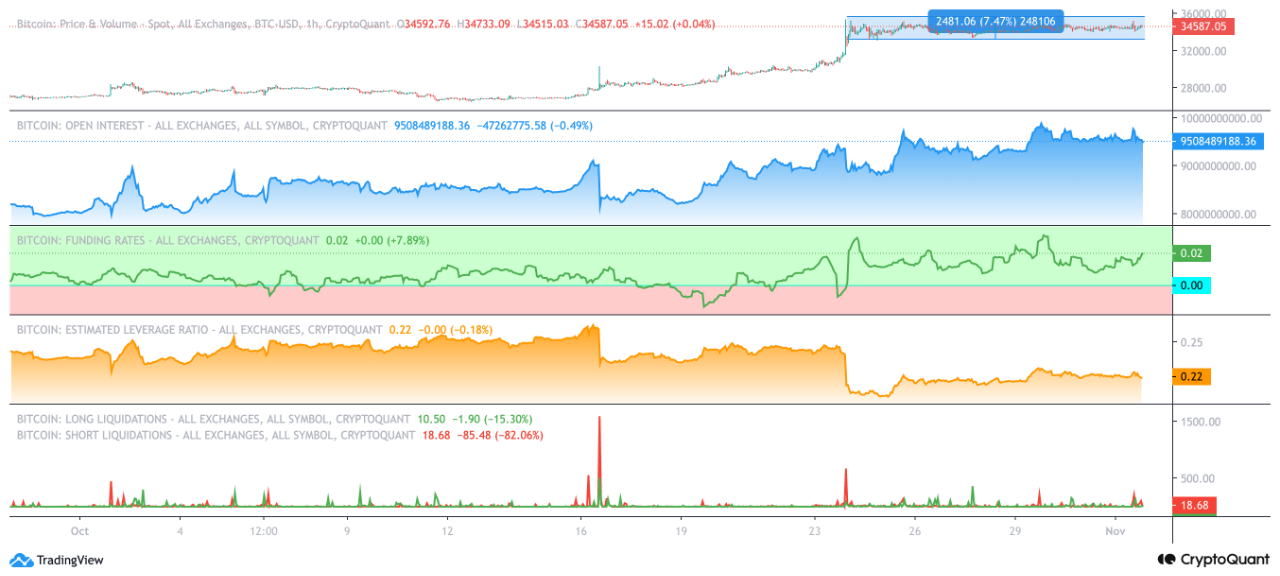
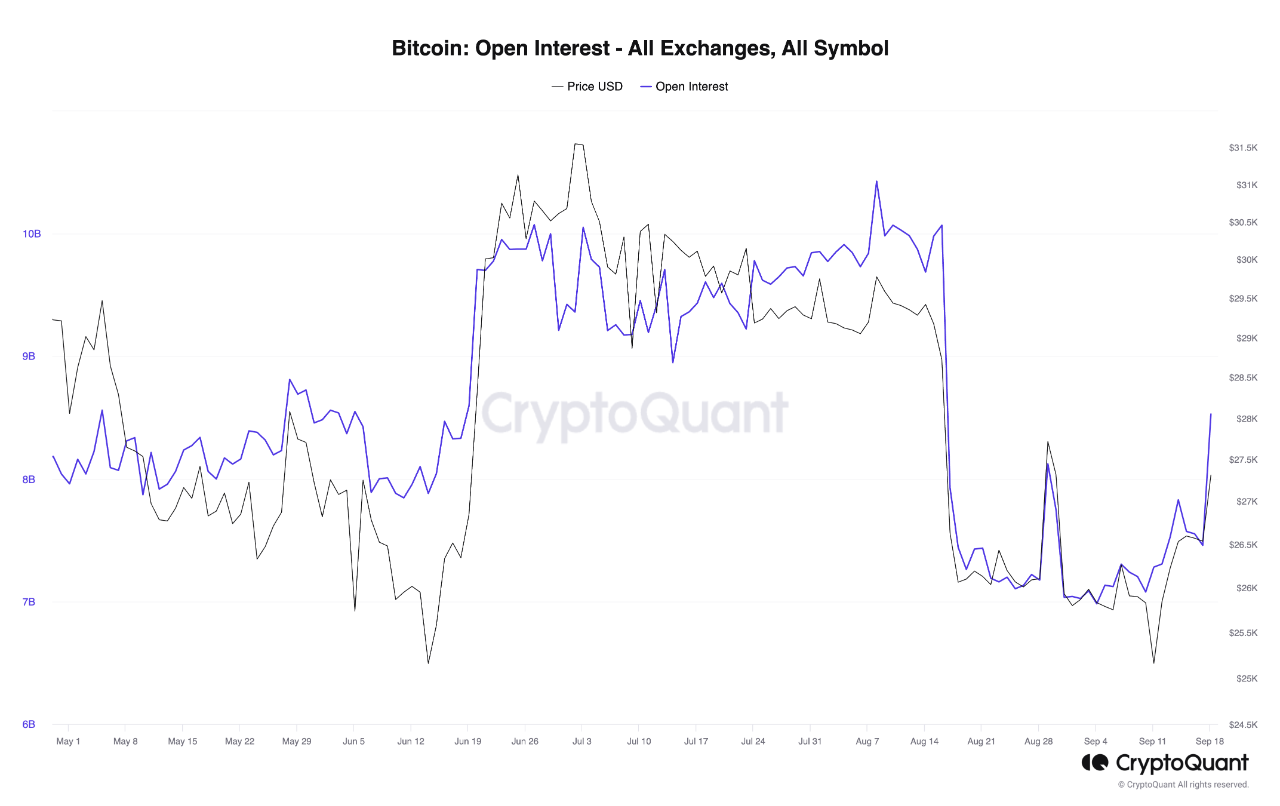
View original →Following the rally that pushed Bitcoin to 35k, the cryptocurrency market has entered a period of relative price stability. Bitcoin's price is now in a tight trading range, and it appears uncertain about its future direction, reflecting the market's search for clarity. Amidst this consolidation, one intriguing aspect stands out: the consistent rise in Open Interest.
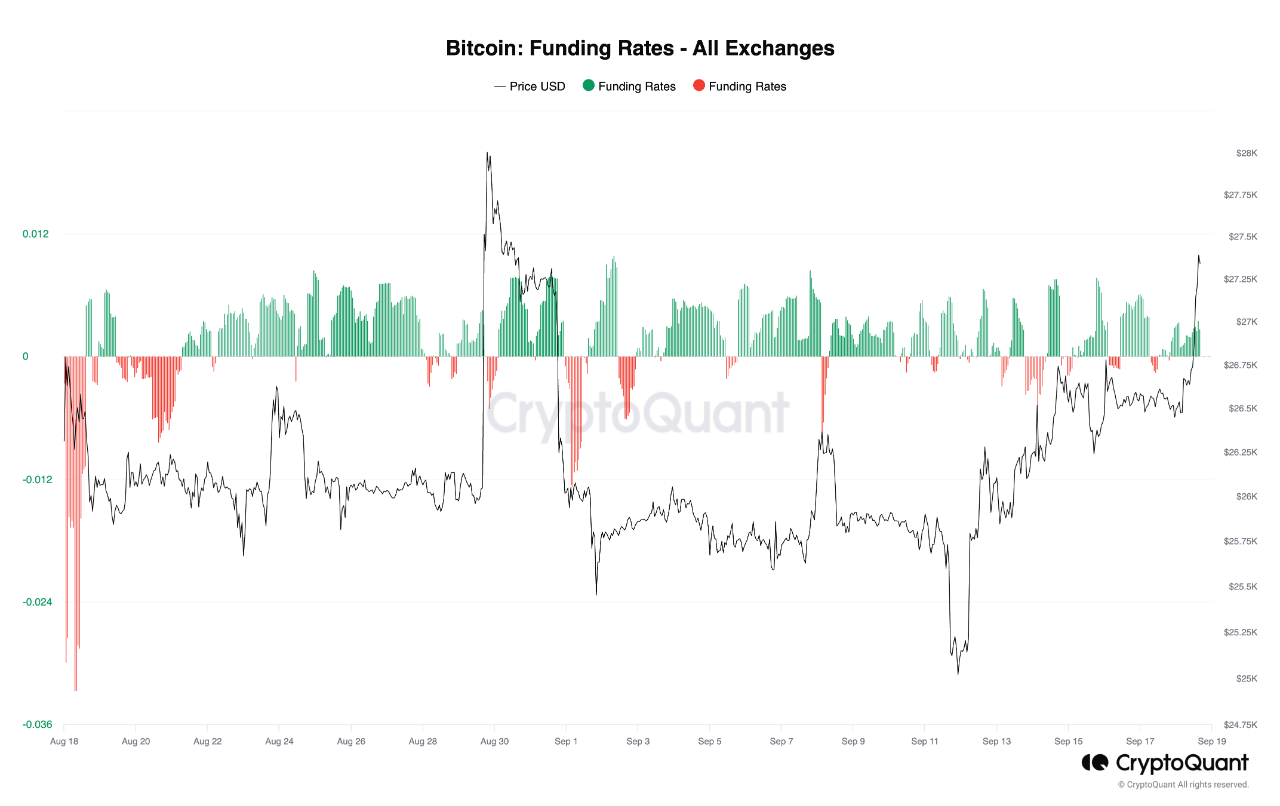
Open Interest, which measures the total number of derivative contracts, has been steadily increasing. This upward trend highlights the enthusiasm of traders for both risk and potential profits. Moreover, the predominantly positive funding rates in the market signal a collective belief in the potential for an upward price movement. However, it's essential to note that significant short and long liquidations have not materialized as of yet, and market volatility has not experienced a sharp surge. This leaves the door open for the possibility of substantial liquidations at a later stage.

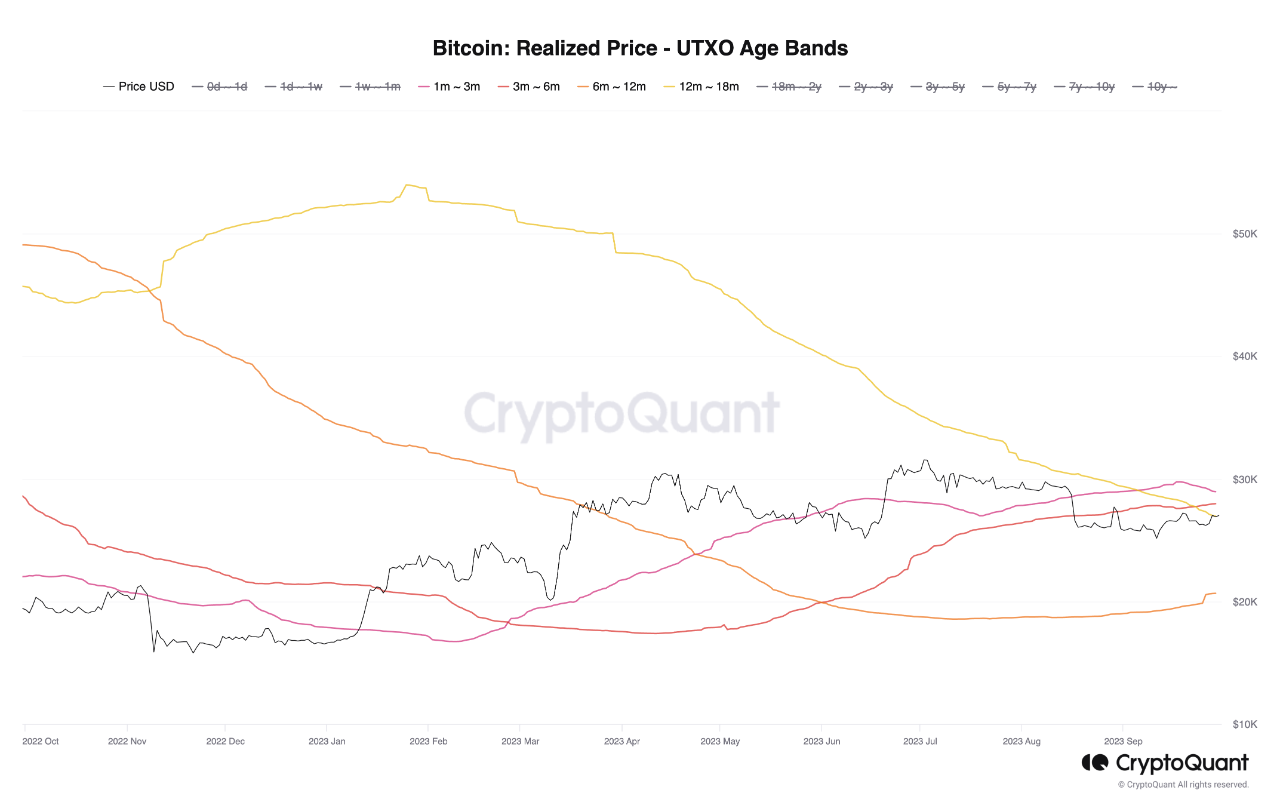
View original →Bitcoin's current price is hovering around $27,000 USD, while 12-18 Months UTXO Realized Price is at $26,950 USD and the 6-12 Months UTXO Realized Price at $20,600 USD. Coupled with data from Exchange Inflow UTXO Age Bands, this narrative unveils investor behavior and its potential implications.
The 12-18 Months UTXO Realized Price indicates that holders within this timeframe have reached their average purchase price. In contrast, the 6-12 Months UTXO Realized Price, lower than the market price, hints at profitability for this cohort.
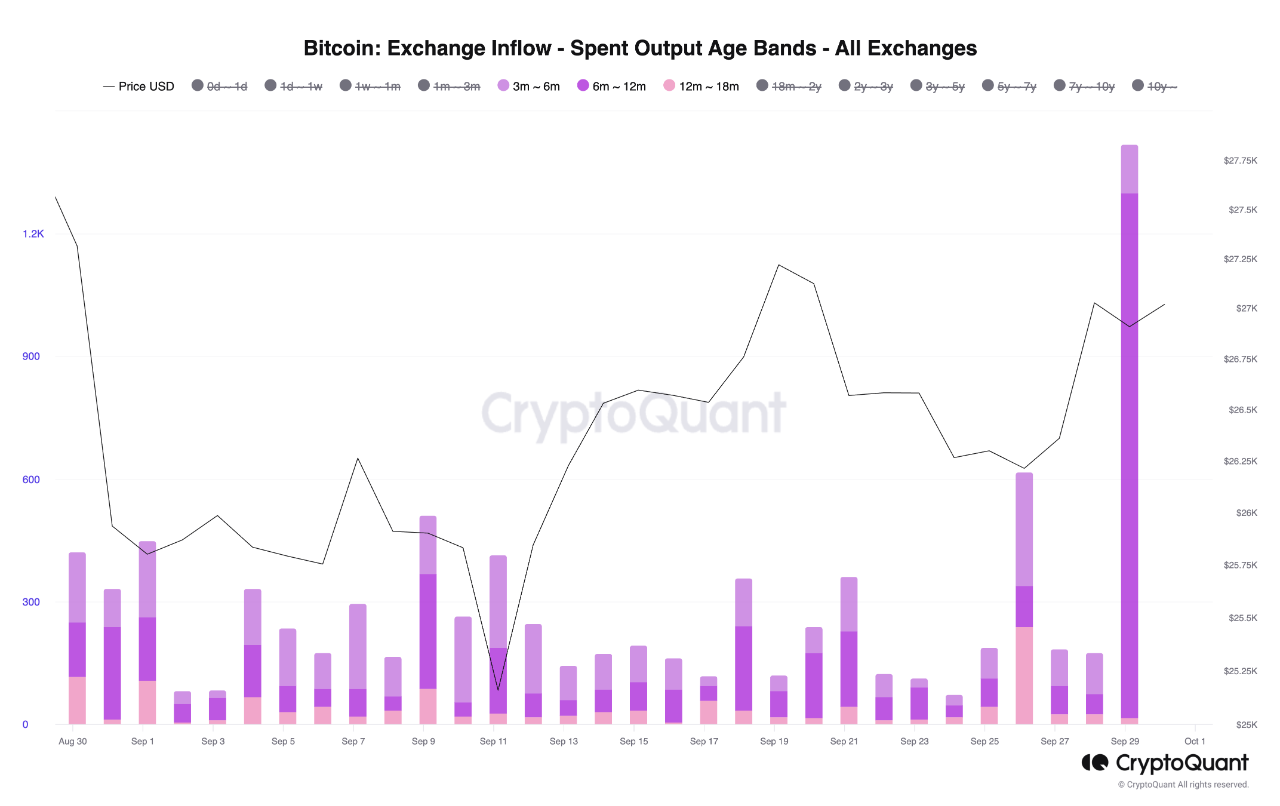
Exchange Inflow UTXO Age Bands data reveals that the 12-18 Months UTXO cohort, despite enduring extended unrealized losses, is not rushing to sell their holdings. Conversely, the 6-12 Months UTXO group, realizing profits, is actively selling on exchanges.
The difference in behavior shows that some investors have more confidence in Bitcoin's long-term future. Those who've held Bitcoin for 12-18 months seem to believe in its future potential, thus not selling at the break-even point right now. Given the limited influx of Bitcoin from the 12-18 Months UTXO cohort into exchanges indicating low selling pressure, it suggests that their realized price may not serve as a resistance level for Bitcoin price. This implies that Bitcoin has room to rise and potentially surpass this level.

View original →Bitcoin Exchange Reserves tracks the amount of Bitcoin held on cryptocurrency exchanges. One striking observation is that the quantity of Bitcoin held on exchanges has been steadily declining since its peak in March 2020. This period coincided with a remarkable bull market in the crypto sphere, raising questions about the potential reverse correlation between Exchange Reserves and Bitcoin's price.
During this bull market phase, the highest point in Exchange Reserves aligned precisely with the commencement of Bitcoin's impressive price surge. It appeared that as more investors withdrew their Bitcoin from exchanges, the asset's scarcity increased, potentially driving up its value. This inverse relationship seemed to support the notion that decreasing Exchange Reserves were a bullish indicator for Bitcoin.
However, as with any market analysis, it's crucial to consider that trends can change, and the apparent correlation may not hold under all circumstances. Starting in November 2021, following Bitcoin's peak price, the dynamics between Exchange Reserves and Bitcoin's changed as Bitcoin's price started declining along with its reserves on exchanges.
This challenges the simplistic assumption of an inverse correlation. It suggests that during bear markets or periods of price consolidation, investors might opt to keep less of their Bitcoin on exchanges, possibly seeking less trading opportunities.
Julio Moreno, the head of on-chain research at CQ, argues that a decrease in Bitcoin on exchanges is not necessarily a bullish sign. Instead, it may signify that fewer market participants have a significant influence over Bitcoin's price.
Moreno's perspective is a reminder that market dynamics are multifaceted and not easily distilled into simple bullish or bearish signals. The interplay between Exchange Reserves, investor behavior, and market sentiment is intricate and subject to change based on evolving conditions.


View original →As of today, it appears that there has been a significant surge in Open Interest, indicating a notable rise in the number of active contracts within the market. This increase in Open Interest is often seen as a reflection of heightened trading activity and growing market participation.
Additionally, the same applies to Estimated Leverage Ratio, suggesting that traders are increasingly utilizing leverage in their positions. This can be indicative of a more aggressive trading environment, with investors seeking amplified returns or exposure to price movements.
Funding Rates have been consistently positive, implying that a majority of traders are taking positions that anticipate a rise in Bitcoin's price. This positivity in Funding Rates underscores the prevailing sentiment in the market, where there is a general expectation of upward price movement for Bitcoin.
However, it's important to note that if we continue to see increasingly positive funding rates, a further surge in open interest, and possibly a continued rise in the estimated leverage ratio, it might create conditions conducive to a long squeeze. A long squeeze occurs when traders who have taken long positions (betting on price increases) are forced to sell their positions to cover their losses as the price moves against them. This scenario could potentially lead to a significant price drop for Bitcoin, as selling pressure intensifies.

View original →

